Interview (Part 4): Tara Tomicevic
My interview with 2021 Black List writer for her script “Thicker Than Ice.”
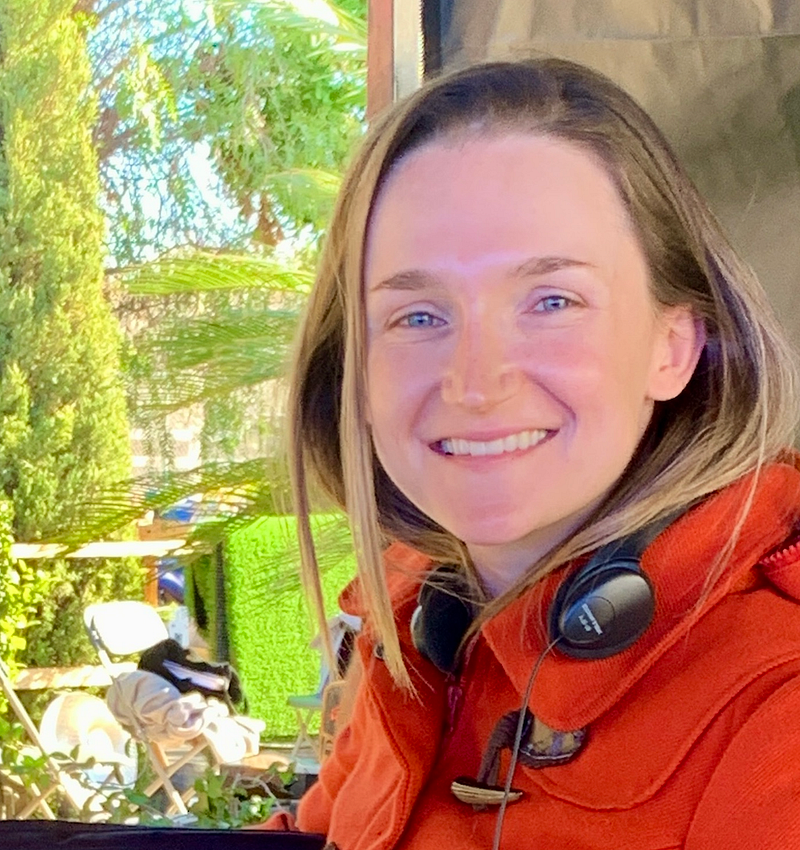
My interview with 2021 Black List writer for her script “Thicker Than Ice.”
Tara Tomicevic wrote the screenplay “Thicker Than Ice” which made the 2021 Black List. Recently, I had the opportunity to chat with Tara about her creative background, her script, the craft of screenwriting, and what making the annual Black List has meant to her.
Today in Part 4 of a 6-part series to run each day through Sunday, Tara discusses the inner journeys Hannah and Marissa went on through their experiences leading up to and through the Winter Olympics.
Scott: It was a smart choice on your part. Part of it, you benefit because it’s cinema and you’re crosscutting between, it may be South Korea and Minnesota, but you’re still seeing the sisters side by side, from scene to scene. Psychologically, we’re tracking them emotionally, even if they are separated.
I couldn’t help but think, if this were presented to some movie mogul at MGM in 1938, “What? They’re not going to end up on opposing teams and the gold medal. Come on, you got to change that.” Right?
Tara: Yeah. Oh, man, I was tempted to. I had a couple of those mogul voices saying, “Well, you might want to change history a little bit.” I don’t know that I feel powerful enough to do that. But the practice game that happens prior to the Olympics did really happen so I focused on just upping the sister vs. sister stakes there.
Scott: There’s that old Hollywood saying: “Don’t let the facts get in the way of the story.”
Tara: That was the hardest part of writing the script. Once you get to know people and you like them, then you want to do them justice, and you’re not sure how much you can stray from their real story and still do so.
It was always a conflicting value for me — I have to write a movie here, I know that that’s what I’m here to do, and I think that they understand that. However, these are two small town girls from Minnesota who aren’t thinking about narrative structure all day every day like I am, and I wouldn’t blame them for wanting to be portrayed a certain way.
I did have to a couple times be like, “Hannah, you’re not always going to like yourself, but I promise this has to happen or there’s no movie — please trust me.” I didn’t think that I would get quite so emotionally involved, but I did, I felt a real responsibility, and that ended up being the biggest challenge.
Scott: Korea only qualified because the Olympics took place there. In fact, I looked it up, they scored two goals and they allowed 28. It’s not like they’re going to end up in the gold medal final, which was US versus Canada, which the US won.
Tara: It would have been stretching the truth too much if I put them in the gold medal match. [laughs]
Scott: I have this theory which is there’s an existential question at the heart of all stories. The protagonist has to ask, “Who am I?” Stories are fundamentally about self-identity. It struck me that that’s what you got going on here, because you got these two sisters who are so close and so defined by each other’s presence. Then the call to adventure. The classic, the world intervenes, boom, one of them goes off to Korea.
She doesn’t know the language. She’s never eaten the food. She doesn’t know the culture. She left when she was four months. That was a great environment for her to have to go and experience.
Meanwhile, Hannah has now experienced this knee injury. Now, she’s got to go through physical therapy with the possibility that she may not make the US team, and perhaps never play hockey again at the level she was. Both of them are put into a new environment, and they’re separated.
All of that is new stuff that they got to deal with that’s going to force them to look at themselves individually. I’m sure you’re aware of that. Is that playing pretty much into where you were going, with their exploration of the characters?
Tara: Yes. Absolutely.
Scott: It’s like a hero’s journey. The macro things that Campbell talks about. Three movements. He calls them Separation, Initiation, and Return. You’ve literally got the sisters separated, geographically, emotionally. They go through some tense times.
Hannah’s jealous, angry, frustrated because of her health situation. Marissa is actually enjoying herself in Korea. Plus, Hannah is separated from being able to play competitive hockey. The initiation, that’s part of it, is that she’s learning what it’s like to not be able to play hockey versus learning what it’s like to be in Korea, and then you come back a transformed individual.
They got to find themselves in that whole process. That’s their journey, isn’t it? Does that seem like a fair perception or articulation of their journey?
Tara: Spot on.
Scott: Let’s talk about this family of characters that emerged for both of them, because they both have a family of characters that they experience in the act, too.
Marissa is with their teammates in South Korea. Some of them are from North Korea, including most specifically Yoon Jung. She’s the one who plays the goalie. Were those fictitious? How did you figure out that cast of characters in terms of the family experience for Marissa in Korea?
Tara: A couple are based on real people. I changed names. I would say that at least one thing was taken from the real people for all of Marissa’s teammates. There was some defining characteristic or memory that Marissa shared that guided the inception of those characters.
Then I would also ask leading question like, “Who did you connect with and how? How did you do that when you didn’t speak the language and they didn’t speak English?” A lot of digging to get those little golden anecdotes.
I read a lot of articles about the team and the integration of the North and the South. It was always a combination of fiction and starting from a drop of the real people.
Scott: There’s some very touching moments, but they also play into Marissa’s psychological journey. At one point, they go out with a teammate and they visit a great-grandmother that one of our North Korean teammates has never seen. Is that right?
Tara: Yes. Marissa’s North Korean teammate had a great-grandmother in Seoul, South Korea, whom she’d never met because of the fragmentation of the country.
Scott: The great-granddaughter has an opportunity to see someone who she’s never met before, but has an impact on her in terms of her understanding. It’s almost like a little bit of a bridge for Marissa. She may not even realize it consciously. Like, “Oh, my experience here with these people here is going to help me understand my relationship with myself and my sister a little bit more.”
Did you ever think about that like that at all?
Tara: I did. I did because, sadly, there’s a pattern of this in the world. I’m also from a country that was divided, that was torn into not two, but six at this point. There are brothers and sisters literally on opposite sides of political lines. Fortunately, in former Yugoslavia, Croatia and Bosnia, where we’re from, it wasn’t North Korea. It wasn’t that once you cross the border you were never seen or heard from again, which is most of these people’s real-life stories. There was a division that was created by powers that have nothing to do with the everyday man. My dad has a saying, “Our lives are in their shadows.” The everyday man’s life can become collateral damage. That’s how I saw the North and South Korea fragmentation. Everyday people who had families who just happened to live on the other side of this border that was artificially created by governments. Their lives were forever changed.
Scott: There’s an interesting thing going on at that time with Marissa in her own individual journey. She and Hannah are not on the outs, but she’s trying to reach out to Hannah and Hannah is not returning text. It’s like, “Let’s watch “Miss Congeniality,’” which is a runner. There’s that separation.
She has a choice, though, whether she’s going to abide by that or whether that’s something that she’s going to fight through. Similarly, Hannah has her own family. These two characters, you must have had fun writing these guys, Cosmo and Martin. Were they based on real characters?
Tara: They were not. I kind of thought of them as my, maybe even quirkier version of Cam and Mitch on “Modern Family” because I just love them and they’re the best.
Tomorrow in Part 5, Tara reveals what it was like to learn that her script “Thicker Than Ice” had made the 2021 Black List.
For Part 1 of the interview, go here.
Part 2, here.
Part 3, here.
Tara is repped by Paradigm and Lit Entertainment Group.
For my interviews with dozens of other Black List writers, go here.