Interview (Part 4): Scott Derrickson
My interview with the co-writer and director of the hit Marvel movie Doctor Strange as well as horror movies The Exorcism of Emily Rose and…
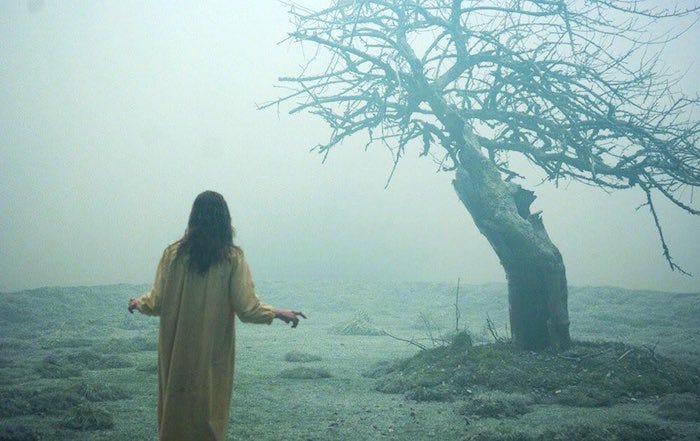
My interview with the co-writer and director of the hit Marvel movie Doctor Strange as well as horror movies The Exorcism of Emily Rose and Sinister.
I started following filmmaker Scott Derrickson years ago on Twitter (@scottderrickson) because I enjoyed his movies, plus, he’s a huge fan of Flannery O’Connor and Bob Dylan, two of my very favorite creatives. So I reached to Scott for an interview and was especially pleased when he said yes.
Recently, we enjoyed an hour-long conversation which was wide-ranging in nature covering three of his movies: The Exorcism of Emily Rose, Sinister, and Doctor Strange, as well as his thoughts on storytelling in general and the horror genre specifically.
Today in Part 4, Scott provides insights into a movie he co-wrote and directed The Exorcism of Emily Rose:
Scott Myers: That’s a great segue to some of your movies. I like to delve into three of them that you directed. Let’s start with The Exorcism of Emily Rose, a 2005 movie. Great cast, Laura Linney, Tom Wilkinson, Campbell Scott, Jennifer Carpenter.
The IMDb plot summary, “A lawyer takes on a negligent homicide a case involving a priest who performed an exorcism on a young girl.” That’s loosely based on actual set of events involving ‑‑ I may mispronounce this ‑‑ Anneliese Michel, I think…
Scott Derrickson: That’s correct, yeah.
Scott Myers: …in Germany in the ’70s. When did you first become aware of that particular story?
Scott Derrickson: The 2014 movie I made for Jerry Bruckheimer Deliver Us From Evil was first written in, I think, 2004. I was just a writer. I wasn’t the director on the project at the time.
While I was doing research for that script, I came across an out‑of‑print book that was only on reserve at the LA Public Library — I was unable to find another single copy of it anywhere. It’s called The Exorcism of Anneliese Michel and was written by an anthropologist — it’s a fascinating study of this event which took place in Bavaria in the ’70s. Nobody knew about the story. I’d never heard of it. When I read it, I thought, “This might be the best idea for a movie I’ve ever come across.”
The author, at that time, was still alive. I optioned the book from her directly for $100. She was amazed that I had found it. I don’t think anybody had brought up that book to her in 30 years. She sent me all 43 original exorcism cassette tape recordings, and a bunch of photographs that the priests involved in the case had given to her.
Some of that you can find online now. It was so horrifying to me. It’s bone‑chillingly scary, what I heard heard on those tapes and saw in those pictures, but it’s also gut‑wrenchingly tragic. The confusion that it gave me was what ultimately drove me to try to make it into a movie, because I just could not make sense of it. There was no point of view that I could take on it that made any sense.
I could look at it as a religious person, as a person of belief, and it didn’t really make any sense. I could look at it as a purely medical, psychological tragedy. But that didn’t make real sense to me either. There was no easy way to reckon with the facts of what actually happened. That’s why it seemed worth making — because it raised such important questions for me.
Scott Myers: It’s nice you say that because one thing I found intriguing about it is how you treated the story, you got these two sides. You’ve got the scientific, psychological side and the religious side, but you present both with such credibility that, by the end, you’re not pitting them against each other.
Really, we’re left with the possibility that either or even both could be seen as a reasonable explanation for her life and death. Were you actually consciously going for that, trying to create that?
Scott Derrickson: Definitely. I have great fondness for that movie, but I honestly think I either moderately succeeded at what you’re talking about or possibly even failed at it. It was the water‑cooler discussion movie for a while after its release — you can’t watch it and not come out of the theater and have conversations about it.
So in that respect, I succeeded. But I think that I failed in the silliest and stupidest of ways, in that while I had both the prosecution and the defense present cogent and articulate points of view, I think most viewers felt that the movie was heavily weighted toward the defense, toward the argument that this girl was not only possessed but a kind of modern saint.
The prosecutor is a person of faith — Campbell Scott’s character — and he’s arguing against the reality of possession and exorcism. The defense attorney played by Lauren Linney is a skeptic, but she’s taking the position in court that possession is a real phenomenon, and exorcism was a legitimate way to treat the girl’s condition. I thought that was a really good idea. But the mistake that I made was not making Campbell Scott’s character more likable. Too many people thought he was the villain, not to be believed.
Half the problem was his damn mustache. I knew it as soon as we had the first test screening. I was shocked at how many people referred to him as the villain and literally referred to his mustache. The funniest comment I’ve ever gotten after a test screening was from that first screening of The Exorcism of Emily Rose. The written question for the test audience was, “What, if anything, did you not like about the movie?” Somebody wrote in response, “I didn’t like it when the evil villain, Snidely Whiplash, tied that poor girl to the train tracks and twirled his ugly mustache.”
When I read it, I was like, “Oh man, I really blew it by letting him have that mustache.” I thought it was interesting because he was a character who just didn’t care what other people thought about him. He liked his mustache. But it made him too unlikeable. Maybe it was my own bias coming through subconsciously in an act of sabotage.
If I had made him as likable and as appealing as Laura Linney, the movie would’ve been better and would have better communicated that complex duel perspective, because the fact is, he makes a more cogent argument than she does.
If I was on that jury and I was listening to these arguments, even with my own beliefs being what they are, I would likely have sided with him given that his argumentation is more rational. But audiences experience characters emotionally. If they don’t like a character, they’re not…It’s just like it is in the real world — if a jury doesn’t like a lawyer, they’re going to have a hard time buying into what he’s saying. It’s just human nature.
Scott Myers: That’s so great. I never would’ve made the connection between The Exorcism of Emily Rose and Dudley Do‑Right.
[laughter]
Scott Derrickson: I can’t believe after all these years, I can still quote that comment card line.
Scott Myers: There was The Exorcist, then there were subsequent sequels, but the intriguing twist to this particular film is that you merged the exorcism storyline with a courtroom drama. Was that something that appealed to you upfront? Did you think that would be an interesting, merging the two?
Scott Derrickson: Yeah, that was the hook. That was what made me want to do it. Nobody had ever made a courtroom horror film before. I’d seen a lot of great horror films and I’d seen a lot of great courtroom movies, but nobody had ever put those two genres together.
Because it had never been done before, it was a little frightening to the studios though. I remember meeting with one studio head who said to me, “I really love this, but I’m nervous about it, you know? Tell me how it is that you’re going to go from the horror film to the courtroom film. How are you going to make that work?”
I remember saying, “Well, I’ll show a really scary horror movie scene, and then we’ll cut to the courtroom, and they’ll talk about it. Then when that over, we’ll move into another scary scene. Then, when that’s over, we’ll cut back to the courtroom.” I thought, “Oh dear, this studio head is going to think I’m making fun of him.”
I didn’t know how else to explain it, because you either got it or you didn’t. He didn’t buy it. Luckily, the people at Sony Screen Gems did get it. To them, it met that fresh plus familiar recipe that studios like. All the elements in it were familiar, but the way it was put together was very fresh. That was, in the end, I think, why it got made.
Scott Myers: Yeah, similar but different.
Scott Derrickson: Similar but different.
Tomorrow in Part 5, Scott reflects on what he considers to be his most personal movie: Sinister.
For Part 1 of the interview, go here.
Part 2, here.
Part 3, here.
Scott is repped by WME and Brillstein Entertainment Partners.
Twitter: @scott derrickson.
For nearly 200 more in-depth Go Into The Story interviews with screenwriters, TV producers, filmmakers, and industry insiders, go here.