Interview (Part 4): Murder Ink
My interview with Brandon Broussard, Hudson Obayuwana, and Jana Savage, the writing team behind the 2021 Black List script “Homecoming.”
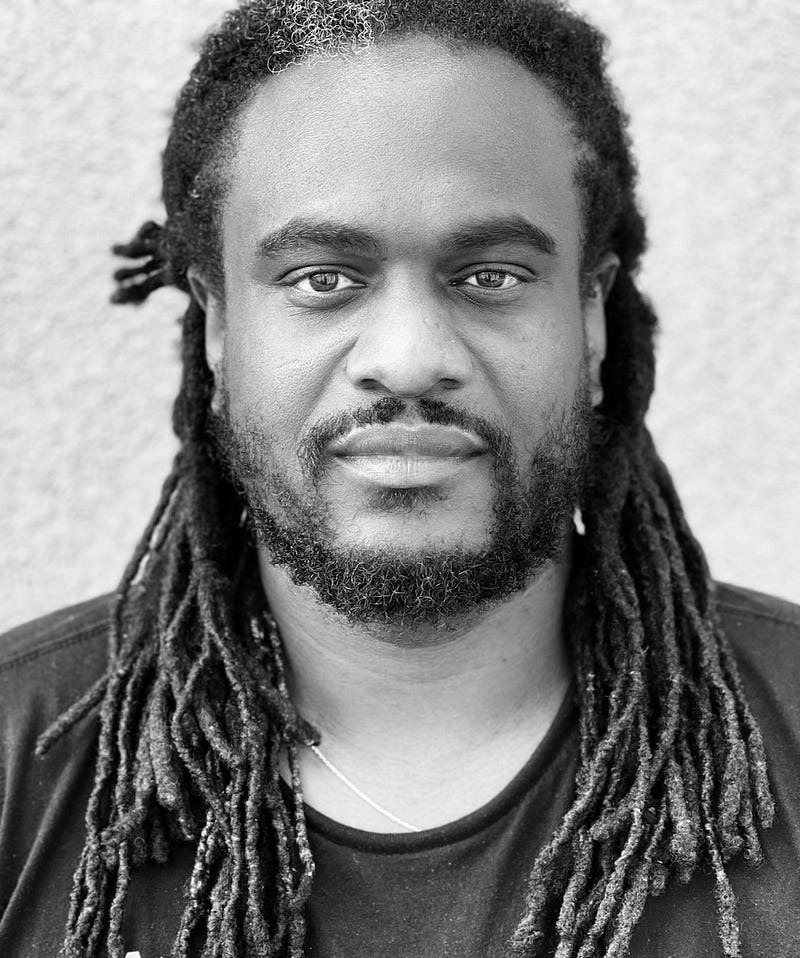
My interview with Brandon Broussard, Hudson Obayuwana, and Jana Savage, the writing team behind the 2021 Black List script “Homecoming.”
Murder Ink consists of three writers (Brandon Broussard, Hudson Obayuwana, and Jana Savage) who wrote the comedy feature script “Homecoming” which not only landed on the 2021 Black List, but also sold as a spec script to Lionsgate in January of this year. Recently, I had the opportunity to talk with the trio about their backgrounds, the inspiration and writing of “Homecoming,” and where their careers have gone after making the annual Black List.
Today in Part 4 of of a 6-part series to run each day through Sunday, Jana, Hudson, and Brandon talk about what it felt like to learn their script “Homecoming” had made the annual Black List.
Scott: Okay, let’s talk about Sweet Milk. Now, this, I think, must have been a very fun character to write, I would imagine. Here’s how you introduce him in the script:
“Sweet Milk, 30s, an eccentric brother in harem pants, matching tunic, Yeezy boots, and a flat brim women’s fedora that only he could pull off that.”
I’m a big fan of Carl Jung and character archetypes. This guy is like trickster, personified. He gets in and out of stuff. He’s an ally, he’s an enemy.
How much fun was it to write this character? Where did this character come from? Was this someone that you knew? Is that how this character came to life?
Hudson: Yes, and yes.
Jana: I think for me, it was so fun because I love absurdist humor and my writing partners do not. So, we tend not to write it because collectively, that’s not our voice.
Sweet Milk allowed me to pitch some ridiculous things that I would normally be told to “save for my play,” which is our response to things that we know are not going to go in the script. That was my part of the reason I loved Sweet Milk so much.
Brandon: Jana, I thought you were going to tell a story about a Sundance.
Jana: Oh, yeah.
Brandon: For years in the writers’ room, we had told Jana about the Legend of Sweet Milk. He was a wild dude who could get himself out of any situation so cut to Sundance…
Jana: Yes, I’ve heard the legend of Sweet Milk, and all of a sudden we’re sitting, having dinner and this person appears at our table.
Hudson: He runs up to the table, he sits down. He’s like, “The feds are after me, whoa.” Then he doesn’t rush off, he just completely stays in character. And we’re like, “Jana, meet Sweet Milk.”
[laughs]
Jana: I was, “Oh, OK, that makes sense.”
Hudson: Now I get it. She was like, “Oh, he did not disappoint.”
Brandon: Later that night, we found out he was there because he was in the movie, “Sorry to Bother You,” which Boots was premiering at Sundance. He texts us later and says he can get us into the party.
Hudson: You can’t go into full detail here for spoilers.
Brandon: I’ll say this. He said that he could get us into the Sorry to Bother You party and you read the script. Anybody can download the script. That night, that story that we put at Homecoming actually happened at Sundance and I was the one that got yanked out of the club. So, I really was JB in real life.
Hudson: With Danny Glover in the bags of ice, that was a true story.
Brandon: All that.
Scott: You’ve already broken the code here, you’ve got Danny Glover.
Brandon: Right here.
Scott: How did you script this thing? There’s so many characters, so many subplots, so many setups and payoffs. How did you figure out the plotting on this thing? Must have been quite a process.
Jana: We have a process we do every time. First, breaking our characters. That’s where we always start is the characters. We take the time to write these long descriptions and where they come from. Then we move into the broadest of the broad beats. That’s definitely something that we do on a board.
Brandon: The character descriptions inform the plot. Even with a pitch we’re doing right now, we’re trying to figure out what it was. We’re like, “All right, let’s remember our process. Let’s go off and write these characters.” Of course, we write the characters, and then we’re like, “Oh, there’s the story in here.”
Just really quickly, and this is not a direct answer to the question, but I think that we always evolve as writers and always get better with every experience. We had come off doing our second rewrite on a spec script that we sold to New Line. As frustrating as that process was, it took a couple years, we learned so much in that last pass with our setups and payoffs, and what the studio wants it. We had also learned a lot working on Universal Studios about trailer moments. After combining things we had learned from multiple studios around the town, it was the perfect timing to write Homecoming. Because we were using all that knowledge.
Jana: Obviously, there’s three of us, we come from very different backgrounds. We have very different opinions. We have different sensibilities. You put three people in a room, a virtual room, every point is debated, every character. By the time we have our first draft, we beat the shit out of it, the three of us. That helps. It’s so overwhelming. Like you’re saying, there’s so much in any script. There’s so many characters. There’s so much detail. There’s layering. For us, sometimes there’s three people to catch it, it’s like a filter. [laughs] If one of us misses it, someone is going to catch it when we do our layering pass. We have our rough draft and then we have our layering pass, and that’s always very important.
Hudson: Tracking.
Jana: Tracking.
Hudson: To complete the original thing about process of like, we start with the characters, then we get into the broadest of broad beats. Then as we say, “OK, we know these are the main beginning, middle and end of our story and a couple of things we want to see in between.”
We just continue to flesh that out and we’ll outline. I know different writers have their own process. Some people would sit down at a computer, look at the screen and start typing some stuff. But we outline to death. We know going into it the beginning, the middle, the end, every single scene, heading, what happens from start. Before we start writing, we know everything that’s going to happen in the movie. We take a good amount of time to outline and we’ll have a 25‑page outline before we start writing.
Brandon: Then lastly, I’ll say, it’s also the magic. Because some shit happens in the room that you don’t plan for. It’s like X happens and that triggers Y. An example in Homecoming is, we didn’t originally have Sweet Milk knocking JB’s phone into the fountain. We had this problem because we had a draft where he’s supposed to get professor Winters number. It’s like, “Why can’t he get in touch?” Then we got him knock off his phone in the fountain and it didn’t work anymore. I was like, “He’s going to have to write it on paper. And that can get destroyed. Then he won’t have a way to contact.”
Hudson: Then when he was in the Uber, it was literally one of those things. This might have been a whole different draft. It was like, “When she throws up, he uses the napkin.” That’s one of those in the room things.
Scott: I want to ask one more question about tone. How did you determine the tone of this thing?
Hudson: A lot of arguing. [laughs]
Jana: Hangover,” that’s a movie that we all love. For us as long as the characters are grounded, we can put them in insane situations, because then their reactions can still be grounded. That’s kind of why it works for us collectively our tone of humor. As long as that’s happening, then it works for our Murder Ink voice.
Brandon: Part of the debate would be like, “They had a tiger in a car, and we were OK by that point.” It’s like, there’s a certain point in the movie where the audience is along for the ride, and they will forgive some things. It’s like, “It’s OK.” Or in “Bridesmaids,” she pooped in the middle of the street in a wedding gown. But it was still a debate. Sometimes we were worried. We sent it off like, “I don’t know. Did we go too far? Did we do too much?”
Scott: Those are the trailer moments, right?
Jana: They are.
Scott: Let’s cut to December 13th, 2021, which in the rest of the world is December 13, but in Hollywood in the morning, that’s the second Monday of December is the Black List annual rollout. Were all tracking it?
Jana: We were tracking it for sure. We had a feeling. Our agents…
Scott: APA, right?
Hudson: Yeah, we’re with APA. On the film side, we’re with Halle Mariner and Adam Perry.
It wasn’t something we thought about when we were writing this. We wanted to write something that we wanted to see, that we thought was fun and funny and would be universal. We didn’t write this with the intention of Getting on the Black List. That was never the goal.
Jana: In general, it’s a goal but…
Brandon: We didn’t know of comedies getting on there like that. I never thought it was a possibility
Hudson: When our agents mentioned that they thought there was a shot that this could happen based on the feedback that they were getting from the executives and people around town who were reading it, we were like, “Oh, wow, that’s really cool.” It’s not something we were thinking of or had the date circled in our minds before that. Then, when that day came around, [laughs] we were definitely like…
Jana: Damn, we want this.
Brandon: We were reading the tea leaves. There was a video that came out to tease that the Black List was having their rollout. We heard them say something about name of a writer’s group that was named after rappers and that they didn’t know you could do something like that. I was like, “Oh, shit, maybe that’s us.” Still the morning, we were waiting and refreshing our Chrome pages or YouTube pages, trying to see if it was going to be us.
Because even still, I felt like we were one of the last announcements or something like that. We were waiting and waiting and waiting. Then as soon as Hudson saw it, he sent us all screenshots It’s a huge deal. We follow Franklin Leonard on Twitter, I follow you. I followed you for years. It was a big deal for us when it finally happened.
Jana: Felt real good.
Tomorrow in Part 5, the writers of Murder Ink share some thoughts about the craft of screenwriting.
For Part 1 of the interview, go here.
Part 2, go here.
Part 3, go here.
Murder Ink is repped by APA.
Twitter: @BrandonQreative, @HuddyRozay, @TheSavageJana.
Instagram: @murderink_llc.
For my interviews with dozens of other Black List writers, go here.