Interview (Part 4): Laura Stoltz
My interview with 2023 Black List writer for her script Last Resort.
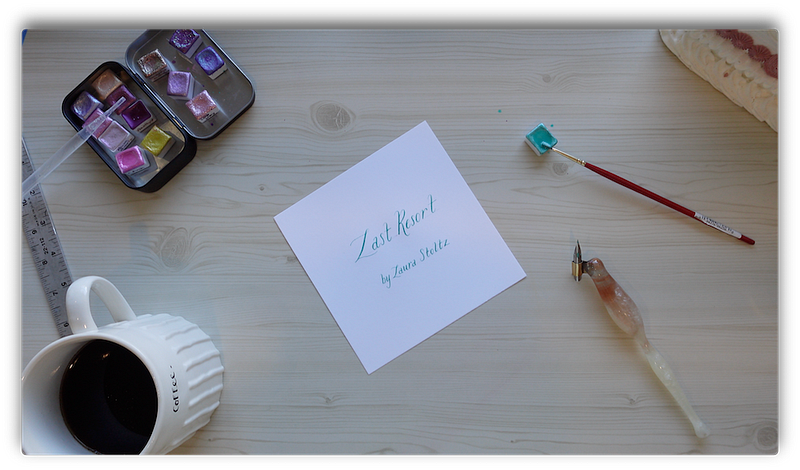
My interview with 2023 Black List writer for her script Last Resort.
This is a special interview for me: Laura Stoltz is one of my former students. She wrote a complex, compelling screenplay “Last Resort” which was named to the 2023 Black List. Recently, I had the opportunity to chat with Laura about her creative background, the craft of screenwriting, and the challenges of writing a script with such dark subject matter while infusing it with considerable humor.
Today in Part 4 of a 6-part series to run each day this week, Laura reflects on a saying which inspired her in writing the script: “Grief is love with nowhere to go.”
Scott: I actually was in Geneva in the fall, and one of my wife’s cousins is a doctor there. She told me that Switzerland does have right-to-die facilities, and they have therapists, counselors. You have to meet with them several times because they want to make sure that the person is decidedly determined to do this.
Just from a logical standpoint, a realistic standpoint, you’re on target there with your script, but from a screenwriting standpoint, what to do about it is I think you’ve got four sessions, if I’m not mistaken.
That gives you these little flag poles, these little points that you can go to where you can hear the inner life, the inner feelings, the inner thoughts of Georgia in these conversations with Margaret…
Laura: Exactly.
Scott: Georgia wants to know why Ruby committed suicide, but there are deeper psychological reflected in her actions. First, she’s trying to find this place called the Orchard, where she believes that that’s where Ruby is buried. That’s the first goal, but then she discovers that the Orchard doesn’t yet exist and that point of fact, there is no gravesite.
That’s like, her body is been composted and it’s all over. Could you talk a bit about that evolving conscious goal that she has and how that evolves in your story‑crafting process?
Laura: I wanted her to have that question. Maybe just from a personal standpoint, if somebody close to you passes away by their own hand, you want to know why.
It’s a natural question to ask, and I was following her, letting her lead on the page a little bit like, “How is she going to find out why?” Ruby didn’t leave a note, but maybe that’s what she’s looking for.
Maybe she thinks that if she goes to where she is, something will come to her or maybe she will have left her a trinket or something. I was putting myself in her shoes, asking myself the question, saying, “What would I do if I was faced with this thing?”
It just so happens that normally when you ask that question, in real life, it leads to dead ends and it’s very frustrating. It was just how many dead ends and obstacles can I put in this person’s path who’s on a quest for this answer that may not even be able to be answerable? It was all about obstacles.
Scott: It’s a little bit of a clue‑gathering thing, and it gives you that narrative engine. You could have told the story without the Ruby background and what do you do with that? Because of the mystery of what Ruby was and then, for example, she discovers that, “Oh, they taped all these interviews,” that gives your Protagonist a goal which drives the plot.
“If I could find those tapes,” so that gives you, again, something you can have the character do so that they’re being proactive.
I want to talk to you about the gallows humor. I call it gallows humor because literally you’re talking about death and suicide.
The moments of humor, I thought they would have been fun to write. Here’s a conversation. Jared on Page 31. “Do you think cremators charge by the pound?”
He says, “I set aside some extra money just in case, but it might make the difference between five or six pieces of bread per meal.” That’s an example of that kind of gallows humor.
Another example. There’s a woman named Anna, who we think may have been in contact with Ruby. Georgia seeks her out and Anna is in the middle of one of those ayahuasca trips. You said in the scene description, “The puking stage of an ayahuasca trip.”
Georgia is like, “Is the orchard real?” Anna is like, “No, nothing’s real. You’re not real. Oh God, I’m not real.” She pukes.”
So the script has got a lot of humor in it which seems counterintuitive given the morbid subject matter, suicide and death. Again, conscious decision or more sort of a gut instinct thing on your part?
Laura: A little bit of both. I don’t consciously try to write comedically, which is a weird thing to say when it’s coming out. Throughout my life, that’s how I deal with my own trauma. Through humor. As the famous saying goes, a spoonful of sugar makes the medicine go down.
It’s like, how do I make something dark but enjoyable to read? Because I’ve read so many…just heartbreaking, dark scripts over the years that I…why not try to make it fun, I guess? It’s a weird thing. I wish in the log line at the very end in parentheses, I could say, “It’s a comedy,” [laughs] just so that people understand. It’s so hard to get tone across in a log line.
It was half-conscious and half-that’s how I tell stories. When my grandfather passed away, we were all in the hospital room in Winston‑Salem and they unplugged him from his life support and we were all around him. It was a nice, peaceful moment.
This poor orderly who was probably 18 years old, came in to change the trash and just looked at him and looked at the plug and looked at us and was like, “Did you guys know that he’s unplugged? We have to get somebody to plug this back in.” She started freaking out. We were like, “No, no, no, don’t plug it back in.”
The color drained from her face. I felt so bad for her but it was very, very funny. My Uncle and I giggles for probably two hours. The rest of the family wasn’t pleased with us, but that made it funnier. I absolutely adored my grandfather, by the way. I always gravitate towards the funniest thing in a traumatic moment just to help get through it, I guess. That tends to be in my writing as well.
Scott: You’re dealing with death and not just death, you’re dealing with suicide. It could very have easily drifted way off into melodrama had you not had two very lively, vibrant personalities in Georgia and Jared. I just thought you hit … it’s pitch‑perfect. There are times where it’s very dramatic and then there are times where it’s very funny. I was so impressed with that.
Here’s another thing I want to talk to you about that I thought you did really well. Plot twists and there’s several of them.
I’m not going to give away the ending at all, but Jared, who we think is this dude traveling to this suicide spa for the first time, then on Page 34, we find out he’s been here before.
That’s a ticking clock because at some point that secret is going to come out and there’s some other stuff about his background there, too. Again, was that a conscious thing, or did that emerge in your story‑crafting process if you knew you wanted to put some twists in the story?
Laura: I did not know about that particular twist at first. That was, and I have to give full credit to my writing group for that one because I wrote the thing and then one of them just said…She’s another UNC alum. She said, “What if he’s been there before?”
It’s like when somebody says something and it’s a light‑bulb moment, you’re like, “Of course,” and you can’t see it because you’re so deep into the script.
You actually did that with my script, “Utopos” years ago. I remember we had office hours to discuss the script and you said something to the effect of, “You’ve thought about the obvious twist, right?” I was blank like, “What’s the obvious twist?” You came out with it and I was like, “Duh, obviously.”
[laughter]
Laura: Sometimes you need somebody else to look at it and go, “You’ve built this thing. And this is also fun thing that could happen within the thing you’ve built.”
So yeah, I give credit to my writing group for that one. The other ones, it just iterations upon iterations. This was more of a thriller when it first started, just because I was…
I didn’t know whether I wanted to write it to try to get it made, or whether it was just going to be more of a voice sample. I was, “OK, the more commercial version of it is that it’s a mystery, right?” She turns up at this place, and she ends up at the midpoint wanting to leave.
She’s gotten what she needed. She wants to leave. The twist is she can’t. It could be a sci‑fi thing where they’re harvesting, whatever, organs and that you can’t leave once you’re there…I went down that route for a long time.
The idea that they couldn’t leave was just stuck in my brain like handprints in concrete. When somebody said, “Well, what if he’s been there before?” I went, “No, no, no. He couldn’t have been there before because they can only go once. What are you talking about…?”
Once you get rid of that initial gut punch to your ego, sometimes these suggestions other people make are really helpful. Sometimes.
Scott: It works for Jared’s character beautifully because it does speak to the fact he is afraid. He’s afraid of making a final commitment. We see that arc in play.
What I want to talk to you next about is when Georgia does find out that this happened. She’s having these conversations with Jared. This is before she discovers that he’s been there before.
There’s a vestige of your thriller script in there because Georgia sees a deadly skydiving incident — when I read that scene, I gasped, then laughed, it was so surprising — and she thinks one of victims was this Anna person who said she was going home. She even says, “They could be harvesting bodies or something like that.” There is a vestige of that still in the script, right?
Laura: Definitely. With her being this NPR investigative journalist person, it’s only natural for her brain to go there. Also, she’s looking for any reason that her fiancé might have not done this to herself. She just wants so badly for the answer to be, “It was against her will. She didn’t choose to leave me.” That’s the things that she’s latching onto at that point, for sure.
Scott: She has an interesting arc. The Want is to try and figure this out. There’s a deeper Need, which is basically to discover that part of herself that wants to continue to live.
That desire to figure this out is like…Joseph Campbell has that quote. He says that the events in the outer world are really incidental. That fundamentally, the hero’s story is an inner journey.
It feels like all these little twists, like “I need to find this videotape. I need to talk to this person. I need to find the location. I need to find the orchard.” She’s trying to busy herself in some respects to avoid doing that inner work. Does that feel correct?
Laura: Absolutely.
Scott: Then Jared has these moments of insight. He says at one point, “I don’t think finding out why is going to make you feel any better. She’s still going to be gone when you wake up.”
You even have a quote in there at one point. I think, if I’m not mistaken, that Georgia says it. There’s a quote from, I sourced it, Jamie Anderson, “Grief is love with nowhere to go.” When did you hit on that, because that seems like a pretty important theme in the story?
Laura: I’m a big Redditor. I lost my father in 2020. I latched on to a couple of these grief subreddits that were incredibly helpful. That’s a quote that pops up on there all the time.
Scott: All the time.
Laura: It just stuck with me.
Tomorrow in Part 5, Laura talks about what her experience has been like being named to the annual Black List.
For Part 1 of the interview series, go here.
Part 2, here.
Part 3, here.
Laura is repped by Heroes and Villains Entertainment.
Instagram: @lestoltz
Twitter / X: @yostoltz
For my interviews with dozens of other Black List writers, go here.