Interview (Part 4): Kayla Sun
My interview with the 2023 Nicholl Fellowships in Screenwriting winner.
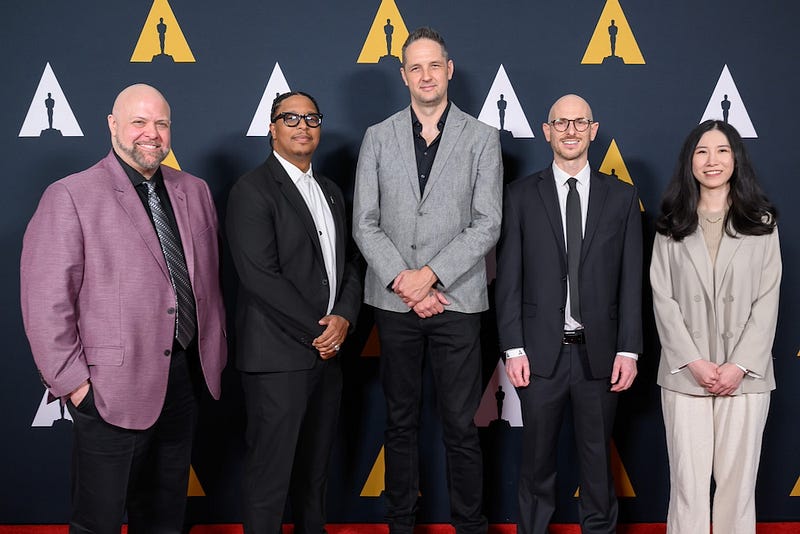
My interview with the 2023 Nicholl Fellowships in Screenwriting winner.
Kayla Sun wrote the original screenplay “Boy, Girl, Fig” which won a 2023 Nicholl Fellowship in Screenwriting. Recently, I had the opportunity to chat with Kayla about her creative background, her award-winning script, the craft of screenwriting, and what winning the Nicholl Award has meant to her.
Today in Part 4 of a 6-part series to run each day through Saturday, Kayla discusses setting up expectations in her script, then subverting them by surprising the reader.
Scott: Velare really sells it. I mean, when you went on 86, she says:
“Listen to me, Aden. In a few years, you’re going to meet a beautiful blind girl. Her name is Gilly Lamorne. She’s our age. Kind, optimistic, a talented violinist and best of all, she can’t see anybody. You will be normal to her all the time. It’s what you’ve always wanted, right? You will give your purple stone to her. It will mean that you are finally done trying to avoid love. She is perfect for you.”
You really sell it in the script. We even see a visual of that moment. We think that is going to be the ending. And you’re saying that originally it was the ending. Is that right?
Kayla: Yeah.
Scott: And so that does make sense. I mean, that is like the perfect ending for him. And it is a tragedy in a way because of the relationship that we feel has developed between Aden and Velare. But then people in your writers group are saying, “We want them to be together.”
Kayla: Yeah, everyone who read it wanted them to be together.
Scott: So what you’ve done is this classic Hollywood ending where they say, give the audience what they expect, which is the down ending. But then give them what they want which is exactly what you do in the story here because we were, “He’s going to end up with this blind girl,” but then he’s with the Velare and they have a moment, I don’t want to quite give it away, but they do end up together.
It’s really quite lovely. What was that like for you to make that change? When you wrote that ending, that new ending, did that settle with you? Did that feel good? Did that resonate with you after having given up that other ending?
Kayla: I actually think that was much better because I realized that I was putting off writing the script before, because it ended almost like a tragedy. But I personally like to have more optimism. I like to live with hope. So when I finally made a decision that they’re just going to end up together, that this is a real fairy tale, I was very satisfied and I thought it made sense for their characters to overcome the things that they were always afraid of.
Scott: Yeah, right. That goes back to the character arc. Because he literally rejects, “I don’t want perfect,” he says at one point. And he does something very dramatic with the purple stone. And there’s a wonderful little visual here:
“Aden raises her higher. The passers-by chuckle at the sight of a boy lifting a girl up. They look like any other ordinary couple. But in Velare’s POV, she is flying in the air. The height of being raised up and the swift speed of the spin completely bring Velare into a childish state. She laughs for the first time like everyone else does.”
It’s really a lovely… lyrical.
Kayla: Thank you. Yeah, I first had it end in a conversation, but then I thought that lacked impact. So I looked at the last scene, I thought, what image can I end on? And I thought, OK, when he holds her up and she thinks she’s flying in the air, that is a perfect moment to end for them.
Scott: Yeah, visual storytelling. Your director’s sensibility.
[laughter]
I was so impressed that you had a lot of storylines going on. How did you organize all that? Are you the kind of person that uses index cards or whiteboards?
Kayla: When I sat down to write it, I was already pretty sure of what was going to happen, so I didn’t really need to organize those. I knew what the next scene was going to be when I was writing because I had thought about the story for a long time.
Scott: Do you use cards at all or how do you outline? How do you approach prep writing?
Kayla: I don’t do a strict outline. I just have documents where I write down my thoughts sometimes. And at some point I would know, OK, the story is ready to actually be written in the script format.
Scott: So a lot of internal writing?
Kayla: Mostly internal.
Scott: OK. Lovely script, really just wonderfully written, and very evocative. It’s like right in my wheelhouse, I hope somebody makes this thing. What is the status of the script at this point?
Kayla: We do have a production company now. They’re actively trying to develop this. So if we’re lucky, we will get to make this film.
Scott: OK. Well, I’m going to lobby for you to direct it. Just feels like it’s so personal, you should do it yourself. Let’s talk about the Nicholl experience. Had you been submitting scripts along the way to various competitions over the last few years?
Kayla: Yeah I sent my first script to maybe seven or eight contests. It was a pilot and became a finalist at the Austin Film Festival. I went to their writers’ conference and it was also a great experience, so after I wrote this feature script, I also sent it around and it placed in a few competitions.
Tomorrow in Part 5, Kayla shares what it was like to win the Nicholl and experience the award recipient week in Hollywood.
For Part 1, go here.
Part 2, here.
Part 3, here.
Kayla is repped by Bellevue Productions.
For my interviews with every Nicholl Fellowships in Screenwriting winner since 2012, go here.