Interview (Part 4): Juliet Giglio and Keith Giglio
My conversation with the screenwriting couple whose first novel The Summer of Christmas has just been released to the public.
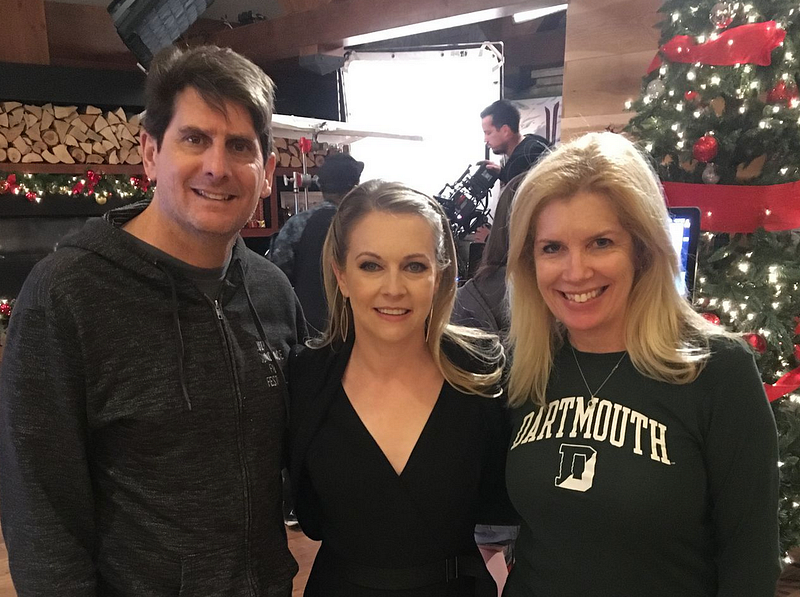
My conversation with the screenwriting couple whose first novel The Summer of Christmas has just been released to the public.
Juliet Giglio and Keith Giglio are a husband-wife screenwriting duo who cover a lot of territory of interest to Go Into The Story readers. They write everything from studio features to TV movies and now novels with the release of The Summer of Christmas. They also teach screenwriting: Juliet at SUNY Oswego and Keith at Syracuse University.
Recently, I had an entertaining and informative interview with the pair. Today in Part 4 of a 6-part series to run each day through Sunday, Juliet and Keith reveal how they pitched The Summer of Christmas as a novel and landed a two-book deal.
Scott: Let’s move into the next part of the plot here for The Summer of Christmas:
“The last thing Ivy wants is to come across Nick, the childhood bestie and long‑term lover, the man who broke up with her just before Christmas five years ago.”
“With no other choice, Ivy goes back home, determined to prove that she moved on. After all, she’s in a relationship with Drew, the producer of this film.” Let’s talk about these two guys, this romantic triangle. How did Nick and Drew, separately, how did they come into…How did they emerge in this?
Did you know that you were going to do a romantic triangle from the get‑go?
Juliet: We sort of did. We liked the idea of triangles a lot. We think these guys are so opposite. Drew is very LA. He’s like a lot of people we know.
Keith: Surfer dude who doesn’t surf.
Juliet: He’s the son of a famous producer. Grew up in Malibu. Then there’s Nick, who is the son of a winery owner in upstate New York. Very different guys. One can really help her career, but one really loves her. I think that was the idea.
When we first started the book, Drew didn’t pop up until later. The bigger idea we had was that we wanted Amari, the actress who was playing Ivy, to try to fall for Nick as she tried to get into character. Because of that, we felt like we needed a foil for Ivy. Ivy needs something. That made a lot of sense. There are a lot of producers who date their screenwriters. I never did.
[laughter]
Scott: Was this a conscious thing? Ivy is so distraught about the way the relationship goes. When she writes the script, she basically writes the Nick character off… she whacks him, like dead. Meanwhile, Nick has his award‑winning wine called Poison Ivy. Was that intentional?
Keith: 100 percent intentional. He’s like, “You killed me.” “You named this wine after me.” [laughs]
Scott: Here’s the next part of the plot:
“However, just about everything goes wrong as the heroine playing Ivy gets too close to Nick.” That’s Amari. “Ivy is still very much confused about her feelings for him. Ivy needs to get her life back on track and decide what she wants if she hopes for happy ever after.”
You actually kind of doubled down on the complications. It’s more of a romantic quadrangle because you had Amari in there.
Then I started going like, “OK, Keith and Juliet must have seen A Philadelphia Story or some of these other wonderful screwball comedies.” Do you find yourself leaning into that kind of content, the witty banter?
Juliet: His Girl Friday. We watched a lot of those old movies a bunch of times while we were writing this book.
Keith: I always tell students the language of Hollywood is film. Growing up, I always wanted to be in the film business. I always loved movies about movies.
Scott: You mentioned how you sold the thing. When you say you pitched it, I’m curious. People would say, “What does that mean?” How did you pitch this project?
Juliet: Actually, it was all written down. We pitched the one‑liner to the person who became our agent. From there, we had to write three chapters. We had to completely outline it. Our agent gave us some notes, helped us tweak that. From there, she actually crafted the pitch that was sent to the 10 publishers, or however many they sent to. Our agent is Haley Heideimann at WME and she’s terrific!
We had never had to go into a room. We didn’t even meet the publisher until she wanted to buy it.
Keith: Here’s a big difference. As you know, when you pitch a screenplay or send something in, you have no idea when anyone is going to respond, if they are ever going to respond. What I love about books is like, here’s the material, we’ll be talking about this on this date. That’s it, “This is the date. You want it? On this date, let us know. If you don’t want it, let us know another date.”
Juliet: There’s a deadline of a week or two when material is sent to publishers. We knew pretty quickly, which was nice.
Scott: The screenwriter’s life, it’s hurry up and wait.
Juliet: It really is.
Scott: They want it now. Then it’s like, OK. One week, two weeks, three weeks…
Juliet: The lag time is different though. Typically, the time from when you sell a book to when it comes out is two years. Granted, screenplays can be that as well. In the last couple of years with our Christmas movies, we would be writing them in say, January or February. They’d be filmed in summer. They’d air in December.
This turnaround time is a lot slower, but there’s a whole juggernaut process. There’s a whole team behind you from the time you turn it in, to when your editor does the first round of edits, and there’s copy edits. There’s all these other readers that are checking everything till the final moment.
There’s a whole team behind you. What’s exciting is they involve you in the marketing. At a certain point, they create the cover.
That was one of the most exciting moments, for me anyway, was when Sourcebooks brought us the cover. We were like, “Wow. This is not what we expected.” It’s so much better than we could have imagined. That cover, as you can see here, it really pops.
Scott: I’m looking at it. I know from talking to other people, other authors, that it’s a big deal. The cover is a huge deal.
Keith: Whether or not you pick up the book in the bookstore, yeah.
Tomorrow in Part 5, Juliet and Keith discuss their process as a writing duo.
For Part 1 of the interview, go here.
Part 2, here.
Part 3, here.
Juliet and Keith are repped by WME.
The Story of Christmas: Amazon, Barnes & Noble, Good Reads.