Interview (Part 4): Joey Clarke Jr.
My interview with the 2018 Nicholl Fellowships in Screenwriting winner.
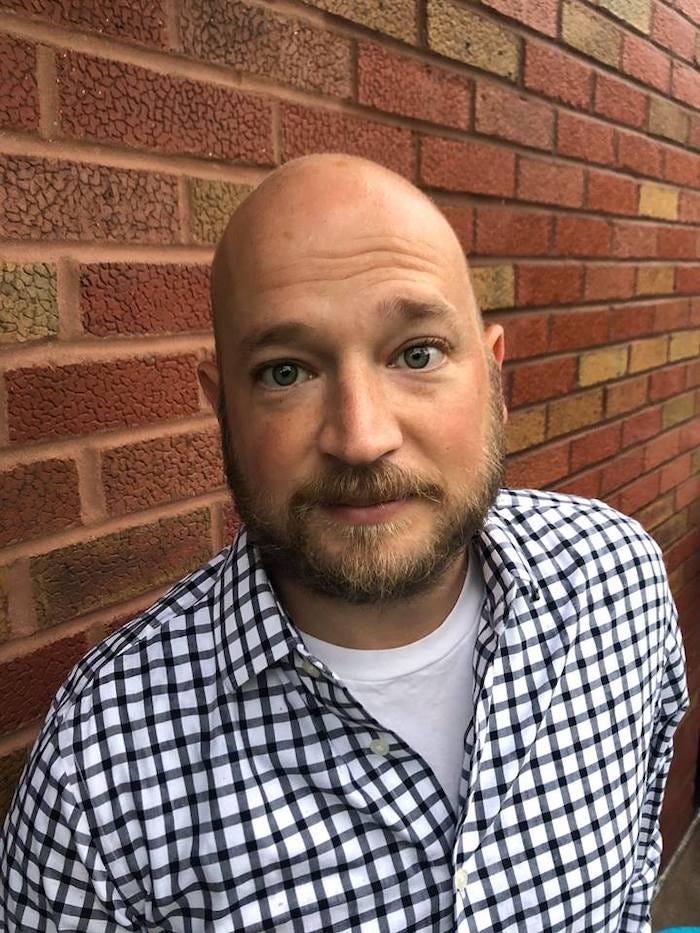
Interview (Part 5): Joey Clarke Jr.
My interview with the 2018 Nicholl Fellowships in Screenwriting winner.
“If I really feel passionate about an idea, there’s a decent chance there is at least some people out there that would also like that idea and like that movie.”
Joey Clarke Jr. wrote the original screenplay “Miles” which won a 2018 Nicholl Fellowship in Screenwriting. Recently, I had the opportunity to chat with Joey about his background, his award-winning script, the craft of screenwriting, and what winning the Nicholl has meant to him.
Today in Part 5, Joey shares what the experience has been after winning the Nicholl Award and answers some writing craft questions.
Scott: Let’s talk about the Nicholl experience.
Joey: Yeah.
Scott: What was that like hearing from the committee that you’d won the Nicholl Fellowship?
Joey: It was surreal. We got the call that we were finalists in late August. Then it was three weeks before we found out who won. Those three weeks were the longest three weeks ever. [laughs] Actually, I said I’ve quit several times. I quit in between in those three weeks. “I’m not going to win. Nobody’s been reaching out like they’re supposed to. I’ll quit.” I told my wife that. It was probably three hours, just throwing a tantrum.
Then they set it up so there’s going to…You need to be available for a twohour window for a Skype call. We knew that was going to be the day when we found out. That was end of September, September 17th. It was two hours, which in Central Time was 1:00 to 3:00 we had to be available.
I originally thought it was going to be alphabetical order, which I was going to be second. I thought it’d be right at 1:20, and that didn’t happen. It just went longer, and longer, and longer. Then I was like, “Well, there’s no way they’re going to make you sit this long to tell you, ‘You lost.’” Then I got to the point where I thought they forgot about me. Finally, at 2:55 the thing calls. It was a video chat. There was fifteen to twenty people, most of the committee in the video. I was like, “All right, I won.” Then I cried a little bit right there. I didn’t know what to say. I was just sitting there stumbling over words for five minutes. [laughs]
I said this on stage. “The whole time you’re writing and pursuing this, you have no idea if it’s ever going to lead to anything.” In that moment, it’s like, “All right, there’s validation for why I’ve been doing this.” It’s a giant door being opened and I can get there.
Scott: You are living proof of what we just talked about. Give the audience what they expect. Then give them what they want. You’re like, “Oh my gosh, maybe this is not going to happen.” Then, boom, it does.
Joey: The whole thing’s great. There’s the Nicholl Week. We go out there. They have all these seminars set up. Alumni dinner, you meet a lot of the people. I’ve read a lot of their scripts. I’ve seen several of their movies. And, they welcome you in.
I didn’t really understand what fellowship meant, but it’s a lot of people are available to help and want everybody to succeed. It’s like this little community of writers helping each other out and offering advice. I’ve already talked to a few on the phone when I’m in need of help. It’s pretty awesome.
Scott: You mentioned that there are some producers involved in the script project.
Joey: Yeah. I haven’t signed anything, so I don’t know how much I can talk about it. I have producers who are pretty great — both professionally and as people. They’re helping a lot. They actually passed my script along to who ended up being my managers. My manager and them are working together to get Miles going. And, I’ve done a couple rewrites on their notes.
Scott: You can tell me who your manager is.
Joey: A newish company called Fourward. Jon Levin, he’s the head of the Feature Department. Then Sean Woods and Theo Vieljeux are his younger guys. I work with those three. They’re all good people. A lot of good ideas so far.
Scott: You can say hello to Jon. He was my agent at CAA for 10 years.
Joey: Was he really?
Scott: Yeah.
Joey: That’s awesome.
Scott: You’ve been rewriting this. You got to do a rewrite on this or write another project for the Nicholl…
Joey: Yes, I’m working on…The rewrite doesn’t count for this. Since I finished that rewrite, I’ve started the next project for the Nicholl. You got to turn in pages every quarter to keep getting the checks.
You can do more. They said people have turned in one new script each quarter in the past. I can write more than one script in a year at the pace I usually go, if the script goes well and I don’t run into a bunch of problems. I’m probably going to try to do two.
Scott: That’s a nice segue into some craft questions here. First up, a simple question, but it’s one that people stumble over because they don’t think about it so much. How do you come up with story ideas?
Joey: I don’t know. I can tell you when they do hit me, I have a file on my computer that I write down ideas. I just keep a list of what I consider good ideas going. Probably most of them I’m never going to get to, because I have new ones come before I can finish ones I’m working on.
Sometimes, there’s just a seed of an idea that resonates in my head for a while. For “Miles,” I wanted to write two kids on a journey in an ’80s throwback type thing. It was in my head for a long time, different pieces you pick up here and there.
You might get those pieces just walking around. I have a lot of ideas when I’m walking the dogs or driving, for some reason. I have a lot of ideas in the shower even. Obviously, watching movies, you get ideas. You’re not going to plagiarize the movie, but you can draw from things, the emotions those movies project. Just being out in the world, you come across ideas.
I don’t think anybody…I’m sure nobody really tells you they sit down and start writing and ideas come to them.
Scott: That said, when you come up with an idea, are you the kind of person that thinks, “OK, is this a strong story concept in terms of marketability, presumably,” or are you just someone who’s like, “OK, this is a story idea that I feel like I’m really passionate about writing, and I’m just going to go with it, no matter how marketable or viable I think it is?”
Joey: I’m a lot more on the passionate side. I do try to think if people would watch it. It’s changing now, but I’m not ever that concerned about if there’s other people out there that are looking to see it.
There’s a Taylor Sheridan quote. He said something along the lines of, “I write the movies I want to see and just assume I’m not that different from other people.” I think that is incredibly true, even though I like to think I’m unique, I’m not. If I really feel passionate about something and about an idea, there’s a decent chance there is at least some people out there that would also like that idea and like that movie.
“Miles,” in particular, I thought it was an idea that would do well in the Nicholl. That’s why I wrote it. I didn’t even pitch it at anybody, just because I didn’t want to get talked out of it.
Scott: See? You were doing a little bit of market research there. You’re thinking, “Oh, OK, so this could be a Nicholl script.” It does read like a script that would slot in with their sensibilities.
You talked about your prep writing process in terms of starting off with three lines and going to a page. Then going to notecards and working it out six times and whatnot.
Let me ask you a question. How do you go about developing your characters? Are there any specific things you lean into or rely on to have them come to life?
Joey: Yes. A couple of years ago I just Googled “character template,” and I just found what I liked. I filled out this template. It’s probably five pages of just general information about the character and background, what they like, books they like, and things like that. I go in and start doing that. I’ve been using that template for awhile.
That doesn’t always stay true to who they end up being when I go and actually start writing it. I start with that to get a general idea of ’em. With the last couple scripts I started to do, I’ll write a couple scenes with those characters that would take place before the movie. It helps me develop their voice.
Then I also just use those scenes as something that happened in their life, even if it has nothing to do with the movie. This is just something that happened in their life that I know. That’ll help me get an idea of who they are.
Scott: That’s one way you go about finding the dialogue is by writing a scene that may or may not end up in the movie.
Joey: Yeah.
Scott: Are there other things? The dialogue in the script is great. Are there other things that you do to help find the dialogue?
Joey: Not really. I write fat at first and then cut it back. I try to keep it as slim as possible. I still get some parts where I have bigger chunks of dialogue than I’d like to have, like telling a story or what not.
For the most part, I try to keep the dialogue as slim as possible and just stay true to their voice. I don’t specifically try to have…I don’t know. I don’t have this person has this in their vocabulary. This person has this.
I am aware that this character might have an elevated vocabulary or whatnot, but it comes more naturally when I’m just writing it out and then go back and edit it. Then I’m actually putting a lot of thought into exactly how this person would talk. I try to write like people talk.
Scott: That’s especially true with dialogue is that you’ve got to come from a feeling place, really immerse yourself, get into the characters’ heads, and just put the whole rational thing out the window. You can always edit it, but you need to come from a feeling place, right?
Joey: Yeah, absolutely. I believe strongly in writing it as it plays out in your head and then going back and trimming the fat and shortening it.
Tomorrow in Part 6, Joey provides advice for aspiring screenwriters about learning the craft and breaking into the business.
For Part 1 of the interview, go here.
Part 2, here.
Part 3, here.
Part 4, here.
Joey is repped by Fourward.
For my interviews with every Nicholl Fellowships in Screenwriting winners since 2012, go here.
For my interviews with 53 Black List writers, go here.