Interview (Part 4): Jimmy Miller
My interview with the 2023 Nicholl Fellowships in Screenwriting winner.
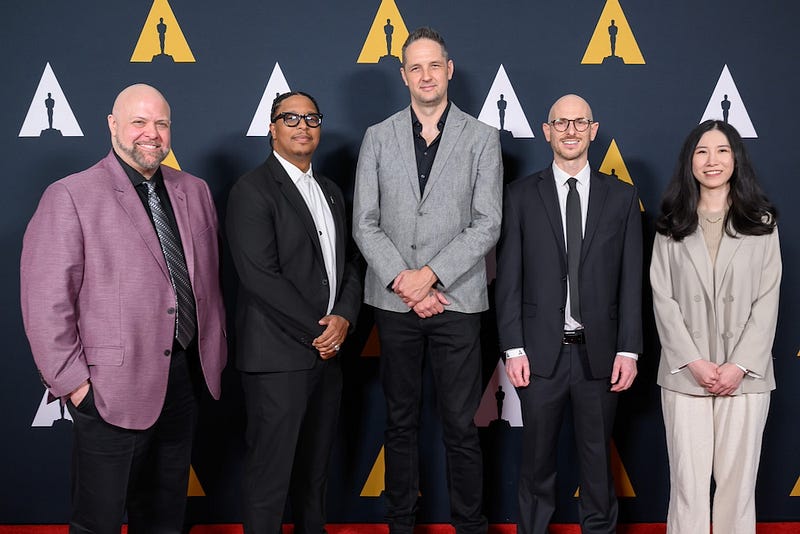
My interview with the 2023 Nicholl Fellowships in Screenwriting winner.
Jimmy Miller wrote the original screenplay “Slugger” which won a 2023 Nicholl Fellowship in Screenwriting. Recently, I had the opportunity to chat with Jimmy about his creative background, his award-winning script, the craft of screenwriting, and what winning the Nicholl Award has meant to him.
Today in Part 4 of a 6-part series to run each day through Saturday, Jimmy discusses the script’s Protagonist-Mentor relationship and subverting expectations with a potential Protagonist-Attractor storyline.
Scott: She moves in with her grandfather Roger. This is near, is it Austin…
Jimmy: Right. It’s a city called Flat Rock, which is based on Round Rock, Texas, just outside of Austin.
Scott: OK. So by the end of Act One, she’s living with her grandfather. Jessica is now trying to be sober. She’s studying accounting, which really pays off with her. She’s doing all the stats for baseball, which is great. But that Roger character is like an assistant coach, I think, for the baseball team, eventually becomes a coach.
But jumping ahead, he has a wonderful kind of Obi-Wan moment with Callie about the bat. He gives her a wooden bat, and he’s telling her, just feel the wood. Could you maybe talk about that scene? Because it’s really terrific.
Jimmy: Oh, thank you. Honestly, so much of this story changed because of what I was going through personally as well. And so much of what I was learning about my life is that I was worried a lot more about the result instead of being in the moment. And I had to learn how being very present with the moment really affects the outcome. A lot of that scene was me talking to myself about being right where I’m at.
And that’s what Roger wanted her to do because she was thinking too far ahead about the homerun she’s going to hit and the jog she’s going to make around the bases and just how good it’s going to feel to hit the ball as hard as she can. But that’s the thing that’s going to stop her from doing it. He wanted her to be present right there in the moment. He says, “Make it small.”
He’s basically teaching her how to meditate.
Stop thinking ahead so much, stop overthinking why you’re swinging and what it’s going to be like. Just feel the bat. You are skilled. All you have to do is see-ball, hit-ball.
If she’s really there when that baseball comes at her, her talent will take care of the rest.
Scott: Yeah, it’s great because, as you know, Michael Jordan tried to play baseball and that didn’t turn out well. There’s a line about how hard it is to hit a baseball coming at you at 95 miles per hour: The challenge of hitting a round ball square.
Callie says at one point, “I hit better when I’m mad.” And then Roger says, and you’ll always be an amateur. And then later on he says, first you have to want to fix it. She says, why am I here? A dumbass ultimatum, remember? Fine, I get it. I want to fix it. And so, of course, fixing it is not just your swing and not just about baseball. It’s about fixing yourself.
And so that little moment that you had there, and I mentioned ObiWan, it’s like that moment with the blaster shield that he does with Luke? Right?
Jimmy: Yeah.
Scott: Be here now. Be in the moment. Because if you can’t, in the batter’s box, be completely focused on that pitch coming in. It’s going to blow past you just like that. [snaps fingers] And so what that teaching moment does is say to Callie, “It’s inside you. You can do that. You don’t have to be driven by anger at all times.” Is that a fair assessment?
Jimmy: Oh, yeah. And it’s about — if you really want the best out of yourself, you have to be OK with being there with yourself and not thinking about the outcome. Because there’s both fear and joy in a potential outcome. I could strike out. That won’t feel good. People are watching me. I could hit a home run. That’ll feel great. People will applaud me.
If it’s always about the others, then your happiness is always driven by the reaction of others. But, if you concentrate on your part, how the bat feels in your hands, are your feet balanced, is your mind clear, you can live with any outcome.
I think that’s what he’s teaching her because he knows she has the physical skill. She has the ability. She is smart enough. None of that is the problem. It’s her own brain that is in her way, overthinking, being angry.
Because like you said, that ball comes at you, especially on the next level. And that’s what Roger’s thinking about. He’s thinking about the next level. It’s a fraction of a blink of an eye. So if you’re not ready, and if you’re not right there, just like you said, it’s past you and you’re out.
Scott: Yeah, it reminds me there’s a great scene of Bull Durham where Crash is up to bat and we hear him talking to himself, his inner thoughts. Trying to focus on the pitch, but he’s distracted…
Jimmy: It was about him getting out of his own head. It’s a common thing we hear athletes talk about and it’s a constant struggle.
Scott: There’s Adrianne, who is a school official, part of that kind of Jackie Robinson dynamic: “What I told you is part of my job, all female athletes walk the tightrope every day, don’t cross a line, don’t take any shit either a real dirtbag gets the job done, despite their disadvantages. You need to convince these men, you don’t have any.”
It’s like that “why it’s so hard to be a woman” speech in Barbie, you got to do all these things like way better than guys. So there’s that pressure as part of Callie’s storyline.
Jimmy: The dynamic between Adrianne and Callie has been refined over the years. I liked the idea of the previous generation being there, because Adrianne’s athletic like was very different because hers came before Title IX.
Callie is a person whose life changed because of Title IX. Because before Title IX high schools could tell you to play softball. And then Title IX decided that baseball and softball were two different sports. So if a girl wanted to play, you had to have a girl’s baseball team, or you had to let them play on the boys’ team. And Adrianne is before that time.
She dealt with a much more closed system as a female athlete. And the idea of playing against men, the opportunity to play against men, was not there for her. They are of different generations, but they still have to deal with the same shit.
I wanted to do that in this story. I wanted to show that there are many male allies that are totally on board, that are supportive. And then there’s an entire set of male enemies different in their thinking. Some of them are kids her age and some of them are men that are much older.
To me, it was important that I show it goes across generations. Some people progress and some people just don’t. It all depends on their parents, how they grew up and their experience. This is not a movie about hating men.
It was important to me to show what male allies look like and this is what men who are not allies look like, because I knew she was going to have to deal with both.
I think Adrianne is a person who reminds her, not everybody’s going to be on your side here, and as you get better, and if you start fulfilling your potential, those sides get sharper. This is about you knowing who you are and what you’re doing here, and you just can’t goof around with this.
Because nobody questions why a boy plays baseball. That’s another reason that question annoys Callie. Nobody asked Cal Ripken why he wants to play baseball. Nobody questions a boy who wants to play baseball.
But for girls, people want to know, “what are you doing here? Why are you doing this?” Callie doesn’t understand why they don’t get that it’s for the same reason boys do it. Because it’s fun. She could be rich and famous. Why else would she be there? But she and Adrianne know those questions are going to come with an edge to them because they will not be able to question her ability, but they can question her right to be there.
Scott: I want to jump to this. Earlier you said, sometimes you give them two plus two equals five. Here’s an example. You introduce this kid named Will, high school baseball player. And the way you describe him, he’s standing in the cage behind him. He’s like out of a movie. Handsome, nice hair, big smile, pat on the shoulder.
So immediately, your expectation is, OK, so this is going to be the romance story between Callie and Will. But then, surprise, five pages later, she’s noticing these girls playing lacrosse, including this girl, Lindsay. And she has the same exact, it’s like a “spark.” I think you used that phrase both times. There’s like a spark between her and Will and a spark between her and Lindsay. Which introduces an exploration of her sexual identity.
When did that dynamic emerge in this process? Was that all the way back in 2004? Or is this something that crept up in the process?
Jimmy: No, that was one of the last major revisions I did to Callie’s character. I really wanted there to be a part of her life where she felt the opposite of how she does on the baseball field. A place where she feels totally lost and scared and doesn’t have anyone to talk to about it.
She feels like such an adult on the baseball field, but in those scenes she’s very much 17–18, exploring how she loves. How she expresses that love, what feels safe and what doesn’t feel safe. I think that’s a universal experience, but for Callie, she’s very vulnerable because she does not know what to do with that part of herself. It’s been so ignored and set aside for most of her life.
But I love that Callie wants to push herself and try to ask the most basic questions. There’s a part of her that needs to know what “category” she’s in because she’s lives in the world of baseball where everything has a place and purpose. There are no gray areas. To me, the line that was important is when Callie asks Lindsay, “What if I’m attracted to both and girls? How do I pick?” And Lindsay says, “You don’t have to pick the boy or the girl, pick the one who gives you the most butterflies.”
I really wanted that. I wanted Callie to hear that she doesn’t have to fit into any category. That there aren’t really categories, it’s just all made up. Just follow where your heart leads you. Callie getting permission from another girl her age, to be exactly who she is, was really important.
Scott: Well, it’s an extension, isn’t it, of that whole thing that Roger said, you got to be in the moment. Just don’t think about the future and the past, just like the butterflies are like, what are you feeling right now?
Jimmy: Yeah. And it’s OK. It’s OK to follow it. It’s OK to be who you are.
Tomorrow in Part 5, Jimmy talks about a central theme of the script and what his Nicholl experience has been like.
For Part 1, go here.
Part 2, here.
Part 3, here.
Jimmy is repped by Marc Manus at Persistent Entertainment.
For my interviews with every Nicholl Fellowships in Screenwriting winner since 2012, go here.