Interview (Part 4): Harris McCabe
My interview with the 2023 Nicholl Fellowships in Screenwriting winner.
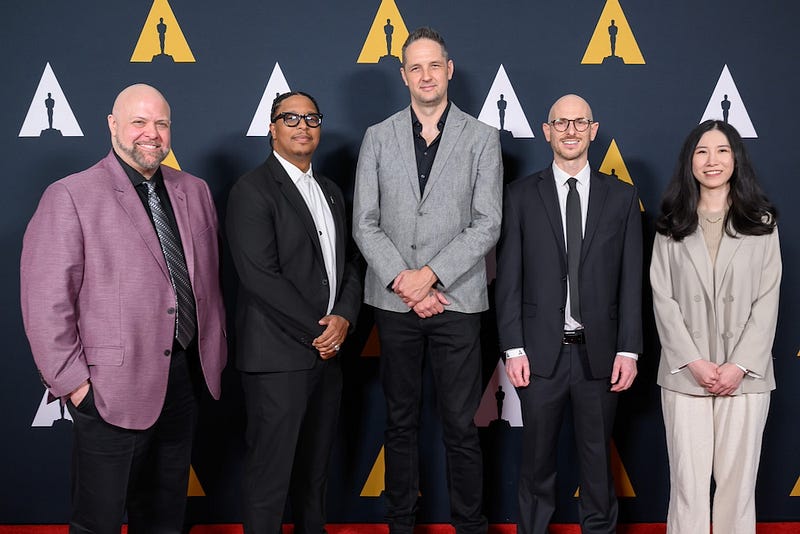
My interview with the 2023 Nicholl Fellowships in Screenwriting winner.
Harris McCabe wrote the original screenplay “Nat Cady’s Boys” which won a 2023 Nicholl Fellowship in Screenwriting. Recently, I had the opportunity to chat with Harris about his creative background, her award-winning script, the craft of screenwriting, and what winning the Nicholl Award has meant to him.
Today in Part 4 of a 6-part series to run each day through Saturday, Harris goes deep in discussing the Nemesis character in his Nicholl-winning screenplay.
Scott: Remember that Billy Wilder quote? I think he says, “Don’t give them two plus two equals four, give them two plus two.” The audience will appreciate.
Harris: They’ll thank you for that.
Scott: They’ll thank you for it. I thought that it’s an interesting point because you do throw these names out. Of course, when you’re reading a…You’ve done this. When you’re reading a script, you’re assembling the roster of characters. When someone just throws these names out, you’re like, “OK. What am I supposed to do with that?”
I thought that worked there because there’s such a clarity of emotional focus on the part of the boys, particularly Heck, on what they’re doing. I got that.
This just says to me, “All right, now I got that forward momentum you’re talking about. They’re going to go after these guys. I’m trusting now. This writer has already gotten me into this world, really done a great job in giving us a sense of the place.”
That’s going to be the forward-moving momentum to be taking these guys out. Then you do some nice little twists and turns where you cut away to…I think it’s Clark and Sorensen with the Dodd character.
Harris: Yep.
Scott: All of a sudden, you shift the point of view. There’s a couple of times when you switch point of view. I was curious about the decision making part of the process there for you in that.
Harris: I know I heard this advice within the last few years. It might have been Craig Mazin and John August talking on their “Scriptnotes” podcast about that, like, “Your number one obligation is just to be interesting.”
It’s something we take for granted a little, or at least I do, when I’m writing, is that sometimes you have exposition that you have to get out there, you have some plot that you’re trying to follow. Sometimes it can feel perfunctory because as a writer, I’m treating it as perfunctory.
I’m like, “I have to get here. I have to have them do this. I have to get this information across.” I’m not concerned with, “Am I holding the reader’s attention? Is this scene actually, in and of itself, as an isolated thing, interesting?”
I was trying to make sure that every scene I was writing was interesting. What I found was sometimes because I was so focused on the boys and their journey, I was having trouble.
Every time I wanted to give them time to breathe and they couldn’t be in the middle of something of great interest, I would think, “Oh, God, how can I make this interesting?”
I wouldn’t call it a copout, but I made a very deliberate decision to sometimes just pulled the rug out from under the audience. Introduce new characters that they don’t know. Have that moment of them going, “Wait, what? Who are these guys?”
If you write a good scene, they’ll continue to read the scene out of curiosity, but I wanted them to be a little disoriented and think, “Wait, what is going on here?” Then as long as I answered that question soon enough, I would be OK.
I think of the pot boilers like Dan Brown, or even before him, James M. Cain. You end the chapter on a cliffhanger. Then a lot of times, you go to a whole other plot line. People want to know what happens next, but you make them wait. “No, you got to read this chapter.” Then that one’s going to end in a cliffhanger, and then we’ll circle back to that earlier thing.
I was trying to end on the cliffhanger, “What’s going to happen with the boys?” and then cut to something unrelated. “Here’s something to just keep you on your toes, make sure you’re paying attention. We’ll get back to the boys in a second, and then we’ll tie the two things together.”
If I do it right, I’ll land the plane and you won’t hate me for totally diverting you for a minute.
Scott: What’s so great about it is you’re teasing the reader in a fun way because you’re planting all these questions. Then you switch over here to this storyline. At that point, again, we’re trusting you. You’ve established that trust level with the reader. I know that eventually, these guys are going to come back into the story. It’ll be interesting to see where that happens.
Also too, you’ve got that going on with the fundamental existential question of the story is, “What’s going to happen with these boys?” If they do in point of fact achieve their goal, their want, particularly Heck, whacking the guys who killed their father, well, wait a minute. Are they going to get away with it? Are they going to get caught?
That plays out underneath, along with all this other stuff that you set into motion, “Here’s a cliffhanger. I’m not going to answer it right now. I’m going to take you away for five pages.” I’m assuming that was a pretty intentional thing on your part too, to have that stuff playing out underneath.
Harris: It was intentional. I’ll tell you what was a happy accident, though. The original scene that I wrote with Dodd and his captors didn’t mention Kinderman at all, because I hadn’t come up with the Kinderman idea yet. I was still in the mindset that it was going to be Nat Cady’s old gang.
When I realized that I wanted this larger-than-life, almost supernatural character, I was like, “Well, I can’t just throw him in at the end.” Then I realized whatever bullshit Dodd was talking about, I’m sure it was a fine scene, but I went back and I was like, “Oh, you know what? I’ll have Dodd be the gateway into Kinderman, to tease him a little bit. Build him up before we actually meet him.”
As long as I plant him with Dodd and then I plant him again with Lenny at the trading post, then it won’t be coming out of nowhere that he’s in this area.
Scott: Dodd’s spinning this yarn about this Kinderman guy as a way to deflect the attention so that he’s trying to get loose. It’s not like he’s just doing it. It doesn’t come across as writer’s convenience, like, “Oh, OK, the writer just wants to introduce.”
Kinderman, let’s talk about this character because he’s like a Keyser Soze type of the usual suspects. Then by the end, when you meet him, actually, with his crew, you’re like, “Wait a minute, this guy’s like Kurtz from Apocalypse Now.
What was the inspiration for this character?
Harris: It was definitely a little bit of Kurtz. It was definitely a little bit of the judge from “Blood Meridian,” again, with the Cormac McCarthy thing. I wanted this representation of the worst version of…I didn’t want him to be evil.
I just wanted him to be the worst version of man regressing to his most animalistic…
Scott: Primal.
Harris: Exactly. He himself isn’t an animal, but he makes animals of all the people who follow him. He’s this almost religious figure for these men who go with him and become like beasts again.
I wanted that to be like, “What can I really put Cole through that would change his worldview and so jade him to the world that he becomes like his father, that he becomes a bad man?” It was this perspective of the worst of humanity.
How can you go back and think that there’s anything worth saving then if you’ve done that? Even though we know that somewhere in him is this little boy who is smart and who’s got a good heart, he can’t ever really be that again.
Once he’s had this experience with Kinderman and his gang, it’s poisoned him. Even his brother can’t save him, although he’s going to try now because he’s had his own conversion.
Scott: It’s almost like DNA. It’s like Luke Skywalker, he’s not a moisture farmer. He’s a Jedi Knight. He’s got the DNA. Michael Corleone is not…His father wants him to be a politician or a lawyer, but he’s not. He’s a mafia don.
The story this is my take on it, and I’d be curious to hear your reaction to this. They do split up, which I thought was a terrific choice. You mentioned that you inverted this. That Cole doesn’t go off with the Marshal Hoyer who is like a surrogate father figure eventually in a way to Heck.
Harris: Because that would be easy.
Scott: That would be easy.
Harris: That would just be reinforcing his own feelings.
Scott: Now, you take Cole and send him off with this really bizarre group of cannibals, essentially, living in this mystical black caves mythological thing. There, he gets in touch…He doesn’t become the guy that he becomes out of nowhere. It’s like that’s inside of him already. It’s DNA. It’s his father’s DNA.
Also, we’ve seen a couple of times in the story where he shows off some real craft. He’s crafty, probably like his father. On the one hand, you’ve got that going on, where he even says at some point, “I can’t go back. There’s no way I can go back.”
Whereas it feels like with Heck, that’s more of an intellectual thing. That’s more of a moral code. He doesn’t have the DNA to be a killer per se. I think he’s more the principle of it. Was that a fair assessment?
Harris: Yeah, Cole seems uniquely suited to survival. I think they’re both clever, they both have elements of their father in them, but they’re not the same person. They aren’t. No two brothers are exactly alike.
We don’t meet their mother, we don’t hear too much about her, but they’ve got a little of her in them too. They both could be redeemable. If Cole hadn’t gone through that, he probably would have been a good man. If Heck hadn’t gone through what he went through, maybe he could have been a bad man.
They were both shaped by their experiences. As much as Cole wasn’t ever going to be a pacifist, Heck really wasn’t meant to be a barber. [laughs] They end up fighting their nature in a way because they’re both actually good. I wanted to make it clear that they weren’t superheroes. I wanted to show them being vulnerable a few times and having things not work out the right way.
I wrote a couple of scenes that I took out, like the original scene where they interrupt a hanging. I had another one where they come across a very pious religious woman who asks them to escort her somewhere and then wants to adopt them. They have to escape from her because she’s got a screw loose.
If it didn’t connect with my theme enough, I cut all those scenes out. The one that I left was them getting assaulted by the guys at the ford and losing the rifle, because I wanted to show them screwing up somewhere early.
I wanted to show that this wasn’t in the bag. That they didn’t have the plot armor of typical main characters, and that they could make mistakes and they could end up in trouble.
Everything they did ended up guiding them to these places, but had they lived a different life, they could have ended up very different results. Like you said, they’re good at this. They have these skills. Cole is very clever and can be very ruthless. Heck has this inner morality that he’s fighting for the whole first half of the script.
They ended up in the right place for them, but it wasn’t inevitable. There were other ways they could have gone. That’s the whole idea. That we are shaped by who we are, but we are also shaped by the experience we have and the people we meet along the way, and who ends up mentoring us and who ends up raising us.
Tomorrow in Part 5, Harris talks about what the Nicholl experience has been.
For Part 1, go here.
Part 2, here.
Part 3, here.
Harris is repped by Entertainment 360.
For my interviews with every Nicholl Fellowships in Screenwriting winner since 2012, go here.