Interview (Part 4): Haley Bartels
My interview with the 2021 Nicholl Fellowships in Screenwriting winner.
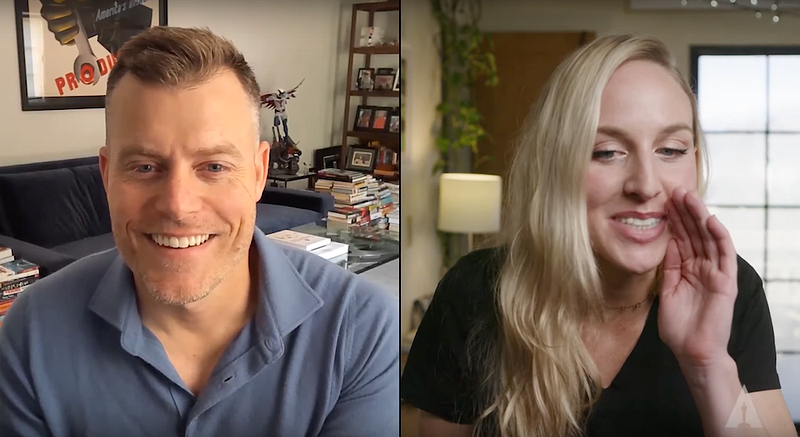
My interview with the 2021 Nicholl Fellowships in Screenwriting winner.
Haley Bartels wrote the original screenplay “Pumping Black” which won a 2021 Nicholl Fellowship in Screenwriting. Recently, I had the opportunity to chat with Haley about her creative background, her award-winning script, the craft of screenwriting, and what winning the Nicholl Award has meant to her.
Today in Part 4 of a 6 part series to run each day through Saturday, Haley recalls how Lady Macbeth was an inspiration for one of the key characters in “Pumping Black.”
Scott: Let’s talk about some of the other key characters. There’s Duncan, a God‑like cyclist because he’s so strong, a top rider. When you first meet him, it’s like, “OK, so he’s going to be the bad guy,” but he’s actually a decent guy. He’s a rival, but he’s also an ally because he and Taylor ride on the same team. Then over time, he does emerge as a nemesis type figure.
How did Duncan come into being? What were you thinking with that character?
Haley: His origin was definitely from the source text, from Macbeth. There’s the King Duncan, I didn’t even change his name. Maybe that’s lazy writing.
[laughter]
Haley: Actually, he did start as a much more antagonistic figure. There’s a version, and I actually think the version that maybe won the Nicholl, he was a little bit more of a jerk.
But it just wasn’t quite as interesting to watch Taylor descend into doing the horrible things that he does to a person that he didn’t like, as it was to watch him start as friends with Duncan and to see the way ambition corrodes that relationship and drives Taylor to poison that as well.
Scott: I think that was a smart choice. Also too, because it’s kind of counter to what your instincts would be. Again, I was like, “Oh, this guy’s going to be a jerk,” but no, he actually was a nice guy which does make what Taylor does even that much more horrific.
Let’s talk about this Lathe character, Andrea Lathe. I looked up the word “lathe.” That’s a machine for shaping wood. And what she does is basically shape this guy Taylor. Were you intentional about that, or was that just sort of serendipity?
Haley: No. I was intentional with that. I love the significance of character names.
I knew I wanted something that kind of sounded like Lady Macbeth, but still have the LA, and Taylor, his last name is Mace, which is almost the beginning of Macbeth. It’s a little more subtle. And like you said, the meaning behind the word felt so fitting as well.
Scott: She is this person who comes in and takes over. What is her position? I guess she’s like the team…
Haley: The team doctor.
Scott: She’s a piece of work, this character. What a great role this’ll be. Her dialogue. I just picked one out, where she’s saying to Taylor:
“It’s not enough to want. Wanting is for mewling babes, and impotent insurance salesmen who dream of fucking their secretaries, but go home to mash their tiny cocks into fat, nagging wives. Most people want. They ache, they lust, they whine like dogs after a distant moon, incapable of planting a flag on their desire and saying, ‘this is mine.’ Most people die strangled in the mire of their useless wanting.”
What do you think when you hear that side of dialogue, and you wrote it?
Haley: I think that it will probably get cut way down. [laughter] We’ll take a lathe to it.
Scott: Hey, you know in Bull Durham, that whole “I believe in…” monologue, the writer-director Ron Shelton is quoted as saying, “I put that in there strictly to get the actor. I had no intention of it being in the movie.” It was like actor‑bait and evidently it worked because Kevin Costner played that role.
Haley: Actor‑bait, I love it.
Scott: This character Lathe is interesting because if you think about archetypes, character archetypes, she plays the whole gamut. She’s like a Mentor because she’s going to help Taylor with the doping thing so that he gets his performance, actually makes the team because there was some possibility, quite a bit, that he wouldn’t. She’s been there before, she knows all the science, so again, Mentor. But she’s also an Attractor‑type figure because there’s this whole weird sexual dynamic between them. Then she’s also a Trickster because you don’t really know if she’s playing sides, and eventually a Nemesis. She plays the whole gamut.
The complexity of that character, could you maybe talk a little bit about how she emerged in your story‑crafting process?
Haley: Yeah, totally. Again, it started with Macbeth. Lady Macbeth is one of my all‑time favorite characters across the entire spectrum of literature. Also, in crafting her character once I had gotten to maybe the third, or fourth, or fifth draft, I was looking a lot to Black Swan and Whiplash, as sort of lode star for my teacher‑parent relationship.
What those two films do so brilliantly for their Protagonist is, the relationship with the parent really informs the relationship with the teacher. Right? In Whiplash, Andrew looks at his father, and he feels so scared of ending up like his dad, because his dad, Andrew feels, didn’t push himself hard enough or wasn’t pushed by someone else hard enough.
That is really the attraction to the J.K. Simmons character who is only push. Same with Black Swan — the mother in that role, the Barbara Hershey character, is so intent on suppressing Natalie Portman’s Black Swan. She’s intent on infantilizing Natalie Portman in keeping her a little girl, keeping her asexual, whereas the teacher is very interested in bringing out the Black Swan, in getting her to embrace her darkness and her sexuality.
Thinking in terms of the way that those films structured their parent‑teacher relationships with the protagonist really helped in shaping Lathe because I think, for Taylor, in looking at his dad, he sees not only a life that he sees us as a death state, but also, his mom left them. And Taylor sees that as having happened because his dad fell short. His dad didn’t push hard enough to be great.
And along comes Lathe, who feeds off of and weaponizes Taylor’s yearning to not be like his Dad, while simultaneously operating as this proxy mother that Taylor has been missing. She will switch from being an object of desire to mothering instantly based on how she needs to manipulate Taylor in the moment.
That was a long-winded answer, but that’s sort of how I shaped the psychology of that relationship.
Scott: Well, it’s funny you mentioned because I was going to throw out some movie associations, and I had Whiplash and Black Swan in my notes.
You actually cited something that I hadn’t really thought about, which is that in both Whiplash and Black Swan, they’re single parents. It’s the same thing with Donald (Taylor’s father), too. Donald and the father character in Whiplash both settled for a lesser life.
Let’s talk about a Nemesis figure in your script who provides that threat and opposition throughout the story and that’s a character named Banks. He’s in‑charge with testing the cyclist in terms of the whole doping thing. Again, you play off the nose with this character. You think, “Okay, this is going to be one of those sneering, evil bad guys,” but he’s actually this kind of goofy bureaucrat. Really awkward and socially inept. Was that intentional to play against type?
Haley: Yeah, I think with Banks, the first draft was a little bit on the nose and a little bit uninteresting. I think he was kind of a placeholder. I knew I needed him there because I really needed that threat of the UCI to be coming in and testing.
I knew I needed that, but the first draft of him, he didn’t have that kind of Swiss‑German sing‑songy element. He didn’t feel quite as specific. That was the note that I kept getting: Banks needs to be more specific.
I think all screenwriters hate that note sometimes. But it’s also kind of a nice note, because it’s your friends telling you that they know you can do it. You don’t give those vague “be more specific” notes to a writer that you don’t think can execute.
But yeah, I think one of the inspirations was maybe Christoph Waltz from Inglourious Basterds, and also I think just the characters that the Coen brothers come up with. Banks is very much a product of me watching every Coen Brothers movie.
Scott: Yeah, the Coens and their fixation on The Man Behind the Desk, those male authoritarian figures who recur in their movies.
Another reference came to mind when reading your script, the story of Icarus, flying too close to the sun. Every choice he makes takes him closer and closer to the sun. Watching that process unfold contributes to the gut-churning experience reading the script. I’m like, “No, no, don’t,” but then Taylor goes ahead and does it.
In fact, his character arc syncs up with the structure of the plot. It has a conventional feel to it. For example, Lathe shows up at the Act One midpoint. Taylor decides to go for the doping path at the end of Act One.
How did you approach the process of crafting the plot? Were you mostly in receptive mode, following the characters, or did you work it out beforehand?
Haley: I have a giant whiteboard downstairs. I always start with my nine beats. I could not have written this movie if I had not written three other movies beforehand. Because Pumping Black is using structure, but after the midpoint, it’s going in the opposite direction of most other conventionally-structured films.
In most of films, you have a character who starts with a flaw. They want something. They’re going along, going along. Midpoint, they have a glimpse of the life that they could have if they abandon their flaw, and/or they get a sense of how their flaw has impacted their life up till this point, and they begin to make changes.
If the first half of act two is your character using want‑based tactics to get what they want, 2B, they’re using need‑based tactics. They’re starting to learn their lesson. But with Taylor, after the midpoint, every moment that he has an opportunity to back out, to start embracing the lesson, he instead doubles down on his flaw. It’s a descent narrative, a tragedy.
For me, it was very much about putting those beats up. Being very intentional, both in the plot points and in the narrative intention of the film. Making sure each vertebra of the spine felt correct. Then once I was like, “OK, these are the beats,” then I go to an outline. Then I start building it out. I start to get to some more scenes.
Do that a couple of times. Keep building it out, building it out. Then eventually, by the time I get to actually writing the script, it’s just the fun part. It’s just writing the dialogue, hearing how these characters speak, and doing fun action lines. I love the poetry of action lines.
Here is Haley’s conversation with writer, director, and producer Rawson Marshall Thurber whose movie credits include Dodgeball: A True Underdog Story, The Mysteries of Pittsburgh, Skyscraper, and Red Notice.
Tomorrow in Part 5, Haley talks about what being selected as a Nicholl Fellow has meant to her.
For Part 1 of the interview, go here.
For Part 2, go here.
For Part 3, go here.
For my interviews with every Nicholl Fellowships in Screenwriting winner since 2012, go here.
For my interviews with Black List writers, go here.