Interview (Part 4): Filipe Coutinho
My interview with 2023 Black List writer for his script Patsy.
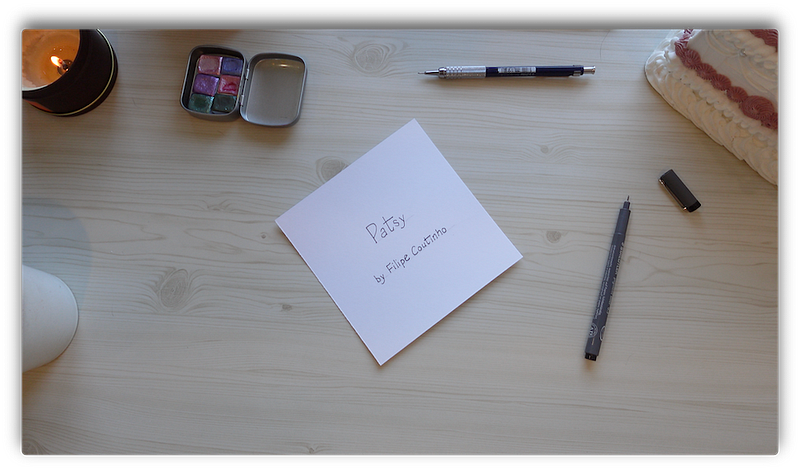
My interview with 2023 Black List writer for his script Patsy.
Filipe Coutinho has made the annual Black List three times: In 2021 for the screenplay Whittier (co-written with Ben Mehlman), 2022 for Jambusters, then in 2023 with the screenplay Patsy. I had the opportunity to chat with Filipe about his creative background, his latest Black List screenplay, and the craft of screenwriting.
Today in Part 4 of a 6-part series to run each day through Sunday, Filipe talks about Patsy recording three of her hit singles: “Walking After Midnight,” “Crazy,” and “I Fell to Pieces,” and what drove Patsy Cline to become a success.
Scott: There is a male figure in her life who appears a couple of times. She has this supernatural experience with Jesus. Was that actually something she expressed, or was this something you came up with?
Filipe: This is something that was in the research. Patsy kept having premonitions of her death throughout her life. In fact, part of the reason why I wanted to cover her childhood is because she was very close to dying from rheumatic fever. During that time, her mother thought that she was a goner. Patsy claimed to have seen a figure that she interpreted as being Jesus, and that Jesus told her that it wasn’t her time yet. When she eventually — almost miraculously — recovered, she had a different voice. The voice we know and love today.
This figure also pops up a couple more times in her life, including after her infamous car accident. Same thing happened. According to Patsy, when she was recovering in the hospital, Jesus came to her and told her “It’s not your time yet.”
And then there was a third time where the opposite happened, where this figure told her to get her affairs in order. It’s hard to say where that came from, but I found it really interesting, and I thought it merited being a part of this story.
Scott: It’s also interesting how three of her biggest hits — “Walking After Midnight,” “Crazy,” and “I Fell to Pieces” — if I’m remembering correctly, she resisted wanting to record those. She either didn’t think the songs were that good or they weren’t her style. It got me wondering … this may be too psychological, Filipe, and I’m sorry if it is, but what if she at first resisted recording those songs because of her guilt and shame, like “I shouldn’t record those because I don’t really deserve those hits songs.”
Filipe: Like you, I can only do a bit of armchair psychology, because we can only deal with the information that is available to us. Part of it is what you’re saying, and another part is what we talked about in terms of the past being what she ached for all along. I think because she grew up with Wally Fowler records and she grew up with her father and his angelical voice singing those types of records, I think she wanted to record them too. Maybe it was a way of getting closer to her father and perhaps healing the relationship the only way that she knew how, which was through her voice.
While she possessed this remarkable power that everyone who knew about music understood intuitively, she was also using her superpower the wrong way for the longest time.
She was stubborn because that’s part of who she was. That was her main character flaw, if you will. In that sense, I think she couldn’t see the forest for the trees. I don’t think she was particularly good at seeing the future. Sometimes you have people like Howard Hughes, who’s someone who always looked at the future. Patsy Cline was the type of person who looked at the past, and that had to do with her own experiences.
It’s interesting that people who took advantage of her, both in terms of career and then also in her personal life, like Charlie or Bill McCall, ended up being the people who elevated her musically. They basically manipulated her into recording the songs that would then become her greatest hits.
Scott: There’s a title page, then there’s a page before you go Fade In where you have this wonderful picture of Patsy Cline in the recording studio, and underneath, a quote: “I don’t do anything halfway, halfway is half‑assed and that ain’t me.” That really does describe her positive power to forge through all these challenges, but also it’s a blind spot for her.
Filipe: It’s funny because she had amazing instincts in the studio, right? Sometimes she would do things with her voice and people would be like, “Wow, this is unbelievable.” I think she understood that. But sometimes she would just be completely off. She would go into these rockabilly tempos and her yodeling and they would drive Paul Cohen from Decca Records insane.
Then there’s a scene in which they’re recording one of her tracks, and she says no and no and no. Eventually, Cohen loses his patience and he’s like, “just do this one take for me,” and she does it, and then she listens to the playback and says, “You know what, Hoss? You’re right. This is my identity.”
Scott: I want to talk about three last points here, all tied to how can you get people to connect with the story. One, you’ve got hot links in the script where the reader can click on the links and listen to each song on Spotify.
Filipe: This is something that I started using with Ben Mehlman on “Whittier.”
Scott: That’s right, I remember that now.
Filipe: I know that this can be a big no‑no in the screenwriting community and, honestly, I’m not too interested in rekindling that debate. I can tell you why we used them then and why I continue using them when I think it’s appropriate.
If someone wants to click on the links, they can. If they don’t want to click on them, the script still works perfectly fine without them. The way I think is, if music can be additive in terms of texture and depth to the reading, then why not? I have never, ever had a meeting with somebody who was like, “you know what, I love your script, but those damn links, man, I can’t do it. So I’m passing.” Sometimes people overthink these things.
As long as the writing is engaging, there’s very little that matters beyond that, in my opinion.
Scott: You know what? Her voice was so distinctive. It’s awesome to be able to have those links and just invite people to hear her sing.
Filipe: Look, when she signed that contract with McCall, which is almost like a death sentence in certain ways, I also put a photo of her actual signature there. Why? Because I thought it would be thought people would like it. Could I not have done it? Sure. But you know what, why not?
Scott: Why not? That’s right. No rules.
Filipe: No rules.
Tomorrow in Part 5, Filipe reflects on how music is key part of his creative process and shares advice on how to approach writing a biopic.
For Part 1 of the interview series, go here.
Part 2, go here.
Part 3, go here.
Filipe is repped by Rain Management.
Twitter: https://twitter.com/filipefcoutinho
IG: https://www.instagram.com/filipefcoutinho
Letterboxd: https://letterboxd.com/fifeco/
For my interviews with dozens of other Black List writers, go here.