Interview (Part 4): c. Craig Patterson
My interview with the 2023 Nicholl Fellowships in Screenwriting winner.
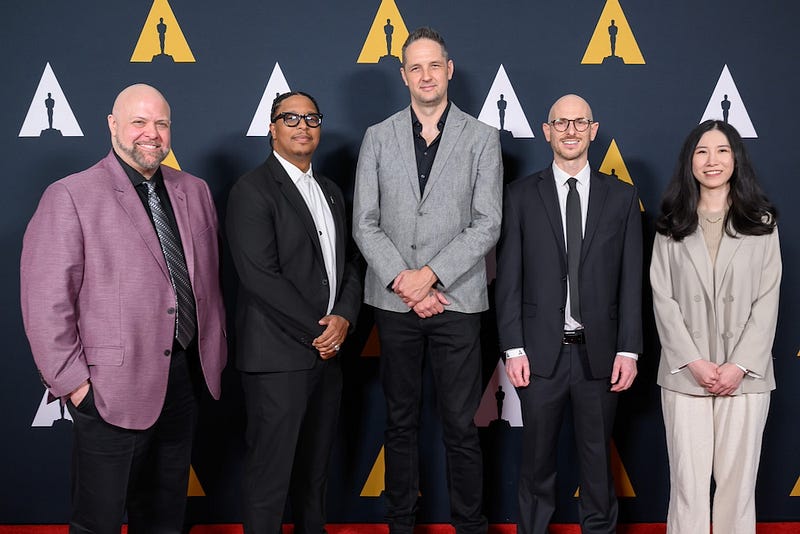
My interview with the 2023 Nicholl Fellowships in Screenwriting winner.
c. Craig Patterson wrote the original screenplay “Tah” which won a 2023 Nicholl Fellowship in Screenwriting. Recently, I had the opportunity to chat with c. Craig about his creative background, his award-winning script, the craft of screenwriting, and what winning the Nicholl Award has meant to him.
Today in Part 4 of a 6-part series to run each day through Saturday, c. Craig describes what it was like to adapt some of the script’s more colorful characters from their real-life inspirations.
Scott: I’m just curious, stepping away from the script. What was it like growing up in New Orleans in terms of the musical thing? I mean, people go and visit there, like thousands and thousands of visitors go every year to experience it. But you’re growing up there. What was that like?
c. Craig: It was a big part of my house because one of my sisters is a jazz singer. So, it was it was a huge part of life for us. You just get used to it. It becomes almost intertwined in your everyday life without you recognizing. In high school, I had friends that would practice twirling symbols because in bands — in New Orleans high school band — you aren’t just going to hit the symbols. It’s going to be a whole dance with it. So, you’re going on a corner and you’re seeing people practice twirling symbols and that’s a normal everyday thing. You’re watching people not just practicing music, but practice artistry.
Scott: Now you mentioned this, let’s go back to the script here. Tah walks past a place, an apartment building, and she says, “I want to live there.” She wants to be in that apartment. Now that you told me what you just said about how all these things she wanted, none of them turned out. I mean, that is symbolic of the sort of height of what her desire is, right?
c. Craig: Right, right. Yeah, Esplanade Avenue in New Orleans, for the 7th Ward specifically, it’s like special. These homes are gargantuan and beautiful. They’re all Antebellum and over-the-top. If you were living in a little shotgun house, you would absolutely dream of those homes.
I didn’t want her to want something unobtainable. I knew Tah’s whole life she wanted to get out of that house. There was no peace in that house. Esplanade Avenue felt like a really true and honest goal to have for her.
Scott: Yeah. And then you’ve got another theme running through the script: Money. The bingo game represents a lottery. And then the club’s got money. And then once Moses, and they have that big blow‑up, and now she’s out of money, so there’s financial insecurity. Maybe talk a bit about that theme, money that plays throughout the story.
c. Craig: Money in New Orleans and money in this particular story, one of the blessings of the 7th Ward in particular is that it doesn’t take a lot of money to be alive and…as long as you have enough money for the weekend, you’ll be all right. And you live in kind of from celebration to celebration.
Tah’s outlook on it was like, as long as she was good, if she had money to get a little something here and there, it wasn’t like she ever felt like she had to stack money up. Because when is the music going to stop? The music never stops. Like I said, to this day that club is open. It’s not the same type of place, but it’s still there.
I didn’t want it to be overwhelming but she needed just enough to leave. Enough to get the first and last month’s rent to get out. That’s all she needs to do. She doesn’t have to stack up enough money to go and live forever. She just has to get out of this house. And that’s it. Sometimes dreams are very, very practical.
Scott: Yeah, I mean, while she’s in that first stage of the script, it was like the first 40 pages or so. I mean, she’s got this little niece, Ada. That’s your mom, right? Is that what you’re saying?
c. Craig: Yeah.
Scott: A little 14‑year‑old girl. Talk a bit, if you would, about the Ada character at the beginning of the story.
c. Craig: Yeah, that was one of the most difficult parts because there was a lot of children. It wasn’t one kid but I had to make it manageable for the story. Ada is my mom but she’s representative of all the sisters (four in total). They were very good kids. They studied hard. They did the things. They grew up the right way. But, money wasn’t a part of the equation.
So if, Tah could bless you with, like, hey, let’s go to Krauss and go get a blouse or dress or shoes. I mean, that was Christmas in July. That type of thing was very important and it was a highlight of a lot of their stories that they would talk about. Small kindnesses.
The other part of it was, in real life my mom got into Brandeis and she was so proud, so happy. And then the next week she got into Yale, but they had already paid the $50 entrance fee. And they didn’t have another $50. And my mom had never let go that she missed out on Yale for $50. I wanted to make sure she finally got a chance to go to Yale.
It was important to put in there. She loves Brandeis and she’s a huge Brandeis person, but she often thinks about that she was $50 away from something she had worked so hard for.
Scott: Let’s talk about Nan. Because she is a piece of work, man. Unrelentingly tough.
c. Craig: Yeah.
Scott: It gets worse as she goes along. It’s not like there’s no moments of merciful relief. Well, there actually is a little moment there with the trombone guy, but let’s talk about this character in the script and then whatever you want to bring to bear in terms of like the real life.
c. Craig: That was one of the notes I had gotten from Sundance the year before, they were like, “Oh my God, she’s like, she’s the worst.” And it broke my heart because in real life she just had no gauge, but there was no malice either. What she’s saying is honest, and she’s telling you what it is. You just don’t like how she’s telling it to you.
She doesn’t have the ability to ease off the gas. This is a woman who lived a rough life. This is a tough existence. You see what has become of her husband. Nan is on Tah’s case because of the choices that Tah makes. Nan is just like, why are you doing this to yourself? But she’s just harsh about it because there’s no need to be subtle. Subtlety gets you in a really bad space.
Scott: Yeah, she does speak the truth. It’s like she’s got no manifold.
c. Craig: Right. Yes, 100 percent.
Scott: So the big twist, and this is one of those stories where you say, well, why, you step outside the story universe and you say, OK, this story is the Protagonist has to go home. And you think about that generically, well, the reason they have to go home is because they have stuff they need to deal with that they thought they tried to escape. No, they’ve got to go home.
And so she does. She’s literally living in this house that’s been divided into two parts. And there’s her mom over there with the refrigerator combination lock… you can’t get the food. Now is that, was that true?
c. Craig: Yeah. They had a very interesting relationship, I mean, it was war. It was loving war and I wanted it to feel…I’m a huge, huge fan of Joel and Ethan Coen. I thought that their sensibilities in my family’s world would be right. It’s just, these larger than life, ridiculous choices of disdain. What does disdain look like through the Coens‑esque universe?
Those little things were just things that we chuckle about as a family. I thought that it would make a lot of sense if you put more comedy into it than just like, woe‑is‑me‑ism with it.
Scott: I want to talk to you about this dynamic. This is very interesting that you’re saying you wanted to do something where you looked at this character, Tah character, and wanted her to have a different outcome. Because, your typical story of what I call the Unity Arc, where they start off where they got to go in a positive way.
This ends up at a place where I feel she is actually more positive, but it’s one thing after another that there’s money that’s lost there’s a her mother becomes even more mean‑spirited she has to move back on all these things one thing after another so that is more reflective of the real life experience how did you then adapt that into the script knowing where you were going to go at the end?
c. Craig: Yeah because I was there at the end of Tah’s life. It was quite a sad space. She was always like a firecracker to the end, but, nothing had worked out in a way that one would be like, this life is a fantastic one. Like, it wasn’t that. It was a real…
Scott: It’s not George Bailey and It’s a Wonderful Life.
c. Craig: No, no, and she earned that. She earned that and that was a hard-working woman who brought joy. I wanted to try to capture that.
Tomorrow in Part 5, c. Craig responds to my comparison of his dialogue to that of the great playwright August Wilson.
For Part 1, go here.
Part 2, here.
Part 3, here.
c. Craig is repped by Gotham Group.
For my interviews with every Nicholl Fellowships in Screenwriting winner since 2012, go here.