Interview (Part 4): Brent Delaney
My interview with the 2023 Nicholl Fellowships in Screenwriting winner.
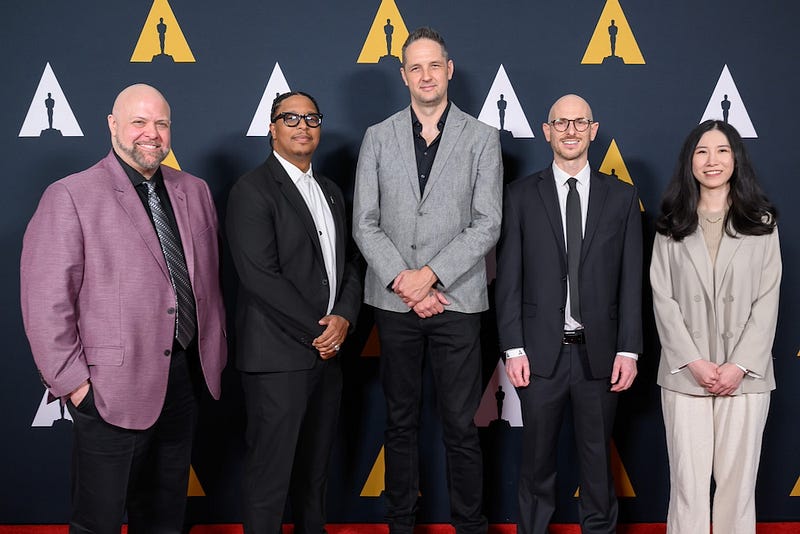
My interview with the 2023 Nicholl Fellowships in Screenwriting winner.
Brent Delaney wrote the original screenplay “Brownie Mary” which won a 2023 Nicholl Fellowship in Screenwriting. Recently, I had the opportunity to chat with Brent about his creative background, his award-winning script, the craft of screenwriting, and what winning the Nicholl Award has meant to him.
Today in Part 4 of a 6-part series to run each day through Saturday, Brent describes a key individual who serves as a kind of Mentor character to the Protagonist (Mary Jane).
Scott: After her daughter’s death, Mary Jane returns to San Francisco. She meets this character you mentioned, Dennis Peron. This is how he’s introduced in the script:
“This is Dennis Peron, 35, a Vietnam vet and self‑described gay hippie outlaw who follows in the footsteps of his close friend Harvey Milk. In other words, a political firecracker.”
Can you give us more of an introduction to him?
Brent: When I think about Dennis Peron, I think about dialogue. Lots of dialogue. Dennis is a helpful character to have in a script because he was just an explosive guy who talks a mile a minute. So, whenever he’s in a scene, he steals it. That’s why he was such a great activist, too.
For Dennis, he had this unyielding desire to change the cannabis laws in the United States. His whole life was about that, you know what I mean? Without him, none of the legislative aspects of the script would have been there. And it was Mary Jane’s public image mixed with Dennis Peron’s strategic activism — similar to Harvey Milk’s political acumen — that changed the system.
Scott: That’s absolutely true, but on a personal level, the relationship between the two of them, it really struck me that maybe you’ll see what your reaction is, is like a Mentor figure. There are many, many times, not just on a political acumen, but on a personal level. Like he’s the guy who says to her, it’s a sort of call to adventure.
“You ever make the Alice B. Toklas way with pot? These are the brownies that you make.”
He’s the one who suggests to her, “Why don’t you make these weed brownies?” Then on several points along the way, there are moments where he says to her, “These are your children,” that kind of thing. Like, “You can’t leave them.” Would you think that as a mentor figure?
Brent: Oh, for sure, definitely. Not only is he central to the inciting incident, but he is also vital in the beginning of the third act as the Mentor, telling Mary Jane: “This is what you got to do. Don’t let the demons win basically, but overcome them and come with me and we’ll change the law for all of these young men, and for Jonathan too.”
Yeah, he’s a Mentor character and really important to the story. And it’s true to life. They really did meet outside of a cafe, and Dennis took her under his wing and thrust her into the political space.
Scott: It’s interesting because if you take the word activist, sort of political activist, but now you look at her psychological journey. At the beginning of the story, she’s really inactive. I mean, she is not moving along where she needs to be.
You even had a moment where she’s watching this group of people, Dennis Peron and these other activists. She says, “In the face of the threat, the fearlessness of the activists is mesmerizing, risking their own freedom for their cause.”
She resists, she continually resists and says, “I don’t want to be a public figure. I don’t want to get into politics.” She says, “No, I’m afraid I don’t do politics, Dennis.”
There is that resistance thing going on. It’s not an easy journey for her to become who she eventually becomes.
Brent: But that’s who she was all along, you know? It was her daughter’s death that made her suppress who she really is — which was an activist to the core. That’s the connection between activism and her character flaw. When Dennis tries to pull her back into politics, it’s painful because it reminds her of the relationship she had with her daughter.
Scott: Here’s another movie reference, a strange one for you, but that’s Rick Blaine in Casablanca. He fought in the Spanish Civil War on the side of the loyalists. He was an idealist.
He had it inside him, but he had to rediscover it, which is really the essence of the Protagonist’s journey. It’s already there. In the case of Mary Jane, she buried it, and now it needs to be coming back out.
So there’s the journey of the brownies. That’s interesting because it’s got its own subplot.
It starts off she just makes brownies. Then she’s going to make brownies with weed for money‑making because she’s poor. Then eventually she’s going to jump into doing these medical marijuana, which she gives away. It’s an interesting subplot with the brownies.
Brent: The relationship she has with baking is something that ends up visually showing her progress as a character — particularly at the midpoint. It shows that she goes from purely wanting to make money off her brownies to giving them away for free. That shift is what initiates the third act and coming to terms with her daughter’s death. Baking ended up being a visual representation of her inner psychology in a way.
Tomorrow in Part 5, Brent talks about another key character in the script who acted as a kind of surrogate son.
For Part 1, go here.
For Part 2, go here.
For Part 3, go here.
Brent is repped by Range Media Partners.
Twitter / X: @Brent__Delaney
For my interviews with every Nicholl Fellowships in Screenwriting winner since 2012, go here.