Interview (Part 4): Beth Curry
My interview with the 2020 Nicholl Fellowships in Screenwriting winner.
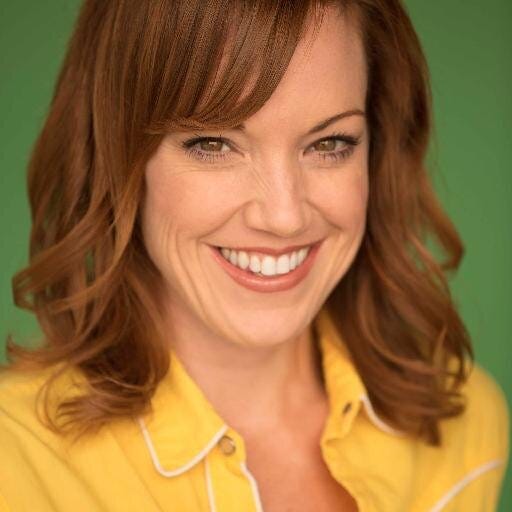
My interview with the 2020 Nicholl Fellowships in Screenwriting winner.
Beth Curry wrote the original screenplay “Lemon” which won a 2020 Nicholl Fellowship in Screenwriting. Recently, I had the opportunity to chat with Beth about her creative background, her award-winning script, the craft of screenwriting, and what winning the Nicholl Award has meant to her.
Today in Part 4 of a 6 part series to run each day through Saturday, I ask Beth why she made an interesting pivot in the script from the Protagonist’s perspective to that of another character.
Scott: There’s a fourth character I’d like to get your impressions on, and that’s Sheila, who is essentially a social worker, but she plays a really important role with regard to Michael and his evolution. Michael eventually does find that Lemon is there in his apartment.
Of course, there’s this big search for her because she’s missing and is on TV. Could you talk about the Sheila character? When did she emerge in your storytelling process?
Beth: She was like a device in the beginning too, because she was in the first few pages. With any social worker, it can be the only consistent person in a foster child’s life.
I was really intrigued with having Sheila come up through the system as well. I think a lot of people who give back in the way that she does, have been a part of that, sometimes, broken system and want to help make it better.
There was a moment where I was like, “They’re going to be romantically inclined.” Michael and Sheila will have a romantic thing. I shied away from that, because that’s not the story I’m telling. I just wanted it to be about Lemon and Michael.
Scott: She serves almost like a mentor figure where she could have easily become a romance figure.
Beth: Sheila’s somebody who, over the year, she was raised probably with tough circumstances as well. She is not afraid to give it to Michael very plainly and hold the mirror up in front of him and be like, “In my eyes, it looks like you guys need each other. I’m going to let you get there on your own, but you need each other.”
Scott: Lemon, at one point, about midway through the story, has this little anecdote about losing a pet turtle for a while. In this exchange with Michael, she says this rather innocuous comment, “I thought I lost something, but I found something.”
In a way, that speaks to a central theme of the story where Michael, who has lost his wife, finds something in Lemon. Lemon lost her mother and finds something in Michael.
Beth: For me, early on when I lost my mom, I remember feeling the grief and thinking this might take me down. I knew that my mom, wherever she was, probably wanted me to use that grief and allow it to help me grow.
For me, it’s about taking that shitty circumstance and finding growth. I mean, don’t flowers grow out of shit? [laughs] I don’t know. As I’m talking to you, I’m realizing it’s a lot about grief. I hadn’t realized that before this moment.
This piece is sort of an ode to people being intrinsically good. I think that we’re so divided right now, but innately, it’s just a story about how we need to love and be loved. It’s almost as simple as that. In a divided world, we need love. In a quarantine world, we need connection. In a world where we lose each other, we need each other. All themes of Lemon.
Scott: I’m an acolyte of Carl Jung. I don’t know how familiar you are with him. I tend to look at stories arising more out of the psychological needs of the characters. Immerse yourself in the lives of your characters. It feels like that’s what you’ve done with the story.
Jung has this great quote, which I when I read it about two decades ago blew my mind. He says, “The psychological rule says that when an inner situation is not made conscious, it happens outside as fate.”
This is your story. Lemon, of all the people in the world whose apartment she could stumble into, she enters Michael’s apartment. It’s like these two people absolutely were fated to come together, that fate brought them together because they’re both flawed, they’re both broken, they’re both wounded. They both need love.
I’m sure you’re not thinking that as you’re writing it. You’re writing it contemporaneously with the characters, and they’re just emerging and it’s happening. If you step outside, can you see that narrative imperative, I guess you could say, of how the two needed to belong together?
Beth: Of course. We attract that in life sometimes too, be it negative or positive. There was a time when I dated some pretty emotionally unavailable people because I wasn’t in such a great spot myself. We kind of attract what we need in moments.
Scott: That there is a synergy between the inner life of characters.
Beth: Absolutely.
Scott: The second thing I wanted to talk to you about…There were these two things that I thought were quite interesting, and the first was that. The second thing is if you look at this and say, “Who’s the Protagonist of the story?” It’s clearly Lemon. She drives the story.
Yet you do an interesting pivot pretty late in the story where Michael takes over in a way that role because the Final Struggle is not taken from Lemon’s POV. The Final Struggle is him, where he’s got to overcome his self-doubts and fight back his fears and his inability or struggle with trusting himself that he’s capable of being a parent.
Did you always have that pivot to Michael’s character?
Beth: No. In life, we ping pong. I hit the ping pong to you, you hit it back to me. I feel like that’s life. In that part of the story, Lemon is in foster care. There’s very little that she can actively do besides just run away again. I feel like it had to go into his court a little bit.
Scott: You have some very nice setups and payoffs, which is something I look forward in stories. I enjoy them a lot. There’s this plot about Mr. Pancake’s pants. We talk about that original ending. The world is scary. Don’t go out there. At the very, very end, Michael is with Lemon. They’re reading the book, and she blurts out the ending. It’s like, “That’s the ending.”
Beth: Yep.
Scott: The real ending, which is, “The world is a loving place and people are good. When we are there for our neighbors, we are there for ourselves, and I’m here for you, Mr. Butter Sauce.” That probably sums up in a way the theme that you wanted to convey to people in the story?
Beth: Absolutely. It’s so funny. I haven’t read it in so long. I’m listening to it like, “Wait, did I write that?” I think it does sum it up. That again is my ode to all people being intrinsically good deep down. We’re just conditioned in different ways, receiving different facts, conditioned to fear different things, to hate different things, to just have different beliefs.
Scott: What’s the status of the script at this point?
Beth: I don’t know how much I’m supposed to say, but we have it out to some directors. We’re trying to get a director attached and the Michael character attached. The search for Lemon will be a whole show in itself, I’m sure.
It’s very important to me that she’s mixed. I really don’t care how mixed. She could be half Asian, half Hispanic, half Black. I just want her diverse in some way. I just opened it up because I don’t know how the casting process will be for finding this little girl. Right now, we are out to directors and actors. And we have an offer on the table from a production company, as well.
Scott: Great. Congratulations.
Beth: We’ll see.
Scott: When Sean Baker came to DePaul and he screened The Florida Project and talking with him, that little girl, Brooklyn, oh my God.
Beth: Oh my God.
Scott: I kept seeing her as Lemon.
Beth: I know. It’s just going to be some little, magical kid. It’s so funny, because for child actors, I feel like it’s a brief amount of time where they’re just wise enough, unfettered enough, and not quite conditioned enough.
It’s that perfect combination that if you get them a year or two years later, they’re out of it and too conditioned. I feel like we’ll attract the right little Lemmie, as I call her.
Scott: I trust that you will too, because this is a project that absolutely needs to get made.
Beth: That’s so sweet. Thank you.
Tomorrow in Part 5, Beth answers some questions about how to develop characters and how to write dialogue.
Beth is repped by Jenny Wood and Raquelle David at Elevate Entertainment.
Beth’s website: LINK
Totsy website: LINK
Twitter: @bethcurrywagner
For Part 1, go here.
For Part 2, go here.
For Part 3, go here.
For my interviews with every Nicholl Fellowships in Screenwriting winner since 2012, go here.
For my interviews with Black List writers, go here.