Interview (Part 3): Wenonah Wilms
My interview with the 2018 Nicholl Fellowships in Screenwriting winner.
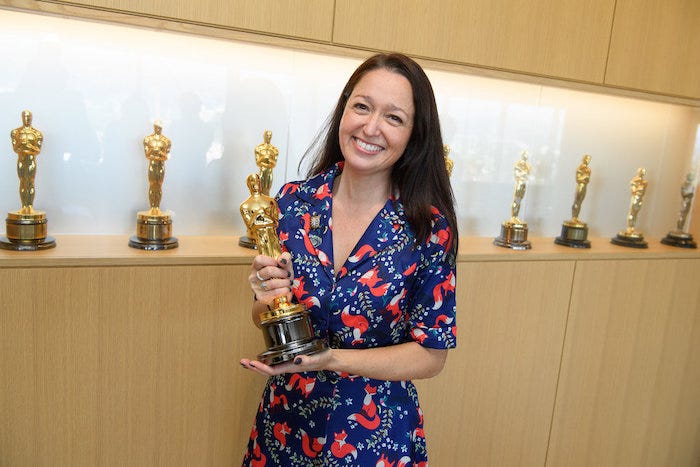
My interview with the 2018 Nicholl Fellowships in Screenwriting winner.
Wenonah Wilms wrote the original screenplay “Horsehead Girls” which won a 2018 Nicholl Fellowship in Screenwriting. Recently, I had the opportunity to chat with Wenonah about her background, her award-winning script, the craft of screenwriting, and what winning the Nicholl has meant to her.
Today in Part 3 of a 6 part series to run each day through Saturday, Wenonah discusses the research she did into the sex trafficking trade in and around oil field operation sites and why she chose to structure the narrative with multiple timelines.
Scott: You do an interesting thing in that you have these dual timelines. Actually, there’s another one, too, where you go back to her past. You’re handling all of these.
The interesting thing in dealing with the events of the night before and the next day, the following days, is you’ve got these dual narrative structures, these dual storylines. How early on did that come into your thinking that you’re going to do it that way?
Wenonah: I don’t generally do flashbacks. I went through my own learning as, “Don’t do flashbacks. They’re misused unless you do it really well.” I was very apprehensive about it, but the opening scene in my head was always what became the first page of the script. Her walking down the road after the “bad night.” The aftermath is our starting point.
I knew the story was going to be about sex trafficking. I have this image of her the day after. I just worked backwards from that. I thought, “What happened the night before, and what’s going to happen going forward?” Everything revolved around this huge event.
To me, that opening image was the jumping off point. It just flowed. I’m not sure if it came out chronologically because I’m so involved and invested in it at this point, but I think that it worked..
Scott: Yeah, although it works very well. That’s my point. I don’t like people who say there are these definitive screenwriting rules because, first, there was no rule book. There’s not like a rule book, are there? When they say, “Don’t use flashbacks,” and then you look at some of the greatest movies of all time.
What you did that was so interesting was you really teased out the events of what happened in the previous evening. You created a mystery there. I’m assuming that was intentional.
Wenonah: Yes. As people have their memories of trauma, It might come in flashes and bits and pieces. You’re trying to piece it all together into this narrative of, “What the hell happened? Did that really happen?”
In my head, it was the trauma of everything that broke it apart. Now, we’re all trying to put it back together into the story. Even though she did some terrible things, she’s still sympathetic because she did take matters into her own hands. She defended and protected someone even weaker than herself. She was a hero.
Now, we’re going further back in time to understand where she came from and why this has happened. Yeah, I played around a lot with time. I’ve gotten the comment that the story is “unrelenting” and that’s what I was going for. A feeling like once this is in motion, there’s no stopping it and shit is going to get crazy. I think it keeps moving the story forward in each timeline.
Scott: Also too, it’s intriguing because I work with university students. There are so many projects after now where there are these multiple historical timelines. Like right now, “True Detective 3” has got three timelines. I don’t know if you saw “Sharp Objects,” the limited series on HBO. That really blurred the line between past and present.
Some of my university students say they prefer stories with that kind of shifting, back and forth, because it’s more interesting than just a straight chronological thing. We may be seeing something where this antipathy toward flashbacks is…
Wenonah: OK, good. I’m never ahead of trends.[laughs]
Scott: You got a little bit more ammo there, Wenonah, on your side.
Wenonah: I’ll take all the luck I can get.
Scott: Yeah, they’re unrelenting. I think that’s actually a strength in the story. You keeping upping the stakes. For example, at the end of Act One, there’s a dramatic discovery. She was traumatized the night before. There was a young woman turns out her name is Sarah that she tries to help escape. We learned that later on.
Her car is missing the next day. They find it at the end of this dirt road. This young woman who is Sarah is in the trunk of her car. By the end of Act One, you’ve got all these mysteries going on.
There are two guys that we met in the flashbacks, Stranger and Tattooed Man. Then you discover the Tattooed Man is dead. Then you discover that she killed Tattooed Man. You’re upping the thing.
It would’ve been one thing just to say she’s completely innocent. She was victimized, but no. She actually kills this guy. You’re making for a much more complex read and a much more complex story to tell about that character, right?
Wenonah: Yes.
Scott: That was intentional?
Wenonah: Yes. She could’ve been killed in this sex trafficking ring years ago but she escaped. Now she is seeing what happens to girls when they don’t escape, what’s their fate — foreshadowing what can happen to her daughter.
Seeing what this young woman, Sarah, is going through makes us understand why she has to go through the extents she does to keep herself safe and eventually save her daughter. Sarah’s character lays out the stakes.
Scott: Yeah, but also that she does have that rage inside. That gives expression to it when she takes out the Tattooed Man who was like…I call him Thesaurus Guy…
[laughter]
Scott: …his little linguistic thing. Let’s talk about this sex trafficking dynamic here. You create a very specific type of environment in South Dakota, the oil wells, the workers there.
There is this RV encampment that basically you say in scene description, they can disperse in 10 minutes. Is that drawn from real life? Is this based on research that you found, or is this something that you just extrapolated from your imagination?
Wenonah: Maybe a little of both. I did have to do research into the sex trafficking rings and why they pop up, and how they get away with it, and why aren’t they being prosecuted.
To me, this is a lot about place and geography. I imagine the old Western circling the wagons except in different context here of the RVs all circled around to protect their ugly trade, protect their secrets and violence and along with the landscape so barren and flat and hopeless. You can see it from a mile away but can never catch up to it; a moving target. It’s all out in the open and yet “untouchable” and now she’s having to go back there to her past to destroy it.
I created a lot of the world, but it’s based on the fracking and mining towns that pop up. There’s even sex trafficking on boats on the Great Lakes. I made up the skin branding in the shape of the horse head from the oil rig, but this is something that can happens to young women in real life in big and small cities to the runaways and the stolen — and it’s horrific. I hate that there’s so many stories to draw from. The research is heartbreaking.
Scott: There are two sets of law enforcement entities involved here. There are these two Indian police officers, Lonnie and Ben, who are part of the community that Keya is part of.
Then there are these two FBI agents who come in because they’re investigating these double homicide. Could you talk about the emergence of that and what you were going for with those parallel law enforcement entities?
Wenonah: I did think early on that it was too many people, too many cooks in the kitchen. In reality, that’s how it is. Reservations are sovereign entities. They do have their own police departments and their own laws, but when it comes to murder, then you do have to call in the FBI. That’s who everything is handed over to.
It was necessary for me to make that reality in the scripts. I’m friends with law enforcement officers on reservation. They’re great people. They’re overworked, understaffed, and underpaid.
I think that when they do have to call in bigger guns that they’re probably not taken as seriously, because they deal with a lot more drugs, abuse, and things that happen on reservation. It’s sometimes very hard to get the attention of bigger entities when it comes to things like that. The FBI would normally step in on murders, especially double ones.
Scott: You could’ve very easily gone to the trope of the white men stepping in and acting like an asshole and the FBI agents. There was a bit of that. Ben and Lonnie actually do take some evidence from a Laundromat and get rid of it. That’s their way of supporting Keya?
Wenonah: Yeah. They protected her. After learning about her past, you have to pick a side. She’s part of their community, they can’t protect her so they did have some sympathy for her.
Here is a video featuring the 2018 Nicholl winning writers receiving word of their awards including Wenonah:
Tomorrow in Part 4, Wenonah and I discuss the use of setups and payoffs in “Horsehead Girls” and a comparison to the movie The Silence of the Lambs.
For Part 1 of the interview, go here.
Part 2, here.
You can learn more about Wenonah at her website here.
Wenonah is repped by UTA.
For my interviews with every Nicholl Fellowships in Screenwriting winner since 2012, go here.
For my interviews with 53 Black List writers, go here.