Interview (Part 3): Vanar Jaddou
My interview with the 2020 Nicholl Fellowships in Screenwriting winner.
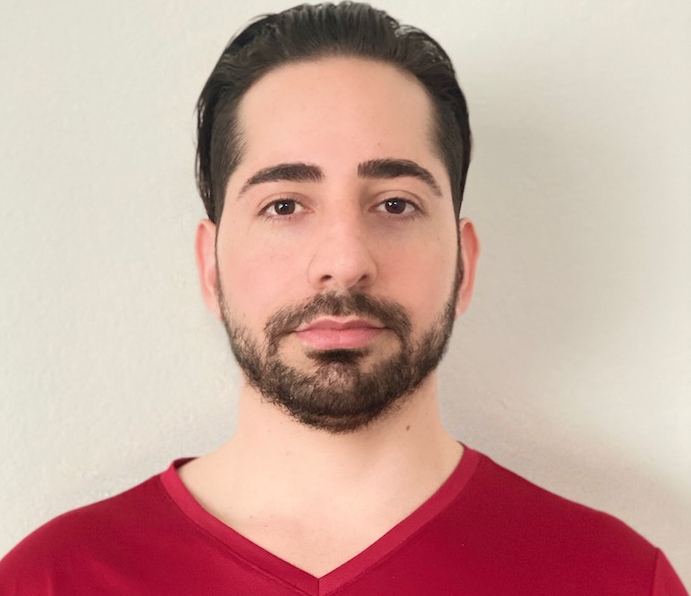
My interview with the 2020 Nicholl Fellowships in Screenwriting winner.
Vanar Jaddou wrote the original screenplay “Goodbye, Iraq” which won a 2020 Nicholl Fellowship in Screenwriting. Recently, I had the opportunity to chat with Vanar about his creative background, his award-winning script, the craft of screenwriting, and what winning the Nicholl Award has meant to him.
Today in Part 3 of a 6 part series to run each day through Saturday, Vanar delves more deeply into the emotional core of his script “Goodbye, Iraq” and its father-daughter relationship.
Scott: Let’s talk about the daughter. Her name is Noor. Thirteen years old. These were two primary characters in the story, the father and the daughter. She’s spirited and lively, very smart. How would you describe her relationship with her father at the beginning of the story?
Vanar: At the beginning of the story, I would say her father is her hero. She lost her mother when she was younger. In Chaldean culture, it’s very patriarchal society. It’s very traditional. You always look at the father as a role model, somebody that you take a lot of values from.
Early on, I would say that her father is her hero. As the story evolves, she starts to learn more and more about her father and what he’s really like, what he’s really done. It changes her perception of him.
Scott: He lies to her about why they’re on the run, right?
Vanar: Yeah, he does. He tells her that they’ve stole some information, which is partly true. He has stolen some information that could incriminate a lot of people who were affiliated with the regime and some of the things that they did, but the real reason they’re fleeing is of course what he tried to do in the opening act and kill Saddam.
That’s something that Saddam would send his forces to the other side of the world to deal with. He’s not going to have one of his attempted assassins on the loose. He made that mistake too with Mahzen in that his parents were killed but Mahzen was spared and later joined the regime.
He also doesn’t want to make that same mistake with Mahzen’s daughter, with Noor. He wants them completely out of the picture. He doesn’t want them to be a threat at all and he doesn’t want to be looking over his shoulder.
Scott: The question you can’t have drama without conflict. You’ve got nemesis type figures. One is Saddam, who we only see for a few seconds of flashback but he’s not present. He’s present as this ghost looming over everything.
You’ve got these two characters, Angra and Sayeed. It’s not just that Saddam is offended by the fact that someone tried to kill him and he’s going to wipe this guy out. Both of them have a personal reason why they are personally connected to wanting to take out Mahzen. Isn’t that right?
Vanar: Yeah. That’s a very good observation by you, first of all. With Saddam, I wanted to create this big brother‑esque persona where he’s never shown. There’s this book called “El Presidente” where it’s kind of magical realism and they’re living under this dictatorship.
That’s how it was there in that time. You see these posters with Saddam. You see him on the news. You hear his name, all good things of course. If you say anything bad about him, then you disappear the next day or you’re found in a ditch somewhere.
I wanted to create that essence with him. He did have that godly power, almost, over life and death. For him to be this omnipotent, omniscient type of character, that’s what I was going for, that mythological feel that he was bigger than life. That’s how it was.
With Angra, he is an extension of that. He is this character who feels like he’s been spawned from the aftermath of this crime, from the very evil soils of Iraq to condemn Mahzen for this sin that he’s committed.
Of course, his position in the regime has been threatened now. He’s always been able to catch every enemy he’s pursued. Mahzen is the one who has evaded him. Now it’s become very personal for him. Mahzen was part of the regime while Angra was there.
Sayeed, too. Sayeed, on a more human level, thought he was like a brother to Mahzen. They came up in the regime together, fighting side by side. They’ve been to each other’s homes. They’ve seen each other’s families. It became very personal for him as well to have somebody like that under your nose the whole time, and he’s a liar. He’s betrayed you.
Everything he has said, everything he has done had been a complete lie. That Mahzen would do such a thing to not only the regime but to Saddam as well, is the ultimate sign of disrespect.
Both their motivations are very different. But Angra’s is deeper, because not only is it personal, but there’s much more at stake for him. Angra is more of that extension of Saddam who believes that everything they’re doing for Iraq, including all the chemical attacks, he believes it’s a cleansing. It’s something holistic, almost, in a sense and they’re doing the right thing. They’re purging everything. They’re taking out the people who are a threat to building the government they want. They don’t want radicals. They want prosperity for their people, truly, but it has to be their vision, and there can’t be any opinions allowed. It’s not a democracy.
Originally taking out Mahzen becomes about that. Upholding what they’re trying to build. Removing traitors. And then as Mahzen continues to escape, his position is threatened, his loyalty is questioned, and everything he once hung his hat on, of never letting an enemy of Saddam/Iraq to escape, is now in jeopardy. There is a ton at stake for him.
Scott: I think that’s super important, because even though we may think of a dictator like Hussein that he may tell people, “Go to the end of the Earth to take care of this miscreants,” that personal element will help sell it. Literally, they travel Turkey, Greece, United States. It’s quite a trek for these two guys.
I want to ask you a question about this journey. Was this a typical or traditional pathway to escape from Northern Iraq, the route carved out here in terms of their journey, or is that something you stitched together through research and just kneading cool set pieces?
Vanar: That’s a good question. It was a combination of both. I would say all the people that I interviewed, they all had a different journey of how they got here. There were a couple people whose journeys were a lot more extreme, whose circumstances were a lot different. They’re all refugees, but that word’s got different connotations.
It was definitely a combination. The interviews, research, and my own imagination, of course. Ultimately, I wanted it to be as dramatic as possible. I went to the extreme. I went to the very end of the line, of where I thought I could go where would something still be held viable and considered as a possible truth, but also wanted to cut out anything that was boring.
This is a movie. It needed to keep the pace. That’s what I came up with.
Tomorrow in Part 4, Vanar talks about the importance of action sequences and grounding them in the characters’ experience.
Vanar is repped by Bellevue and APA.
Instagram: @vanarjaddou
For Part 1, go here.
For Part 2, go here.
For my interviews with every Nicholl Fellowships in Screenwriting winner since 2012, go here.
For my interviews with Black List writers, go here.