Interview (Part 3): Tara Tomicevic
My interview with 2021 Black List writer for her script “Thicker Than Ice.”
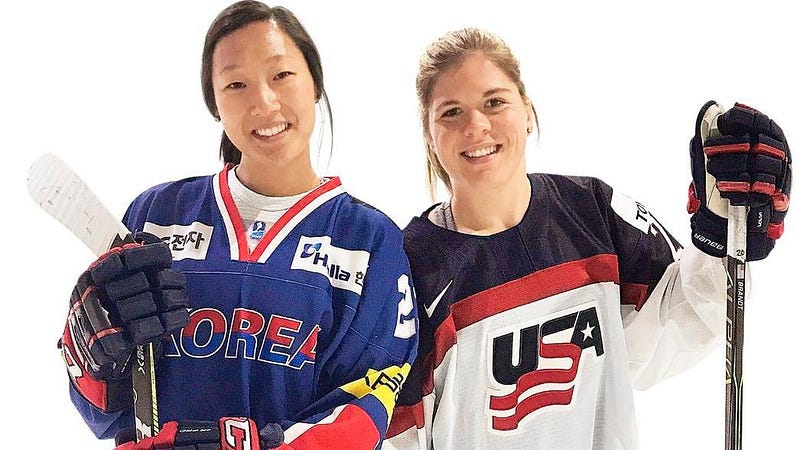
My interview with 2021 Black List writer for her script “Thicker Than Ice.”
Tara Tomicevic wrote the screenplay “Thicker Than Ice” which made the 2021 Black List. Recently, I had the opportunity to chat with Tara about her creative background, her script, the craft of screenwriting, and what making the annual Black List has meant to her.
Today in Part 3 of a 6-part series to run each day through Sunday, Tara talks about some of the research she did in adapting this real life story and the structure of the script which cross-cuts between two parallel storylines: the lives of two sisters leading up to the Winter Olympics.
Scott: Adapting real life stories is a real challenge because people’s lives don’t tend to lay out in three act structure. Though, while I was looking, I was going, “Well, you’ve got a big ending. It’s going to end up at the Olympics.” That’s something you build toward.
Let’s provide some context and meet some of the key characters, specifically the Brandt family. Could you describe Mom, Dad, and then the two sisters, Hannah and Marissa?
Tara: Of course. The Brandts are the most close-knit family. They are exactly who I portrayed in the movie. There was no extra work necessary there. They’re a lovely, Midwest, hardworking family.
Hannah is the very outgoing American-born sister. Marissa was adopted from Korea at four months old and, therefore, does not look like the rest of her family, but was raised in Minnesota, and is very much an American girl — like me. The girls grew up playing hockey since they were four or five years old.
Their dad depicted it as, “Well, if there was practice, then that’s where we were that day. If there was this tournament, then the family was in this city that day.” Hockey very much charted their path as a family and brought them closer.
Scott: Just to provide context here, because there is something unique in some regards to that whole Minnesota thing. First of all, hockey is like a religion there. Hannah played for the University of Minnesota as…
Tara: Yes.
Scott: They’ve won championships, NCAA championships. Certainly, women’s hockey is a big deal. Did you find yourself with a little bit of a learning curve there, tracking the whole hockey phenomenon in women’s hockey and then, in general, the women’s hockey in the Midwest?
Tara: Hockey, yes, because that is a sport that I knew very little about. I’m a lifelong athlete who has played almost every team sport, but of course I wrote a film about a team sport I never played.
There were deep dives into hockey, University of Minnesota hockey, and how different that is from Division III hockey, which is where Marissa decided to go, the competitive nature of it in terms of youth hockey in Minnesota. That was a lot of what I got from their dad — what it was like to have two daughters who are both top players, and they’re playing on the same team. What happens when you show up in a league and they’re new but they take other kids’ spots? Just that competitive, athletic culture in a place that runs on hockey.
Scott: There’s another thing, too, about Minnesota and the Twin Cities. The community there is very active in adopting children from overseas. I’m wondering if that had an influence on Marissa, the fact that this was a very accepting environment in that area? They grew up in a suburb, essentially nine miles away from St. Paul.
I would imagine that they may see other kids with that type of background. Did that ever come up in conversation with them?
Tara: Yes. I think that she saw a couple other examples around her, but not in hockey. She remembers being the only non-white face.
Scott: Because she’s a little different. The way you introduce them I thought was interesting, is eight years old before you cut fourteen years later when the story takes place. Here’s how they’re described when you introduce them in the script.
“[We’ve been following this phenomenal hockey sequence] Our ride was courtesy of Hannah Brandt (8), the baddest motherfucker on the ice. This scrappy little white girl turns heads on the regular.”
Then you cut over to the other side of the ice arena, “Graceful Korean-American figure skater in a sequin pink dress, MARISSA BRANDT (8) executes an eye-popping double axel.” She is different in her attitude about hockey.
Was that true that Marissa was more into the ice skating thing? That’s where the family raised her?
Tara: Yes, she began as an ice skater, exclusively an ice skater. The only reason she started playing hockey is because she missed her sister, wanted to hang out with her sister on the weekends, and didn’t get to because they were doing different activities. Hockey was the uniter of the family as a whole.
Scott: That distinction, where Hannah was, would you say, in a way obsessed with hockey?
Tara: Well, she was in the Olympics last week for the second time.
Scott: Second time in the Olympics. Whereas and this is something that becomes more clear as the story unfolds, for Marissa, I think she even says, she enjoys hockey, but it’s not to the level that Hannah, right?
Tara: Yes.
Scott: Could you talk about these two girls who go on these parallel journeys, one of them gets called into the Korean team and goes to Seoul Korea, that’s Marissa. Hannah has her own journey, she gets injured. A lot of physical therapy. So they are on these parallel journeys.
Could you talk about how early you landed on that construction, because you’re bouncing back and forth between those two storylines?
Tara: That was my initial instinct. The story was the year-ish before the Olympics. One of the challenges of this was figuring out whether the central story was the hockey and the Olympic success, or whether the central story was the sisterhood. The majority of the rework of this script was because in my heart I knew it was a sister story, but I created major moments and act breaks that were about hockey. So at first they were more moves than story.
Once I realized that in my heart the script was one thing, but on the page, I’d made certain decisions that reflected it being another thing, it took some rewriting. My boyfriend, who’s also writer, pointed that out to me. He was like, “I don’t know if you’re sure which one it is?”
I was like, “Hmm, I don’t know if I’m sure either” [laughs]. Once I was able to make that decision, I was off to the races.
I wanted to pull apart these two girls that had never been apart and see how they grow, whether it’s together or apart, and how these parallel journeys coincide at the end.
How is their relationship tested in the meantime? At first, I had my manager going, “OK, so they’re not going to be together the whole movie…? That’s the movie you’re going to write? The sisterhood movie where the sisters are not together…?!” I was like, “I know, I know. Not usually how it’s done.”
But that was the story to me. The story was testing this relationship, their closest relationship. How does the relationship change and exist and survive when they are on opposite ends of the world chasing the same thing? And are they different when their paths cross again?
Here is a video interview with Hannah and Marissa:
Tomorrow in Part 4, Tara discusses the inner journeys Hannah and Marissa went on through their experiences leading up to and through the Winter Olympics.
For Part 1 of the interview, go here.
Part 2, here.
Tara is repped by Paradigm and Lit Entertainment Group.
For my interviews with dozens of other Black List writers, go here.