Interview (Part 3): Scott Derrickson
My interview with the co-writer and director of the hit Marvel movie Doctor Strange as well as horror movies The Exorcism of Emily Rose and…
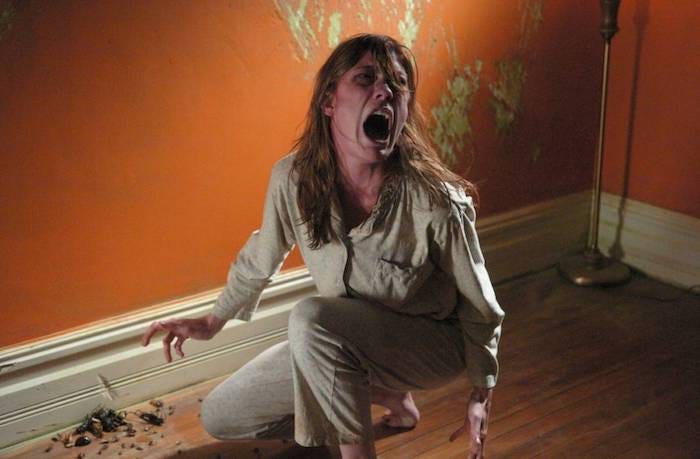
My interview with the co-writer and director of the hit Marvel movie Doctor Strange as well as horror movies The Exorcism of Emily Rose and Sinister.
I started following filmmaker Scott Derrickson years ago on Twitter (@scottderrickson) because I enjoyed his movies, plus, he’s a huge fan of Flannery O’Connor and Bob Dylan, two of my very favorite creatives. So I reached to Scott for an interview and was especially pleased when he said yes.
Recently, we enjoyed an hour-long conversation which was wide-ranging in nature covering three of his movies: The Exorcism of Emily Rose, Sinister, and Doctor Strange, as well as his thoughts on storytelling in general and the horror genre specifically.
Today in Part 3, Scott digs deeper into his reflections on the power of horror movies and what he thinks is at the core of the movie The Exorcist:
Scott Myers: There’s a quote of yours that’s related to this in another interview: “For anyone who takes cinema seriously, it’s important not to limit yourself to just optimistic or happy movies. You’ve got to be willing to let the art of cinema take you into some darker places and figure out a way to make full use of it.”
And I think you were talking about being a horror director when you said, “It’s not about putting something evil in the world. It’s about reckoning with evil. We don’t need any more evil in the world. We need a lot more reckoning with it.”
It sounds like you think there’s almost a pedagogical value in some respects for viewers watching horror movies. That they’re compelled to reckon with evil.
Scott Derrickson: Yeah, I think that’s the fundamental moral value of the genre. It’s the role that horror and gothic art has played through most of human history, especially throughout the religious world — these horrifying depictions of how evil corrupts and visceral demonstrations of the consequences of evil.
I remember once walking through the Prado Museum in Madrid thinking, “God, this is just floor after floor of devastating suffering, torture and death.” It’s because so much of that artwork is from a Catholic culture going back many centuries.
And it’s reductive to look at that magnificent art and say it was all simply intended to scare people into joining the church or to scare people to believing God to avoid going to hell. That’s in there, sure, but so much of it is just honest reckoning with the evil in the world. That classic Catholic artwork does that so effectively.
In light of that, it’s significant that cinema came into existence during the most secular century in history, when the power of religion was on the wane, and the power of statism rose.
It was suddenly no longer all about the power of the papacy or other theocracies, but the murderous state ideologies of Hitler, Stalin, and Mao. And in the midst of these global mass-murdering dictatorships, horror cinema didn’t always know exactly where its place was as source of moral commentary.
A lot of things were scary just to be scary. There was certainly, in the old classic horror films, the duality of man Dracula, Dr. Jekyll and Mr. Hyde and The Wolf Man. And of course horror in the 50s took on the red scare with films like The Blob and Invasion of the Body Snatchers.
And I think that the Slasher movies in the exploitation horror era that I grew up with were always portraying arch moral connotations about sexuality, but rarely in powerful or artful ways.
And so now, in this era, I think what’s so exciting about the genre is how so many people are going so much deeper with ideologies and psychology and philosophy within horror. Just look at the treatment of adolescent sexuality in the Friday the 13th series vs It Follows.
Horror can carry so much meaning, reckoning with evil in the world, within nature, and most of all within our own human condition. It can connect to our unspoken and unspeakable fears in ways that I don’t think even horror literature can reach — at least, not in my experience.
Essentially, I feel very strongly that horror cinema serves a necessary good in the world. My boys are 12 and 14, and I’m watching them get drawn deeper and deeper into horror as I did at their age. It makes so much sense to me, that with all the tempestuous feelings they have, all the fears and anxieties that they now wrestle with as their understanding and experience of the world expands, the outlet of reckoning with that through horror cinema is a truly beautiful thing.
Whenever we finish watching horror movies together, they are always so happy. [laughs] It’s as though something has been dealt with. Something has been released. And it’s as though they’ve been given a bit more strength to go out and face whatever dark and oppressive things they are facing in their lives.
That’s certainly what the genre did for me and continues to do for me. It started in my teens and continues to this day. It’s what the genre has always been for me — a way of reckoning with fear.
Scott Myers: That circles right back to Joseph Campbell in “The Hero’s Journey.” The stories often arose as initiation rituals to prepare young people for becoming adults. They would hear stories about things that would scare them to prepare them for that entry into adult life.
Scott Derrickson: Yes. And the fact that horror feels transgressive is part of the dangerous appeal to young people. Of course, I do think it’s important for parents to monitor the effect of horror films on their individual children. I’m still very conscientious about what horror movies I will and won’t let my kids see. But it has definitely been an absolute good in my life, and I think it’s an absolute good in theirs too.
I don’t know what would’ve happened to me, or what person I would have become, had I not gone so deep into horror cinema as a viewer.
Also, during these very significant phases of my life when I was writing and directing each of my own horror films, I was intentionally reckoning with things that I was actually scared of, and each time I came through the filmmaking experience feeling stronger and less afraid for having done it.
Scott Myers: I’d like to explore that connection between horror and religion. One of the theories as to why religions arose is to explain the presence of evil. For example, why do bad things happen to good people? That led me to another one of your quotes where you said, “For me, horror is a uniquely suitable genre for the intersection of the philosophical and the religious. It’s a natural place for those separate arena’s of thought to come together. Many of the best films in the genre have strong philosophical or religious ideas at their core.”
Maybe just to be specific about it, are there a couple of movies that come to mind that really illustrate the point?
Scott Derrickson: Of course, the granddaddy of them all is The Exorcist. It’s almost not like a movie that we’ve seen — it’s more like something that we’ve all been through. You don’t watch The Exorcist, you survive it. It’s just so visceral and so powerful and so terrifying.
But what The Exorcist is actually about — what I think is at the core of that film — is rarely talked about, even though it’s always experienced by the viewer. Friedkin himself said it plainly, “The Exorcist is about the mystery of faith.” The mystery of faith, not the power of faith. It’s not merely about good triumphing over evil. It’s about a character reckoning with his own faith, his own profound struggle with doubt, and the mystery of the core of that struggle.
And talk about a movie that fills you with a sense of a magical world — that movie does it, even if you’re a complete materialist and don’t believe in the metaphysical or think the idea of possession is complete bullshit. That’s fine. The movie is still going to fill you with an awesome sense of mystery and wonder.
It’s going to tap into… At the very least, what it makes you feel is a strong identification with that priest’s journey, his struggle, and the mystery of his own faith and belief that takes him all the way to a place of making the sacrifice that he does at the end of the film.
In response to your question, that’s the first movie that comes to mind. Whenever I see the list of the best horror films ever made, I always think, “I wonder what number two will be.” [laughs]
What else? I just showed my kids The Shining. The tone of that movie is not like any other horror film I’ve seen. I think the core of Stanley Kubrick’s cinematic genius is how he managed to nail very unique human experiential tones with each film. In The Shining, it is not simply fear. It’s the horror of madness and emotional estrangement.
He talked very articulately about it, about how the tone and the feeling of a movie is primary. That’s the center of the target that a good director tries to hit, because what a movie makes you feel or how a movie communicates to you beyond story, beyond words and themes — that’s what is unique to cinema.
The Shining does that extremely well but, of course, there’s all these ideas in there too — the concepts of afterlife and recurring existence being two of them.
Martyrs is perhaps the best example of extreme horror striving for the sublime philosophically and religiously. It’s arguably the most brutally violent film I’ve seen, but what it left me feeling and thinking about afterward had much more to do with the ineffable meaning of suffering than anything else.
Poltergeist is an ideological pro‑family movie. Is there any movie that is more of a tribute and celebration of a nuclear family than Poltergeist? I’m not sure.
Tomorrow in Part 4, Scott provides insights into a movie he co-wrote and directed The Exorcism of Emily Rose.
For Part 1 of the interview, go here.
Part 2, here.
Scott is repped by WME and Brillstein Entertainment Partners.
Twitter: @scott derrickson.
For nearly 200 more in-depth Go Into The Story interviews with screenwriters, TV producers, filmmakers, and industry insiders, go here.