Interview (Part 3): Sarah Jane Inwards (2017 Black List, Nicholl Winner)
My 6-part talk with the writer of the script “Jellyfish Summer”.
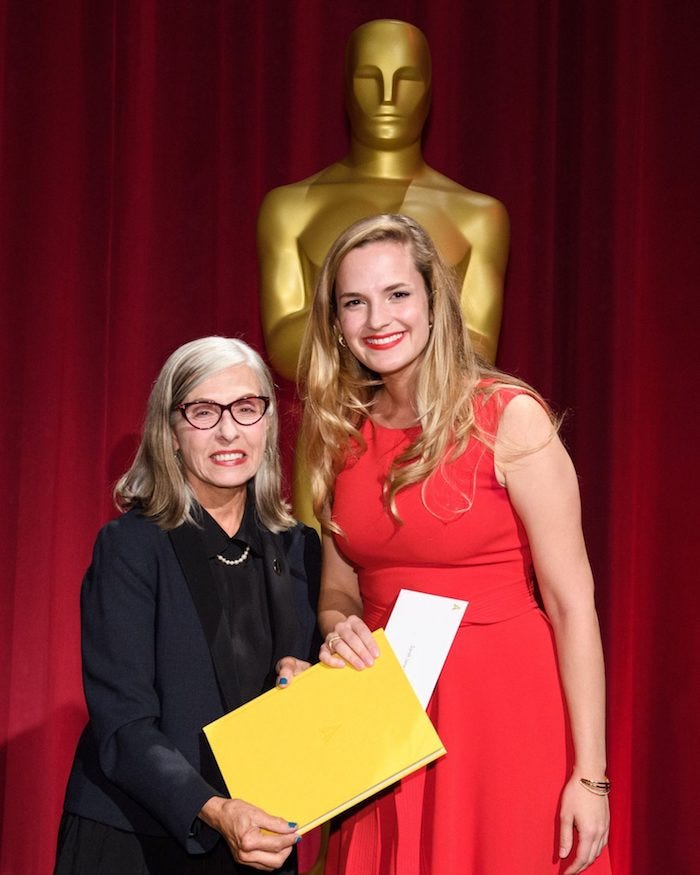
My 6-part talk with the writer of the script “Jellyfish Summer”.
Today in Part 3, Sarah and I continue our in-depth conversation about her 2017 Black List script “Jellyfish Summer”:
Scott: Let’s talk about some of the key characters in the story, this particular family. Maisie Ray, a young black girl, 10 years old. She lives with her mother, Mama Delilah, and her older brother, Zeke, and her older sister, Rebecca. Could you talk about the family’s living situation when we first meet them?
Sarah Jane: This family lives in a rural part of Mississippi, on the coast. The family’s father-figure is gone because he is in the army. At the time of the story takes place, he was first out to Vietnam and then he goes back to help with the riots happening in Mobile, Alabama.
These characters, this family, lives on the shore here all together. It’s summertime when we meet them, so the kids are not in school. I guess their dynamics are the thing that really interests me the most about this family. They all have a very strong point of view about what to do in this situation.
We meet them right away when these refugees have appeared in their backyard and now they’re faced with, “What are we going to do?” Mama Delilah, her attitude is that we need to help others because, “I need someone else to help you,” if they were in that situation.
Rebecca and Zeke, however, are scared because they’ve seen bad things happen to people who help these people. Not only that, they’ve seen terrible things happen to people who were just minding their business but are black in their society, so they’re very hesitant to help these boys.
Maisie is there, a young girl, impressionable, trying to figure out where her place in the world is, and what she feels, and where her stance is going to be.
One thing that was important to me is to have Zeke’s point of view. He’s the brother who doesn’t want to help these kids. Obviously, if you’re writing about why we should help refugees, it’s a romantic notion to think we always have to help other people, but it’s not necessarily taking into account why people who don’t help others do that. It’s not necessarily that they’re bad people. There are a lot of sympathetic situations for why someone wouldn’t help another person. I just wanted the antagonist’s “point of view” to be understandable, because while it would be nice and a romantic notion to think that it’s always best to help other people, it’s not realistic to not take into account why people don’t help others or maybe can’t help others. That was important to me, just to make sure that we talk about this issue in a more realistic way.
Scott: Yes. Zeke, at one point, says, “Some blacks, some whites, some even look Oriental and Mexican. Don’t matter, anyhow. Nobody likes none of ‘em.”
Sarah Jane: Yes.
Scott: Versus Mama, who, in that perspective, she says at one point to Maisie, “That’s why we gotta help these boys, Maisie, because the second you decide someone’s life ain’t worth the same as yours, or your family’s, who’s to say someone else ain’t gonna think your life ain’t worth anything neither. Understand?”
Sarah Jane: Honestly, it’s the theme of the whole story, is right there with Mama Delilah. Not to ruin the story, but, as you go on, that ends up acting as a prophecy.
Scott: In the middle of all this is Maisie Ray. She’s the protagonist of the story and she has to find her way in this remarkable situation that happens when these individuals fall from the sky. How would you describe her personality when we first meet her?
Sarah Jane: One thing I like about Maisie is that she’s very precocious and she has very strong opinions. When we start out, she has a passion for throwing these jellyfish back in the water that get washed up on the sand. Every day in the summer these schools of jellyfish wash up on the sand because it’s high tide and the tide goes out.
If they don’t get thrown back out, then they die on the beach. She gets up early and starts throwing these jellyfish back out, but it’s kind of a fool’s endeavor because they just wash back up the next day. Her determination is admirable, but it seems, maybe, a little bit foolish in the eyes of her brother. But she doesn’t care.
She’s just very compassionate and determined little girl. That’s why I love her, is because she believes that she can do something. Even when she’s not sure what she should do, I feel like, throughout the whole story she believes she can do something.
To me, nobody’s perfect. Nobody is always doing the right thing or helping others, but as long as you believe you can do the right thing, I think that you’re going to stay on a generally good path.
Scott: That image of throwing jellyfish into the ocean, where did that come from?
Sarah Jane: When I went down to Mississippi to help after Hurricane Katrina, we were staying in a camp by a bay. There were little jellyfish in the ocean when we went out swimming out there. That always stuck with me and that was a part of the idea.
When I was there, the jellyfish weren’t washing up on the beach. That does happen. Usually, it’s moon jellyfish, like in the story. They’re bigger jellyfish that don’t have stinging power strong enough for humans. I took a little liberty to have it be a frequent occurrence for the purposes of my story.
One thing I really liked is that I wanted the genre to feel very much like a historical drama, almost like the sci-fi felt incidental to that, but, when I was doing that, I wanted to make sure people’s expectations were set up a little bit to get a hint of a sci-fi. I feel like the image of a jellyfish, they look a little other-worldly. They look a little bit sci-fi themselves.
I felt all those things together tied in nicely to set the stage in the first scene to give you a hint of all these different elements.
Tomorrow in Part 4, Sarah Jane reveals how she made a surprising narrative choice with her script “Jellyfish Summer” and how that plays into the story’s central theme.
For Part 1 of the interview, go here.
Part 2, here.
Sarah Jane is repped by Verve and Kaplan/Perrone.
For my interviews with 52 other Black List writers, go here.
For my interviews with 26 other Nicholl Fellowships in Screenwriting writers, go here.