Interview (Part 3): Renee Pillai
My interview with the 2019 Nicholl Fellowships in Screenwriting winner.
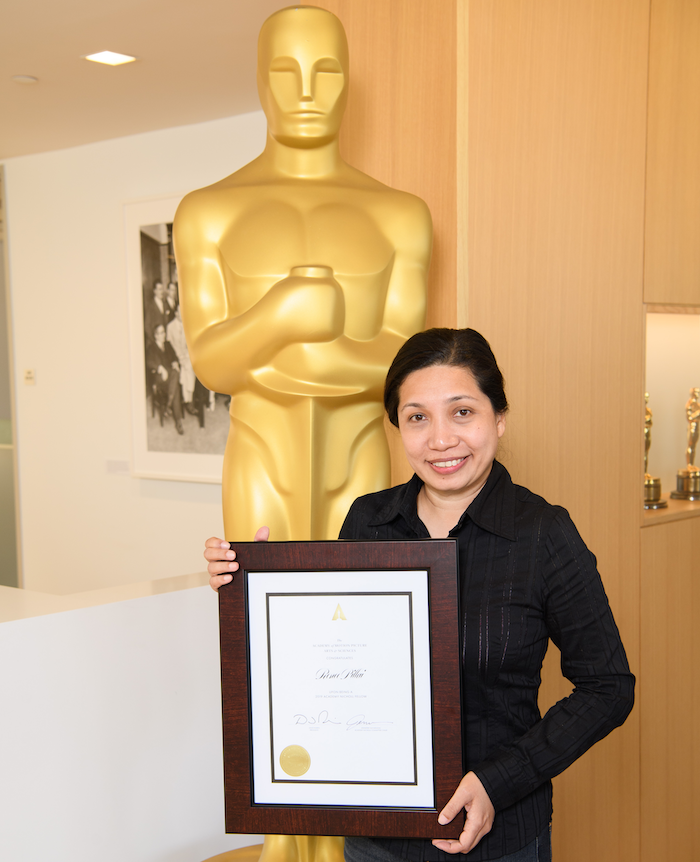
My interview with the 2019 Nicholl Fellowships in Screenwriting winner.
Renee Pillai wrote the original screenplay “Boy With Kite” which won a 2019 Nicholl Fellowship in Screenwriting. Recently, I had the opportunity to chat with Renee about her background as a screenwriter, her award-winning script, the craft of screenwriting, and what winning the Nicholl has meant to her.
Today in Part 3 of my interview with Renee, we dig into the central characters in her Nicholl-winning script.
Scott: Let’s talk about these three primary living characters in your Nicholl script, although there’s fourth character, Gabriel who has recently died, but his ghost, if you will, metaphorically, is the symbolic and emotional presence places an undercurrent and even a mystery to the story.
Let’s start with the protagonist, this plucky little boy named Ben. This is how your script introduces him. He’s in a bus terminal.
“In the middle of that empty room, there’s a boy, small, looks about seven, can’t really tell because his hoodie is pulled in so tight you wonder how he’s getting air.
Ben Holland, as we will learn to call him, is a little bird of a boy, skittish and worried looking. He wears the misery of someone six times his age all over his face.”
Was Ben the first character who came to you?
Renee: In truth, I think all three of them emerged at almost the same time, but I think it was a toss-up between Ben and Stella. It was always a story that would focus on their relationship. But looking back at it — Yes, Ben probably was the first character because he was the catalyst.
Scott: The decision to make him the protagonist of the story or, at least, the character through whose eyes we experience the story, would that come pretty early on?
Renee: After I outlined the piece, I decided to go with Ben as the person who will take us into the world.
Scott: His refusal to talk, which I did a little research on that, there’s an actual psychological condition called selective mutism. How did that aspect of his persona emerge? Was that something you knew from the beginning, or did it come through the process of just getting another character?
Renee: Initially, I thought of making Ben older and he could speak but because I wanted to have him be the person that we follow, whose eyes we look out of, and because I knew where I was going with the story, in terms of his relationship with Gabe and everything, I guess it was a conscious decision then to make him mute.
Scott: That came with some challenges too because, obviously, you have a character who can’t use dialogue to express themselves and you’ve got to work your way around that.
Renee: Yeah, it was not without its challenges. Especially because I had to figure out “how do I make this engaging?” If not, the scene becomes just one giant monologue for the other characters.
Scott: Of course, it was a great way of establishing, at least, one of several questions that create a mystery dynamic: Why is he not talking? His mother’s long gone. His father’s died like a month ago, which turns out a sudden violent death. That makes Ben an orphan, so he shipped off to live with his aunt.
This is how you introduce the aunt where Ben makes his way through this farm house. He goes up to this bedroom door and opens it. He sees two very naked people engaged in some robust lovemaking.
“The woman is Stella Holland, well north of 50, interesting as she is difficult. Stella’s a star but so is the sun, get too close and it’s liable to kill you dead.”
What about the story development process, how Stella came to be?
Renee: To be very open, Stella embodied some of what I was feeling at the time. Like I said, this is not a real experience for me, but more like what I felt when I witnessed certain things.
If Ben was the projection of my feeling of helplessness and voicelessness, then Stella was really the projection of a cautionary tale, like this is the bitterness that can creep into people if left unchecked. It was more a reminder of how forgiveness is so important.
She came about as a ghost of Christmas future if people cannot forgive.
Scott: Then there’s her lover, Linny and he’s introduced mid‑coitus with Stella. This is how the script describes him with her:
“He’s Linwood James, 60s, salt of the earth, head in the clouds, heart as big as the sky. He’s a blues man. You’d be proud to call father, brother, and son.”
If Ben is a projection of the feelings of helplessness and voiceless that you were experiencing, and Stella is a cautionary tale about if you’re unable to forgive someone, that this bitterness can be the result, where did Linwood James come from out of your own experiences?
Renee: Well, Linny, he’s like a foil for Stella, that rock‑steady character that you hope to be. Linny is basically all the feelings of unrequited love because there comes a point where she does love him in her own way, but he realizes that she’s never going to love him the way he loves her.
It’s drawing again from different human emotions, not specifically from maybe any one experience, although I think Ben and Stella might have arisen from a similar feeling. Linny’s came from the feeling of loving someone who can’t love you back quite the same way.
Scott: All of these characters, they qualify in that respect of…there’s points of universal human connection to them.
There’s actually another character, setting aside Gabriel, there’s this towering old oak tree that’s been in the farm and it immediately draws Ben’s attention. He often seeks refuge by climbing it.
In fact, there’s a key plot point that happens in relation to the tree when he falls out of it. What do you think that represents to Ben that tree?
Renee: I think it’s safety. It’s security, a haven for him because if you look at it, it’s a place where he can run away to, And I think he identifies that from the very beginning because it seems to call to him in that way.
Once you start learning his history, you understand that he always had to find places to hide or be safe and that oak represents that security that he needs. It’s supposed to come from Stella, or Linny, but it’s interesting that he finds it in that object, that tree.
Scott: You mentioned it earlier which is really a visual motif or theme, which runs throughout the story. There’s a framing device of two characters, Jenkins and Roche, who we hear several times in voice-over, but we don’t actually see them until the very end and so that’s a little bit of a mystery like what’s going on there.
Could you describe what’s that subplot about it? How did that emerge in your process?
Renee: Actually, that might have been in from the beginning because I knew how it was going to end, but my main reason for having these two characters was because I wanted to show the juxtaposition between what is expected in the world of art and in a way how different the people of that world could be from Stella.
It’s almost the same reason why I set Stella being this fine artist, this luminary in the world of art in that place and gave her the characteristics that she had.
Also, I use them to… how do I explain this? It was the creation of mystery because I knew that you’re going to see them in the end and they were going to bring it home. But the reason why I parceled their scenes out was also as a counterpoint to the relationship of those two kids in those scenes. Who we eventually learn are Gabe and Stella.
Because these two, Jenkins and Roche, they sound almost pretentious in the way that they approach art, almost a little too cold‑blooded, until they reach the end and the emotion is undeniable. I just wanted to show the difference in how art can be seen.
Scott: As opposed to like they’re just there to service a mystery. It sounds like laying in some of the backstory elements from within.
Renee: Yes, because if you noticed, as we cut away to these flashbacks of the more innocent time which leads up to the boy flying the kite, it’s almost like a prelude to what follows.
When they talk about Holland and that Holland never went to art school, and then following from that, Stella talks about how she could have gone but she didn’t.
Tomorrow in Part 4, Renee talks about the challenges of writing a script which is “driven” by the characters and how she was concerned to avoid having the story slip into melodrama.
For Part 1 of the interview, go here.
Part 2, here.
For my interviews with every Nicholl Fellowships in Screenwriting winner since 2012, go here.
For my interviews with 53 Black List writers, go here.