Interview (Part 3): Michael Kujak
My interview with 2021 Black List writer for his script Follow.
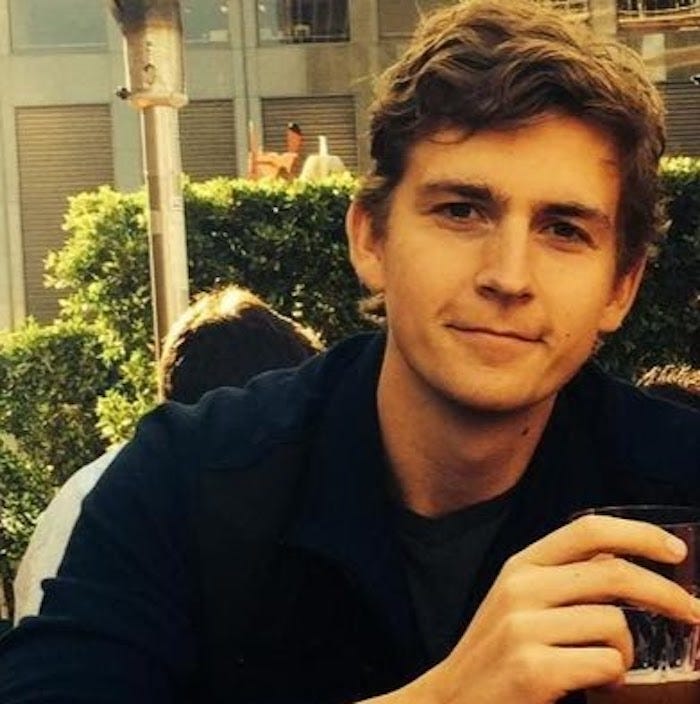
My interview with 2021 Black List writer for his script Follow.
Michael Kujak wrote the original screenplay “Follow” which landed on the 2021 Black List. Recently, I had the opportunity to chat with Mike about his creative background, his script, the craft of screenwriting, and what making the annual Black List has meant to him.
Today in Part 3 of a 6-part series to run each day through Saturday, Mike does a deep dive into the central characters of his Black List script “Follow.”
Scott: I have this theory about a story that, fundamentally, all stories ask a question of key characters, and in particular, the Protagonist, “Who am I?” Like self-identity. With everything else going on, that question exists at the core of the character’s psychological journey.
With your script “Follow,” you’ve got this personal identification so closely aligned with a social media presence, the one million, the two million, the five million subscribers, in that sense of external validation. One of the reasons Millie is sympathetic is that she keeps bringing Hannah back to “What about the old days when you first got started? It seems like you were more honest there.”
Were you thinking about this idea of self-identity, external validation? Were those some themes that were running through your mind when you were working on this?
Michael: Absolutely. Especially, Hannah’s identity and how it’s tied to her fans was definitely a big part of it. It’s very hard to separate yourself from your community if that’s where you’re getting all your validation and love. All these young girls in Hannah’s case, all of them are looking up to her. They see her a certain way.
To separate yourself from that is a really, really difficult thing to do. Especially when you’re sharing intimate details of your life. A breakup that you have with the boyfriend, that’s now a very big storyline in the TV show that is your life. It’s also just a breakup that you actually have to deal with.
It becomes very hard to separate your job from your personal life when you’ve used your personal life to monetize it, which ties into classic views of celebrity, but it’s just even more hyper-focused in these new technologies.
Scott: Your Nemesis character, technically Millie, she goes from archetypally, a Mentor, a Trickster, to Nemesis over the course of time. The quote that Hannah has with her fans, she says, “I love all you guys so much. Without you, there’s no channel. Just remember to always be yourself.”
She says that, but it’s Millie, as a Mentor, that keeps bringing her back to that point, right?
Michael: Yeah. I liked those types of generic, self-motivational, self-help type of advice statements that influencers will wield. They so often wouldn’t follow their own advice.
It would be these generic things that they would find on Instagram, they would repeat it. Yet who they are is completely being dictated by their own audience, and what is best for the channel, and growing the channel and driving the numbers in the right direction.
Scott: In fact, you’ve got another one that has its own little subplot, where she says, “Hannah, ignore the haters. Follow your dreams. Failure is not an option.” It sounds like a self-help guru type thing. It’s innocent in a way, and yet Millie grabs onto it and does her own thing with it. Maybe you could talk to that a bit.
Michael: I got a little bit of that from Nightcrawler. Self-help advice is perfect for a psychopathic or more extreme personality because they don’t have to see the contradictions or doubt as much. “Failure is not an option.” That’s a motivational thing you might see on a gym poster but if you take it literally it would get dark real fast.
Millie, who is a psychopath, takes it to its more natural extremes, where it’s like, “We’re going to grow this thing no matter what for the greater good of all the people that you’re going to help on your channel.”
I like that almost religious angle for being a prophet for this personality.
Scott: Yes. She does have a religious fervor about this for Hannah. Let’s talk about Millie. Here’s how you introduce her.
“A small, shy Fannah, Millie Barnes, 15, steps forward from the line, and rushes up to Hannah. Hannah takes the girl in for a beat. She’s not like the other Fannahs, copying Hannah’s look. Millie has long, unkempt hair, horn-rimmed glasses, and sports a private school uniform.”
Where does she begin this journey with Millie? How would you describe her personality at the beginning of the story?
Michael: I think of that meeting, where that scene takes place that you described, it’s very much a fucked up meet-cute moment from out of a dark Rom Com. It’s these two people who were almost circling each other. They had never met in person, but they were very much a part of each other’s world.
Both of them are pretty lost and isolated when the story begins. With Millie, she’s coming of age, she’s in puberty, she’s in middle school. It should be when she’s making those close friendships that carry her through the rest of her adolescence. Instead, she’s invested her emotional self in these online communities, and specifically, the Fannah community.
She is just way out there. Much like Hannah, she has no one else in her life besides this community. When she finally reaches out to Hannah, we leave it a little ambiguous as to how much of what Millie is doing is calculated in the beginning, versus how much is happenstance. It’s left to the viewer’s imagination.
I found both the girls an interesting mirror of each other, where they’ve both, in their pursuits, basically isolated themselves. That makes them perfect for each other. When they meet, Millie becomes a personification of Hannah’s audience.
The audience has manifested itself into a creature that is called Millie. Millie can then help her in all the things she wants to accomplish, but then also, indulges all the more toxic aspects of an influencer’s relationship with their community.
Scott: That scene we were talking about happens on page 12. It’s almost like a call to adventure or inciting incident in a way, the intersection of these two characters. You’re planting the seed. It’s innocent enough.
Let’s talk about this writing challenge: about how much you give away, teasing that out, and building the tension. I’m imagining that was a pretty significant part of the process for you in crafting the story.
Michael: Yeah. That was a big thing we addressed through several rewrites as we continue to develop it with 21 Laps, the production company. It’s still something we go back to. It’s a very fun but a very tricky game of figuring out what to reveal about the two characters. What do we share with the audience? What does Hannah know? What does Millie know?
Finding that balance about how they reveal themselves to each other is a really delicate balance. In earlier drafts, we had Millie go crazy earlier. We thought, “It’s a stalker thriller. That’s what people are here for.”
Then, in later drafts, we decided to scale it back a little bit in the first half of the script to let it become a little bit more of a a slow burn. In the way the script exists now, you get to invest yourself…There’s not even a ton of horror-thriller elements in that first half.
It’s very much this show business, coming of age drama, getting to know these two girls, and falling into their relationship. When we flip the switch, and it starts to enter that horror-thriller storyline, hopefully you’re invested in these girls enough that it becomes a little bit more dramatic, and a little bit more terrifying.
Scott: It’s done quite well. There is that edge. Millie does seem to know an awful lot about Hannah. That’s something that’s brought up. Then you also mentioned an influencer whose death happened three years ago in rather mysterious circumstances. That elevates the tension.
So let’s talk about that influencer’s death. I was quite interested with this. The 1600 Vine Street building, that’s actually a thing.
Michael: I went and walked it, actually. I went down to Hollywood. I walked around the apartments as much as you can. I had read an article about that community of all those influencers living together. Almost a little incubator of young people being able to market with each other. Obviously, it became this prestige place to live.
Scott: I was wondering how much research you did. Then I thought, “Well, wait a minute, since these people are all online personalities, you probably don’t have to leave much beyond just getting on your computer and seeing people do their thing.”
Michael: It was weird background research. I would pick an influencer. I would go back all the way in the beginning of their channel.. It’s crazy to see what starts as videos we would all make as a kid. It is two teenagers in a driveway, hula hooping, hanging out. Kids messing around, kids at sleepovers, kids dancing, doing karaoke in their bedroom.
Slowly, you start to see the counts go up a little bit, a little bit. They start to get a little bit more attention. Everything starts to get a little bit more produced. The titles get sharper, the ideas get sharper.
You see it morph into this professional product that is completely different than what it started out as. The amount of detail that you can get from these people’s lives is pretty stunning. I felt like a creep doing some of this research, because you learn so much about these people from their channel.
Scott: That’s what drives the thing, in part, is the fact that they do reveal so much.
Michael: Sure.
Tomorrow in Part 4, Mike answers my questions about some of the story choices he made in writing “Follow,” both conventional and unconventional.
For Part 1 of the interview, go here.
Part 2, go here.
Mike is repped by:
John Zaozirny (Bellevue)
CJ Fight (WME)
For my interviews with dozens of other Black List writers, go here.