Interview (Part 3): Laura Kosann
My interview with the writer who not only was named a 2021 Nicholl Fellowships in Screenwriting recipient, but also had two scripts make…
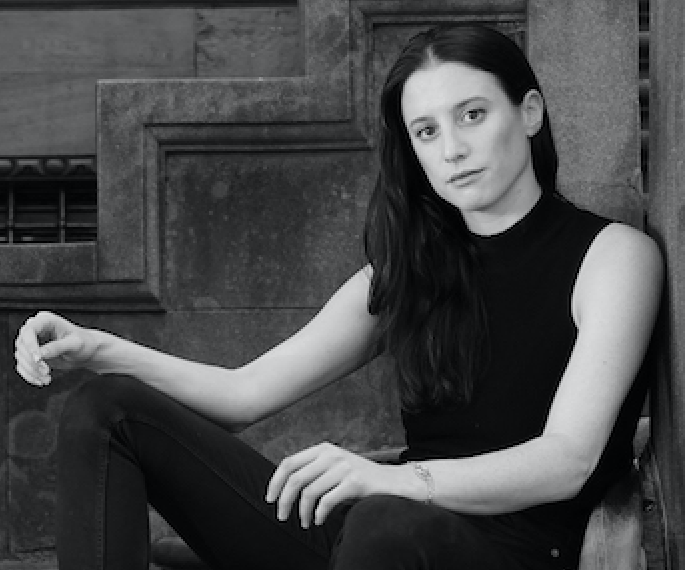
My interview with the writer who not only was named a 2021 Nicholl Fellowships in Screenwriting recipient, but also had two scripts make the 2021 annual Black List.
Laura Kosann made quite a splash in Hollywood in 2021. In November, she was named a Nicholl Fellowship in Screenwriting winner for her original screenplay An Ideal Woman. Then in December, that script plus another screenplay Laura wrote (From Little Acorns Grow) were named to the annual Black List. If that weren’t enough, the good news continued when in April 2022, it was announced that Laura had been hired to adapt the female-driven comic book Mercy Sparx for MGM.
Laura was kind enough to carve out some time for us to talk about her background, the craft of screenwriting, and her screenplay An Ideal Woman.
Today in Part 3 of a 6-part series to run each day this week through Saturday, Laura delves into some of the themes which run through her script An Ideal Woman.
Scott: There are two daughters, “Jackie 15, a willful introvert, sharp and intense. Terry 13, trailing behind her older sister as always.” Jackie’s an interesting character because while the family lives in a suburban neighborhood, where conformity goes with the address, she’s something of a dissident, isn’t she?
Laura: I love her. I just love that character so much. I don’t even know that she’s a dissident. I think that at that time she’s seen as one. But really she is just this free spirit. She’s curious, and she doesn’t listen to an answer from her elders and take that immediately as fact.
I think that she’s just a smart, curious, independent girl who is in a society where everybody — in the face of communism — is being put into these boxes, and everything is so polarized. There’s no gray area. It’s this thing of just not expecting kids to ask questions or decide for themselves. And I think that she wants to.
Not to mention being a woman then, and what was expected of you as a girl growing up in the 1960’s. Jackie has her own compass that makes her seem weird. That’s why I absolutely love that scene where she’s watching The Twilight Zone. She was not like the other girls in her class. She wasn’t girly. She’s a free spirit. She wants to learn. She wants to ask questions.
Scott: Ann’s got these female characters around her, including her daughter, who is seeing things with a kind of clarity, like how the Cuban missile crisis, it’s that big of a deal. There are two other important female characters.
One is Jackie’s teacher, Susan Geller, who has an interesting story, and then there’s this other character Cindy, who is more like the suburban housewife, but starting to exhibit some feelings that she’s trapped in a way, trying to break out of that.
I’m just wondering, the characters, did they just emerge naturally? Were you thinking functionally, “I want to have a character who represents someone like Susan, who sees things in a very stark way, ‘This is the reality of where we’re at,’” and Cindy who’s really struggling and represents that Ghost of Christmas Future, “If you don’t change, Ann, you could go down that path?” How did these characters evolve in your writing process?
Laura: In many of my scripts, I often have two women that should be aligned and be great friends, but because of the circumstances of their society, they’re pitted against one another. Both Susan and Ann have to put on a show for the world. There’s an entire part of them they can’t reveal. They have common ground. But they never find it. Which to me is a sort of Romeo and Juliet tragic, platonic love story in this script, in a sense!
Being gay in the 1960’s, Susan’s circumstances are just so, so much harder. Ann has so many opportunities that Susan does not. But the two still, both, have this melody of themselves that is left to be unsung. And Susan especially, has this whole side of herself that she just couldn’t be public about, and just couldn’t live out. And when I started developing both characters, I always felt like they would be great friends. It was always my instinct.
With Cindy, she is a character I came to really feel for. That scene, honestly, is my favorite scene in the whole movie, when she says, when she’s in Ann’s clothes, “We can’t be anybody else but each other.” It is my favorite part.
At first, when I wrote Cindy, I just wrote her as more of this very sad, lost character. She’s OK with where she is and who she is, but at first, there wasn’t much there. I didn’t realize I was falling into that trap of creating a cliche. The cliche 1960’s neighbor who’s smallish. I realized I wanted to go further when I started to feel just so, incredibly sorry for her.
I remember one day this notion came to me where I was like…”These women are so trapped…why aren’t you including Cindy in that category?” I knew Cindy was trapped, but it was as if I felt that because she was playing the game so well, she was OK.
And that’s when it hit me that if Cindy wanted to be anybody else, all she could be was another wife. Another Mother. There was no other role anyone would let her play. That’s what’s beautiful about creating characters. They sort of take on their own life at some point.
That’s why sometimes I can tend to bump up against having an exact outline. For my specs that’s never how it is. It’s always changing. It’s always evolving. You have to let some magic happen when you’re working through it.
Scott: To me, it feels like Ann’s journey involve getting stimuli, feedback from others, particularly women, and that’s all about a question of self-identity: “Who am I?” She even says at one point, she’s just having sex with her husband, and she pushes back. She looks at him, and she says, “Do you still see me?” Self-perception.
It’s like a hero’s journey, she’s trying to find her authentic nature.
Laura: It’s very much a hero’s journey. With Ann also, when I try to internalize it I think of it this way: I love to write and that’s what I have a passion for. If tomorrow someone said, “You can never write again. You can only be a wife and a mother,” I would be having an identity crisis. So much of my self-worth comes from what I love to do, and the privilege and ability to be able to do that.
Ann loved to act. Then she was blacklisted, became a Mother and acting was taken away from her. She had children and then suddenly woke up years later and wondered — where did my life go?
And that’s why you’re following this family through this week. Through this sort of existential crisis that causes the cracks in the veneer of Ann’s house-of-cards world to just give way completely. And then it becomes an identity crisis. Everyone was playing along. What happens when someone stops playing? That’s why the song “Paper Moon,” is such a huge part of the screenplay as well. That line, “But it wouldn’t be make believe if you believe in me.”
Stan and Ann were playing make believe together. But when someone stops, what does it mean?
Tomorrow in Part 4, Laura talks about the importance of a deer, an Ella Fitzgerald song, and synchronicity in the writing of An Ideal Woman.
For Part 1 of the interview, go here.
For Part 2, go here.
Laura is repped by CAA and Heroes and Villains Entertainment.
Twitter: @LauraKosann
For my interviews with every Nicholl Fellowships in Screenwriting winner since 2012, go here.
For my interviews with Black List writers, go here.