Interview (Part 3): Kryzz Gautier
My interview with 2021 Black List writer for her script “Wheels Come Off.”
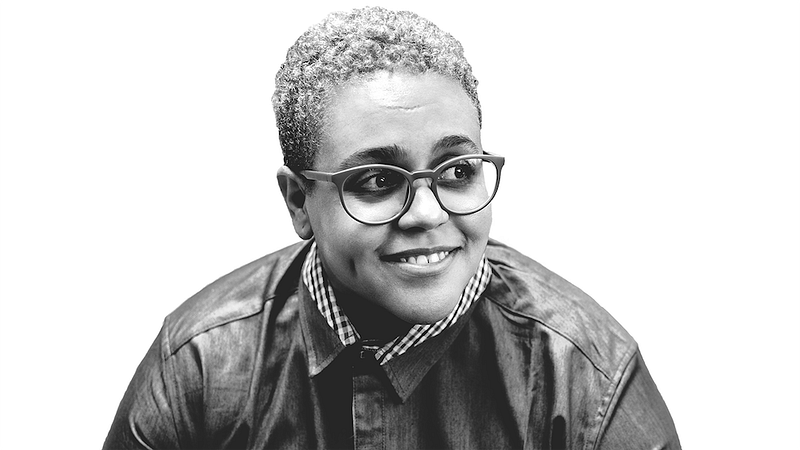
My interview with 2021 Black List writer for her script “Wheels Come Off.”
Kryzz Gautier wrote the screenplay “Wheels Come Off” which made the 2021 Black List. I had the opportunity to chat with Kryzz about her creative background, her script, the craft of screenwriting, and what making the annual Black List has meant to her.
Today in Part 3 of a 6-part series to run each day through Sunday, Kryzz talks about the script “Wheels Come Off” is her life story “except in a different universe.”
Scott: Let’s talk about your feature film script “Wheels Come Off,” which made the 2021 Black List. On the title page it says, “Inspired by this writer and her disabled mother making their way through an inaccessible world.” Then in parentheses, “Some apocalypse added for seasoning.” Now, you said you have a particular type of genre that interests you. Is this in that genre?
Kryzz: Oh, yeah. The way that I like to describe it is the post-apocalypse like you’ve never seen it before. It’s the end of the world, but it’s also magical realism. There’s the “Three Amigos,” who are this disabled mom, her sixteen-year-old daughter, and their AI robot.
They eventually meet up with a group of disabled kids, which you never get to see in the post-apocalypse. You have a deaf character, a blind character, someone with Down Syndrome, a young man with cerebral palsy, and someone with a missing limb. It’s disabled people surviving the apocalypse. It’s putting disabled characters front and center and as heroes in the story. You also have these very fantastical sequences. The whole thing is bright and colorful. The post-apocalypse tends to be gray, grim, and bleak. “Wheels Come Off” is nothing like that. It’s the “seasoning” added to the story.
Scott: That old saying, write what you know. Your mother is someone with a disability?
Kryzz: My mother has been in a wheelchair since the day that I was born. Yes.
Scott: That’s something you have an intimate connection and understanding of because of that experience. I’m assuming there was a considerable inspiration for this coming up with the story.
Kryzz: Yeah. The way all my scripts start, the way all my stories start, is with a question. Going through the pandemic and observing what was happening in 2020, I kept seeing people with disabilities being left out of the conversation. That community was constantly left behind. Even now, as the world has opened up again, I’m witnessing how disabled and immunocompromised people have been basically left to fend for themselves.
Once the world reopened, it was like, “We’re going back to normal. You guys just…fuck off.” In 2020 the tune was very similar. It was “Well, you lot figure it out. We’re going to do our thing. This is the priority and we’re not going to consider how people with disabilities will be affected by this lockdown.”
To this day, they continue to be left out of this conversation about how reopening or removing mask mandates will affect their lives. Knowing my mom is part of the group that has been incessantly jilted by society was jarring. I didn’t realize how it was festering inside me until I woke up one morning with this burning question inside my brain. It was, “What happens to the disabled community during the apocalypse?” This script was me trying to answer that question.
After the initial question pops up in my mind, the next step is deciding whether a project is a feature or a TV show. Then the thought process becomes, “Can I answer this question in two hours, or do I have to answer this question in thirty hours of television?” The response, in this case, was “I think I could answer this in two.” That’s how it became a feature. I ended up writing the script in six days. This project got into one of the Sundance programs. When I mentioned this at one of our sessions, one of the advisers responded with, “That’s because the script was inside you the whole time and it just poured out of you.”
A thing that’s always appealed to me is the complex relationship between a disabled parent and their child. The parent is supposed to take care of you, but you also end up being their caregiver. It’s a dynamic with a very cyclical nature, where it’s like, “What’s happening here? I’m taking care of you. You’re taking care of me. What’s going on? How do we navigate this?”
Interestingly enough, I wrote this the very last week of December 2020. Midnight struck on the 31st and I was at my computer furiously typing. That’s how my 2021 began. The feelings of seeing how people with disabilities were both overlooked and stigmatized sort of sat with me for an entire year and it seems to have all exploded over the holidays. The moment I finished it, I told myself: “This is never going to get made. No one is going to put money into a film about disabled people.” A month later, “CODA” premiered at Sundance. Then that thought transformed into “Ah, shit. No one is going to fund ANOTHER “disabled movie”.” You know how this industry goes. Minorities get one thing and everyone in charge believes that’s enough. But CODA has been so successful that I now see an apparent hunger for these kinds of stories. Everyone wants “the next CODA.” It’s ridiculous that maybe getting an Oscar is the only thing that motivates buyers and financiers to tell diverse stories about underserved communities but, whatever it takes, right? Bottom line is we need to be telling more of them. Now, instead of seeing CODA as the thing that would make it impossible to tell another “disabled family” story, I use it to my advantage.
Scott: The fact that CODA did so well, to me, if I put my development exec hat on, I’ll go, “That’s a plus.” It makes it safer as far as me pushing to green-light the project.” Let’s talk about the relationships in the script. You mentioned the Three Amigos. Let’s talk about those three key characters. I know Ella is shorthand for something, but how do I pronounce the protagonist’s name?
Kryzz: Manoella. Man-oh-ella. Sort of? Close. It’s pretty much Manuel with an “a” at the end. It’s the uncommon spelling of a Latino name, so not many people are familiar with it when they first look at it, but it’s what I was going to be called for a long time. My dad’s name is Manuel, so that’s what they were going to do. With this exact spelling. One of my parents lost a bet and that changed last minute. The script as a whole is insanely autobiographical. I figured I’d put that name to good use now. [laughs]
Scott: Manoella is the protagonist in the story. This is how you describe her in the script, this introduction.
“Manoella Cortez (Latina — 16 going on 54 — face looks older than it should, aged by years of misfortune) zig-zags while biking down barren streets. She may be a teenager, but she’s already racked up about seven decades worth of bullshit that’s made her grow up too fast, too soon. She takes it all in stride. It’s only made her more astute.” Where did this girl, this character, come from in your imagination?
Kryzz: I’d be lying if I didn’t admit that characters in the story are based on me, my mom, or my father. As I mentioned, this is kind of true to life but with significant creative liberties. It’s not directly my family and me, but it is deeply rooted in us, with a twist. It’s “write what you know” but heightened.
I won’t say it’s fully a self-insert, but it’s based on us and my experiences. It’s pulled from conversations I’ve had with my mom. It’s based on my family’s background. My dad undoubtedly doesn’t build robots. He was a financial executive. My mom did work at my dad’s company. There’s a close to thirty-year difference between them. My dad was married until I was about seven. He has three older children. My mom has been in a wheelchair since the day that I was born. Most of the foundational truths of the story are pulled from my life.
Then there are things like the fact that we lived in a two-story house when I was growing up. My dad predictably lived with his wife and children. My mom had caregivers that would leave at around 6:00 PM. At that point, we would be alone from 6:00 PM until 6:00 AM, when someone would come to take care of her again. The kitchen and everything else in the house was on the first floor. I would be my mom’s connection to the rest of the world for about twelve hours. I was the only assistance she had from when they left until the following day. If she needed anything, it would be five, six, or seven-year-old me doing it.
On more than one occasion, my mom fell out of bed, or something happened when no one else was there. It was only me with no upper body strength to speak of left there to try and figure out how to get my mom back up on the mattress because no one was there to help us.
It would be a two or three hours endeavor for us. Like, “How do we do this? You get a chair here. Get a chair from the living room or get this thing. How do we figure it out?” There was no pulley system or skates like in the film. There weren’t any inventive feats of engineering mechanics just lying around. I had to get ingenious when it came to “How do we get you from here to here?” I couldn’t pull her up to the bed myself. It was a process. We had to get creative with it. The two of us had no choice but to figure it out. When I got her back on the bed, it would be like, “Cool. I’m going to go get a juice box now and go watch ‘Barney.’” [laughs] I would go back to being a kid. I would also go back to disconnecting from the world and have these crazy fantasies of the world exploding, me navigating a submarine, or something along those lines. I’d use these vivid fantasies of me going into these different worlds as escapism. I had notebooks filled with these insane stories of everything I was doing in my head. I was a writer even back then.
This script is my life story, except it’s set in a different universe.
Tomorrow in Part 4, Kryzz discusses the central subplot in the story: a mother-daughter relationship.
For Part 1 of the interview, go here.
Part 2, here.
Kryzz is repped by CAA and Rain Management.
Twitter and Instagram: @KryzzGautier.
Website: www.KryzzG.com.
For my interviews with dozens of other Black List writers, go here.