Interview (Part 3): Kristen Gray-Rockmaker, 2017 Nicholl Winner
My 6-part talk with the writer of the script “Last Days of Winter”.
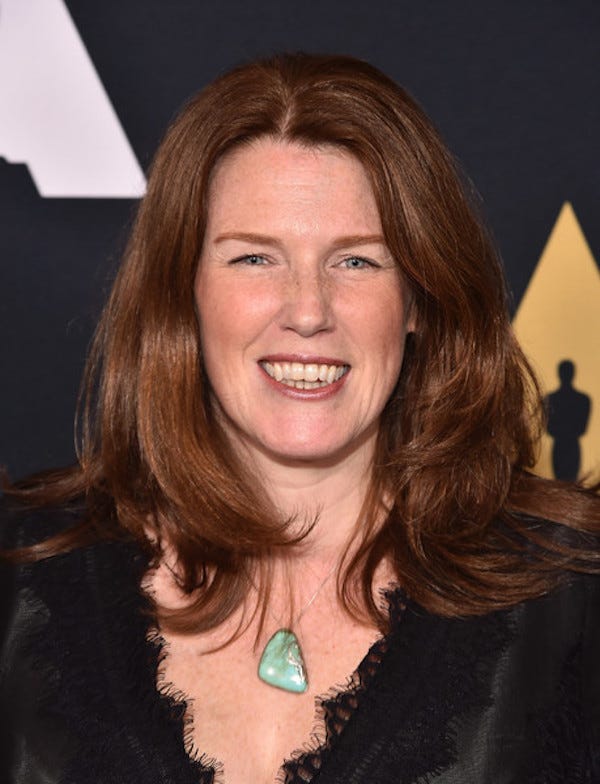
My 6-part talk with the writer of the script “Last Days of Winter”.
Kristen Gray-Rockmaker wrote the original screenplay “Last Days of Winter” which won a 2017 Nicholl Fellowship in Screenwriting. Recently, I had the opportunity to chat with Kristen about about her background, her award-winning script, the craft of screenwriting, and what winning the Nicholl has meant to her.
Today in Part 3, Kristen discusses another key character in her script “Last Days of Winter”, a foil to the story’s Protagonist:
Scott: Then, counter to January, the other lead character is Nick, a homicide detective.
Kristen: Nick, he’s a veteran of the homicide unit, which is pretty grueling in Detroit. I think he’s pretty weary and worn down by his job. He’s been following her cases for quite a while and not being able to figure out who she is, which has been frustrating. He’s also developed a drug addiction because he had been shot before, while on the job.
In the process of recovering from that he developed this drug addiction which progresses throughout the story. He’s becoming more and more unhinged, I would say, as the story goes on. He’s in this marriage that’s not doing well. His wife is cheating on him, so he’s just very, very angry. He’s got a lot of anger and a lot of bitterness.
He’s becoming increasingly erratic and desperate, I think, because of the drugs.
Scott: You have a moment in the script where he walks into the police station after, I think, visiting a homicide crime scene and there’s that board with the names of the open and closed cases. That actually reminded me of “Homicide” the NBC series.
Kristen: Oh, yeah, sure.
Scott: They had that whiteboard where they would mark open and closed cases…I think it was red and black, if I’m not mistaken. In your script, Nick sees all these open cases and he sags.
Kristen: In a way, he’s just giving up. He’s just defeated by it.
Scott: Nick and January have something in common. January, she’s under the gun to raise money to safe the family house. She lives with her mom. The house, the ticking clock, there’s a foreclosure thing coming down on that. She’s under some financial pressure, but Nick is under some financial pressure, too. Isn’t there a bit of a parallel relatability between these two?
Kristen: Nick’s financial pressure is related to his drug addiction — it’s a self-made financial crisis. Nick is pretty biased in his views. I think you can tell. He really views these murderers that he deals with as vermin.
But, in reality, he is doing the same thing she is doing — he is killing by proxy. He is lashing out at his wife and hoping to gain financially from her death. So I wanted to pose the question, who is the bad guy here? He of course doesn’t see himself that way though. He can’t see that.
Scott: You make some intriguing, even surprising plot choices. Let’s talk about January. She has this boyfriend, Sheff, and he’s a white guy, right?
Kristen: He’s white, yup.
Scott: He’s from a fairly affluent or well‑to‑do background.
Kristen: Yeah, he’s upper middle class.
Scott: He’s the one who got January pregnant.
Kristen: Yes.
Scott: To me, once she decides that she’s going to have this child, which is what he wants, he buys this house out in the suburbs. Doesn’t that in a way represent symbolically “January, you have an opportunity to live a ‘normal life.’” Is that what you were going for there?
Kristen: It’s presenting this opposite world, of where she lives and where she grew up. I was interested in seeing the two worlds intersect with each other and how she would do moving into that world, which she does briefly. It’s representing this other side that she finds kind of interesting and appealing in some ways, but she doesn’t quite trust. Yeah, I was interested in exploring that.
Scott: Yeah, she has that one very awkward scene where she’s hanging out with some women from the neighborhood, and it’s…
Kristen: Yeah.
Scott: It’s like they’re from two different worlds, right?
Kristen: Right, they are. The women are very “progressive” and they’re welcoming her, but at the same time, they hold their views. They hold their views of where January comes from. They can’t help it.
January, she senses that. She’s smart, so she kind of digs them a little bit. [laughs] She kind of tweaks them a little bit.
Scott: The idea of presenting January with this opportunity to go and live in this entirely different environment, which is in effect almost a different world, a different life, similarly, in parallel with Nick, now having the opportunity to really embrace criminality in order to accomplish what he wants, vis-à-vis what he asked January to do to his wife, it’s like both of them are dealing with a fundamental question: “Who am I?” What’s their core identity?
Kristen: They’re both dealing with that, especially January. I think she’s really at a crossroads in terms of where she’s going to go with her life and she’s trying to figure it out, for sure.
Scott: There’s some lines of dialogue I highlighted. One line, January says, “I’ve been handling things myself my whole life. That’s all I know.” You get a real sense of her capability of doing that, but also her sense of emotional and psychological solitude.
She has this conversation with him. She says, “Sheff, there’s really no way for you to understand.” This is talking about what she does. Sheff says, “Understand what?” She says, “Who I am.”
Later on, Sheff says, about a conversation, he says, “Does he know you?” She says, “A version of me.” She’s got several masks she wears.
Kristen: Yes, her brother knows what she does, but her mom does not really know. She’s different with different people. What she presents is different with different people. She’s very, very guarded, so people don’t really know her.
Sheff, in particular, just coming from the background that he comes from, there’s just no way for him to ever understand why she does what she does. He could never comprehend it. In her mind, she thinks he could never possibly comprehend who she is because he’s never had that experience that she’s had with her life.
Scott: In fact, they do eventually have a breaking point…It’s mostly because she won’t really talk to him about what she does.
Kristen: She really feels he will just want nothing to do with her and that he’s just going to really be disappointed in her and I think that she worries about that, so she doesn’t really let him in. There was a version that I wrote early on. I was trying to keep them together. I wanted to see them work out in the end and it just was not working. It felt really forced.
Just no, these two people, the way that they’ve been created, it just didn’t seem like they would ever…They just have really different outlooks on life and I didn’t really think that they would work out in the end.
I wound up breaking them up and I think it felt more like what would happen.
Scott: Was it like you were writing scenes, the dialogue, their actions just didn’t feel authentic?
Kristen: Yes, I was trying to still have her not really tell him what she did and have him somehow be OK with it and they make up at the end and get married anyway, but it felt very forced and not real. It felt much, much more real once I decided that…It felt more in her character to be like, “You know what? We just can’t move forward with this.”
Scott: Eventually, she moves back out of the suburbs back home. They’re on speaking terms at the end and you leave the door open, but it seems a more nuanced resolution.
Kristen: To me, it felt much better to have them not be together. They’re still friendly, which is good.
Tomorrow in Part 4, Kristen shares what it took to delve into the mindset of a hitwoman in the writing of “Last Days of Winter”.
For Part 1 of the interview, go here.
Part 2, here.
Kristen is repped by The Gotham Group.
For my interviews with 28 other Nicholl Fellowships in Screenwriting writers, go here.
For my interviews with 53 Black List writers, go here.