Interview (Part 3): Kayla Sun
My interview with the 2023 Nicholl Fellowships in Screenwriting winner.
My interview with the 2023 Nicholl Fellowships in Screenwriting winner.
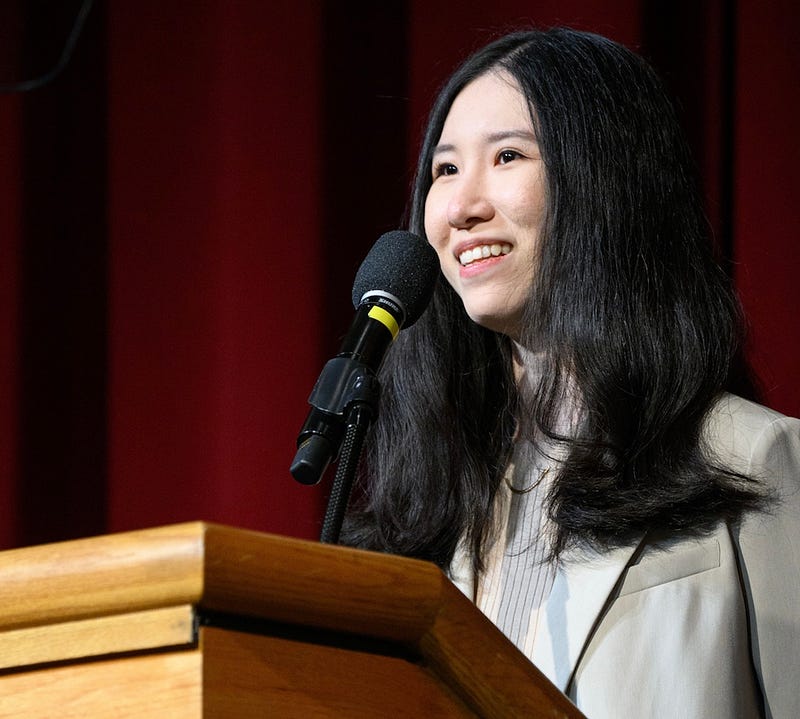
Kayla Sun wrote the original screenplay “Boy, Girl, Fig” which won a 2023 Nicholl Fellowship in Screenwriting. Recently, I had the opportunity to chat with Kayla about her creative background, her award-winning script, the craft of screenwriting, and what winning the Nicholl Award has meant to her.
Today in Part 3 of a 6-part series to run each day through Saturday, Kayla talks about how being a fan of detective stories influenced some key choices in writing “Boy, Girl, Fig.”
Scott: What about the use of voiceover narration? Because both Aden and Velare use voiceover narration.
Kayla: Yeah, that’s how I imagine it. It’s more fun for them to tell their perspective because even though their condition might seem really dreadful to us, when they tell it, they’re already used to it. So they can tell it in a more lighthearted tone. I imagine when Aden was telling, the voiceover was in his childhood voice, but when Velare tells it, it’s the adult Velare.
Scott: You do some time shifting there. In fact, when Aden, I think he’s 18, if I’m not mistaken, and that’s when he gets that job at the private detectives?
Kayla: Yeah, around that time.
Scott: And so you set that up. He liked that book, a detective book. But because his parents have said, you need to stay away from people, homeschooled at some point.
He’s an observer. He watches, even in the way you describe it, and that would be something that I think a private detective would feel that they would need. So maybe talk a little bit about this private detective thing. How did that evolve in your story-crafting process?
Kayla: I was a huge detective story fan growing up. I probably read thousands of detective stories. When I was imagining what they did for a career, how their lives intertwined when they were adults, that was the first job that I considered and it really worked for him just thinking about him following people, investigating. That is something that he was taught to do.
Scott: It works out great. He couldn’t be a banker. He thought about that. He couldn’t work at a grocery store. But this not only is a job that he could do, and this wonderful middle aged woman, private detective October, who’s a delightful figure, that works out really well for him because not only does he have a job, but then you set up this really cool mystery.
It’s like a rash of missing items, each of them mundane, unnoticed until they go missing. How did that mystery evolve?
Kayla: I was just imagining what could be the most ridiculous case that they were going to investigate. And then I started having this idea of people having their objects of sentimental value getting stolen, like nothing of monetary value. And I thought that was something worth looking at, especially because I felt like it fits the theme of my story.
Scott: You just had that idea. You didn’t have in mind Velare’s involvement in it at that point, right?
Kayla: Yeah, I didn’t know that until later.
Scott: And so then you didn’t have her explanation for why she was doing that which also is quite evocative and meaningful. That evolved in the writing?
Kayla: Yeah, that only came together while I was writing it.
Scott: We mentioned earlier she says, “I don’t ever want to see you again,” and they split apart. Now we’re several years later and as part of his investigation he ends up in this…it’s like a psychic type of a place and a funny little bit of business where he’s in a closet and the door opens and, who is it, Velare, fate intervening, right?
Kayla: That specific scene of how they met as adults was put together later. When I was designing the story, I only knew that when they meet as adults, they should meet in a weird position where Velare still sees the transparent him, but the situation should make sense for her to freak out.
I eventually put him in a closet because she’s allowed to act surprised and angry and shut the closet door on him. The real reason she was so surprised was seeing this transparent person.
Scott: Yeah, because she thought he was an imaginary friend, right? And then when she sees him, she is stunned. She closes the door, locks him in there.
Obviously, he’s still smitten with her, and they do have an interesting interrelationship in those pages where they’re adults. He even does psychic sessions with her as his way of asking questions to her. That’s a really nice framing device.
Kayla: That emerged when I was writing because I imagined Aden knowing that she works at a psychic shop, but because Aden was told to keep away from people, he doesn’t know how to ask a girl out. He doesn’t know how to interact with people properly. So it was the only way he knew how, just pay money and get this session with her.
Scott: At the end of it, it’s sort of heartbreaking too, because she says, “You’re a good person, Aden, but you don’t belong with me.” There’s a kind of a parallel.
She’s basically saying, like she did before, “I don’t ever want to see you again.” And here she’s saying, “you’re a good person, but you don’t belong with me.” And then it says in the scene description: “Close on her face as tears start to form in her eyes.”
That’s a much different feeling than when she says, “I don’t want to see you again.”
Kayla: I knew that in the timeline, by that point, she would have seen a better future for him that’s without her. So she decides to let him go. But because the first half was told from Aden’s perspective, I knew that would be the great midpoint to switch to her because he cannot solve the mystery of why he thought everything was going great, why she just wants to leave again.
Scott: Right. And that is literally, it’s like page 50.
Kayla: Yeah, right.
Scott: Right at the middle of the story. So yet again what you do so well in the script you set up something that creates a mystery because you’re not going to give us the answer until you pivot. You now do this little bit of Rashomon business where we’re seeing the story through Velare’s eyes and we see how her relationship with her mother and father is.
We experience the death, their deaths through her perspective, because we didn’t see that before. It was from Aden’s perspective. We now begin to see, for example, she’s got this habit of dashing into traffic blindly, and that’s because she’s seen her own future and she says, “well, I’m not going to die that way.” So she doesn’t need to worry about that. That must have been satisfying. I don’t know. When I write, when I do a setup and payoff, it’s a really satisfying feeling. I imagine that must be a satisfying feeling for you, too.
Kayla: Yeah, I love plants and payoffs. My friends say my writing is too clever. I should dial it down a bit.
Scott: Well, I disagree with that entirely. For example, there’s a moment of revelation here on page 69, where when she intersects with Aden, she says, “it’s incredible how this escaped me before. He’s not imaginary after all.” And so, realizing that he’s a real person. Then they have a nice relationship going on, and you have this moment where she says to him, we’re not going to end up together, and there’s another wonderful little bit of business there. He’s supposed to, in this future, fall in love with a blind woman, which is like, oh yes, of course, that would be perfect.
Kayla: That had been the actual ending of the story for a couple of years before I switched to this version. When I first designed their love story, I saw Aden end up with this blind woman. They were perfect for each other. So it was a sad ending before, and it wasn’t a fairy tale back then. I changed it because I realized if that’s the ending, then he didn’t really change. There’s no actual character arc. I think everyone who read my earlier drafts wanted them to get together. So I reconsidered. But it was difficult to let that go because that would have been perfect for him. But I think he needed to grow up from wanting the perfect thing.
Tomorrow in Part 4, Kayla discusses setting up expectations in her script, then subverting them by surprising the reader.
For Part 1, go here.
Part 2, here.
Kayla is repped by Bellevue Productions.
For my interviews with every Nicholl Fellowships in Screenwriting winner since 2012, go here.