Interview (Part 3): Jimmy Miller
My interview with the 2023 Nicholl Fellowships in Screenwriting winner.
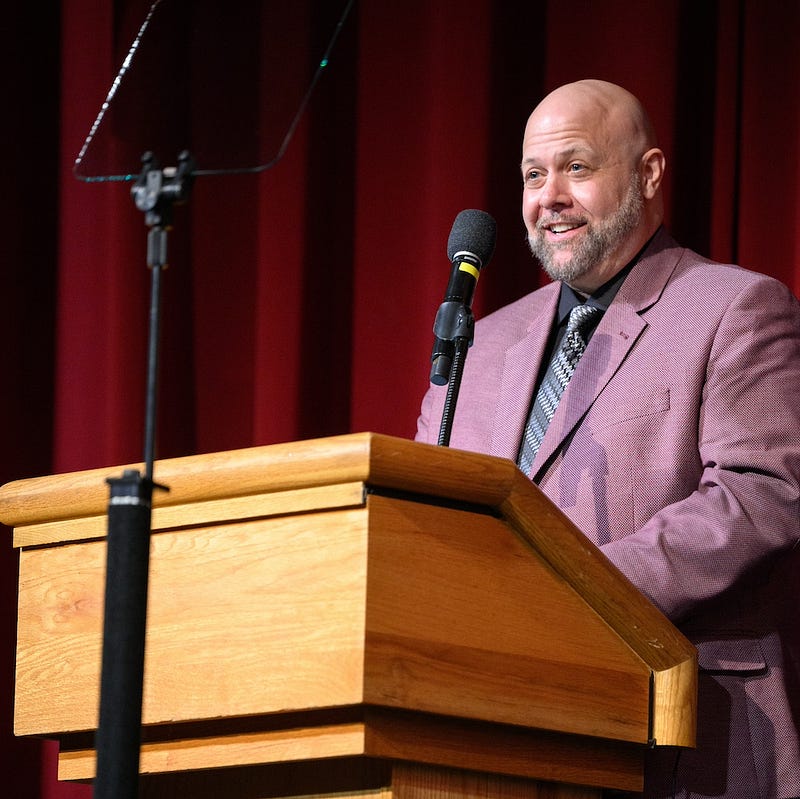
My interview with the 2023 Nicholl Fellowships in Screenwriting winner.
Jimmy Miller wrote the original screenplay “Slugger” which won a 2023 Nicholl Fellowship in Screenwriting. Recently, I had the opportunity to chat with Jimmy about his creative background, his award-winning script, the craft of screenwriting, and what winning the Nicholl Award has meant to him.
Today in Part 3 of a 6-part series to run each day through Saturday, Jimmy discusses two of the story’s main characters and their mother-daughter relationship.
Scott: Let’s talk about these three characters that are at the center of the story, the Protagonist Callie Malone. This is how she’s introduced:
“10, short hair, athletic, growing fast, sits up in bed and kills the alarm, takes a deep breath.” And we see her room is filled with baseball paraphernalia. She’s fascinated with Cal Ripken Jr, the Hall of Fame baseball player for the Baltimore Orioles. There’s a photograph of her father when he played at Texas A&M, if I remember correctly alongside a guy, a setup for a payoff later on.
So you establish the baseball element. But then her parents, the way you introduce them:
Her father, Ryan, 30, is one of the players from the frame photo, now old and haggard, paces and limps out of view. Her wild-haired mother Jessica, 30s, “lies belly down on the bed, fresh bruises on her back and arms.” There are wine bottles scattered around.
Expand on this introduction of Callie and her family.
Jimmy: I wanted to set up this unsafe space that this little girl was in. She’s 10 years old. And she clearly has a unique interest in playing baseball. She’s so driven to do it she sneaks out and does this on her own. That’s what I wanted to show. This is a person who we see very quickly has a unique talent that her parents don’t care about. She’s pretty much on her own.
Her father is involved, but he’s selfish, he’s mean, he’s disrespectful to her. He’s driving her too hard. He’s talking to her like he doesn’t care about her. The early pages put her in such an unsafe place that her mom had to rescue her from a potentially violent situation with her dad.
And I wanted that bond between Callie and her mom. I needed you to feel that bond when she was little, that she felt it was her and her mom against him. That maybe she wasn’t alone. So when Jessica suddenly disappears and leaves her with her dad, it really hurts.
Her life fundamentally changes when her mother leaves because she’s now feels betrayed. She’s suddenly now more like her dad. Angry and disappointed. And in the last early scene, when Callie is young, her father tells her to forget about her mom and use the anger to be a better ballplayer. And that’s when she clobbers the ball.
Scott: Boy, does she, yeah. She gets in there and hammers the ball. It’s not just hitting the baseball, it’s a release of her anger. This is like how all sports movies, I think, are not really about sports. The sports is the backdrop, but it’s the psychological journeys of the characters.
So from very early on, there’s this parental pressure on the part of the father who wants her daughter is a mixed bag for him to succeed at baseball, but only on his terms and this only from his own ego.
I love that bit of business where she’s lefthanded like he is and she gets in the batter’s box and moves to the right side. She wants to bat righthanded. I thought at first, well, OK, that may be that she’s just smart because switch hitters. No, she wants to rebel against her father, so it’s a great little bit of business.
Those first five pages, I mean, you just pack a lot in. You set up all this stuff very efficiently. Again, like I think as an editor plowing through tons and tons of tape to find that one minute scene. You really got that instinct, I think, playing there. So I imagine you reworked that beginning a lot, those first five pages or so.
Jimmy: Yeah, it took me a while to figure out. What situation can I put them in where the choices they make in the middle of it tell me the most about them? And I think that’s the trick of every scene and setting up any kind of plot device. And that’s one reason sports is a great plot device, because like you said, it’s not about baseball. It’s the reason to talk about these other things.
The sport can put you in situations where you have to make tough decisions. You have to show your character. But it took me a while to figure out which things I’m needed to show to reveal the characters and set up Callie’s frame of mind when we jump forward to her being 17 and going to high school. What do I need to know about the dad when I get there? What do I need to know about the mom when I get there?
The first time I wrote it, this was 15 pages which felt too long. But then I adjusted a little of the plot. I adjusted a little bit of the action, so it felt more direct and simple. And you know, wrote it, wrote it and wrote it until it was the five pages I wanted.
Scott: Yeah. It’s a really strong opening. And then you’ve got a nice midpoint in Act One where she makes a choice. Her father’s not happy with it, where she gets up and decides to bat, take a bat. There’s a little car race that she does, a race. I thought it was interesting. She drives a Dodge Avenger of all cars, right?
Jimmy: [laughs] Yeah, an Avenger.
Scott: Appropriately named. Her father says, “You’ll never catch me.” And she says, “I’m not trying to catch you. I’m trying to beat you.”
She ends up with Jessica, who asks a really great question on page 19: “Why do you play baseball?” That question plays out throughout the whole story, doesn’t it?
Jimmy: Yeah, it does. Yeah, because her answer changes in the story. I think it was important for Jessica to ask that, because Callie’s reaction is important. She says, “why didn’t you ask me this when I was six?”
Because it reveals the rift between them. Her mother is trying to be a part of her life, but for Callie, it’s too late. You never cared about this before you left. Why would you care now? She doesn’t get to be part of her world anymore. She had her chance, and she blew it.
But as for the actual question, when she’s first asked, I’m not sure even Callie knows That’s part of her problem is that in the beginning… She’s playing to both make her dad proud and make her dad mad because she knows it does both. But is she playing for herself? Is it just all about her anger?
That’s where Roger, the coach she meets, becomes important because he knows that playing baseball with such emotion at this level, she might get away with it because of her talent. But at the next level, you’ve got to have honed skills. You have to know what you’re doing. And that’s where she’s forced to decide, “What am I doing this for? Do I actually like this game?”
Early she switches to right-handed because that’s more of a power side. She can hit harder from that side. But it’s not the best side for a baseball player of her size and her skill. She’s defying her father and doing the thing that feels good. She likes to hit the ball hard and show the boys up.
So that’s what happens in the midpoint of the whole thing, of her facing, oh, I have to work much harder than I thought. Do I really want to do this? And that’s what the coach is like, “You ready to do this?” And she decides she wants to do it.
Tomorrow in Part 4, Jimmy discusses the script’s Protagonist-Mentor relationship and subverting expectations with a potential Protagonist-Attractor storyline.
For Part 1, go here.
Part 2, here.
Jimmy is repped by Marc Manus at Persistent Entertainment.
For my interviews with every Nicholl Fellowships in Screenwriting winner since 2012, go here.