Interview (Part 3): Jennifer Archer
My interview with the 2022 Nicholl Fellowships in Screenwriting winner.
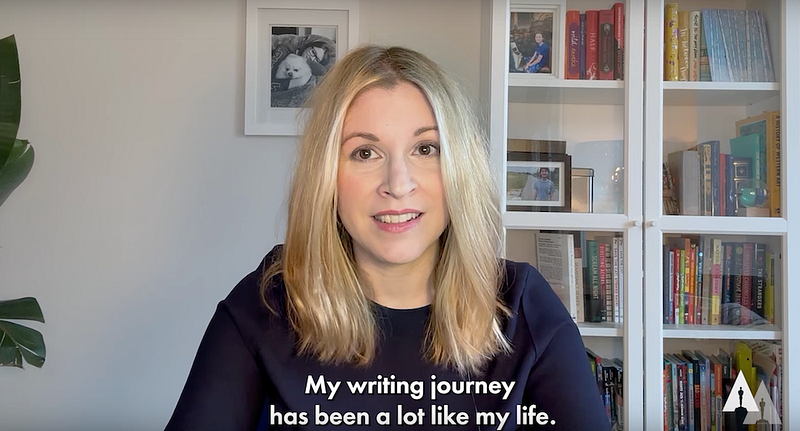
My interview with the 2022 Nicholl Fellowships in Screenwriting winner.
Jennifer Archer wrote the original screenplay “Into the Deep Blue” which won a 2022 Nicholl Fellowship in Screenwriting. Recently, I had the opportunity to chat with Jennifer about her creative background, her award-winning script, the craft of screenwriting, and what winning the Nicholl Award has meant to her.
Today in Part 3 of a 6-part series to run each day through Saturday, Jennifer reveals why she chose to drop the reader into the “middle” of the story and the family lives of the two lead characters.
Scott: You drop us in right into the middle of their relationship, and it’s already very complex. That was probably instinctual to you. You’ve already got the first image is riding a bike towards his house, so they presumably know each other. That was an instinctual decision on your part?
Jennifer: It was. I wanted their relationship to be well on the way…Like they’re in the thick of it already and take it from there, instead of starting from the beginning and slowly getting there. We’re going through it with them and they have this history of friendship.
Scott: Yeah, I think the advantage you have in the script is really the dynamics between these two characters is very strong, really gripping emotionally. You’ve got these two storylines going on. One is the grieving storyline. One is this feeling/romance storyline that’s going on between them, their interpersonal relationship.
I thought that was quite interesting, because at times, those coalign. At times, you explore them…
Jennifer: Separately.
Scott: …more separately, correct. Let’s talk about some of the other characters in this family of characters that exists in your storyline. Some of them literally are family members. The fathers are interesting to me. Could you talk about Nick’s father, just describe who this character is, and what his personality is?
Jennifer: He just lives under the umbrella where he wants to ignore everything. He’s already moved on. He loves his family, but he doesn’t really express it in a very loving way. Love to him is rooted in the financial — I helped get you out of a jam, I gave you a job, there’s a roof over your head. He doesn’t really understand what Nick is going through, like the depth of it.
Scott: He’s had a series of girlfriends, is that right?
Jennifer: Yeah.
Scott: Including one who we meet who is quite younger that he is.
Jennifer: Right. I think he moved on a long time ago. You almost want to categorize him as the villain, but to me all of these characters are doing the best they can with the tools they have. There are no perfect parents, siblings, or friends. It’s really about not being defined by other people’s actions and choosing your own path, and I think that’s the journey Nick and Fiona are on.
Scott: He has that one exchange, I think, their last exchange that he has with Nick where he says that. He says, “She didn’t even want me to be…” It’s interesting though, the character’s name is Mr. Bennett…
Jennifer: [laughs]
Scott: …as opposed to Fiona’s dad, who’s Bob. It’s like OK, Mr. Bennett is a little bit more officious and standoffish. It’s a little bit more of a patriarchal dynamic with the son, whereas Bob, it’s like, “Bob.”
Jennifer: [laughs] Right.
Scott: Could you talk about Fiona’s dad, because he’s in a different mode. I mean, similar issues in terms of having lost a loved one, but a different place. Can you maybe give us a little sense of who Bob is?
Jennifer: I think he considers himself a superior parent to Nick’s dad, but he’s not by much. He’s avoiding the situation at home and avoiding Fiona essentially. He loves Fiona, he’s still so lost in his own grief, he’s a little oblivious.
Scott: I warmed up to him. I liked Bob. He has a couple of mentor moments there. At one time, Nick is drunk. They take him in. Sincerely speaking, he’s more supportive of Nick than his own father is. Then there’s a conversation they have about a car. I was very happy to see that he’s ready to move on by the end. It’s funny how those little secondary characters could sometimes connect on an emotional level with you too.
There’s a couple of females that I want to talk to you about who influence both Nick and Fiona. There’s Nick’s older sister, Alex. Could you maybe describe what you were going for there and who Alex is in relation to Nick’s life?
Jennifer: Alex was the rebel of the family. She was a teen parent. She moved out of the house early on. There’s a lot of conflict between them because he blames her for creating the rift between their parents. There’s that dynamic.
Scott: She’s moved on quite further in the grieving than Nick. In fact, there’s this startling revelation at some point, maybe the middle of the story, where she’s pushing Nick to write a victim statement, I think it is, for an insurance settlement. There was an airplane crash, and the airplane company is going to do an insurance payment to the family. As it turns, it’s for $2.5 million, I believe it is.
Jennifer: Yeah, she’s very pragmatic, and she’s been independent from the family for so long. She really wants that financial security for her child.
Scott: $2.5 million, a lot of money. Nick, to show again what he doesn’t want, is like, “No, I don’t want to do the statement. I don’t want the money.” He has an interesting comment. He says, “If I take the money, every time I buy a hamburger, I’d be reminded of this.”
Eventually, he does. Her primary function with that settlement, it’s like a ticking clock. It’s forcing him. If it weren’t for the insurance thing, he could just go on forever in the state of not moving forward. Isn’t that one of the main benefits that you derive as a writer is that it was propelling him to deal with this?
Jennifer: She definitely added that layer of pressure and forces him to deal with his feelings. He felt obligated to do it for his nephew more than anything, but it turns out to be quite cathartic for him.
Here is a video of Jennifer’s Nicholl Award acceptance speech:
Tomorrow in Part 4, Jennifer reflects on happy endings and a wonderful runner in the script involving a baton.
For Part 1 of the interview, go here.
For Part 2, go here.
For my interviews with every Nicholl Fellowships in Screenwriting winner since 2012, go here.
For my interviews with Black List writers, go here.