Interview (Part 3): Ian Shorr
My interview with 2022 Black List writer for his script The House in the Crooked Forest.
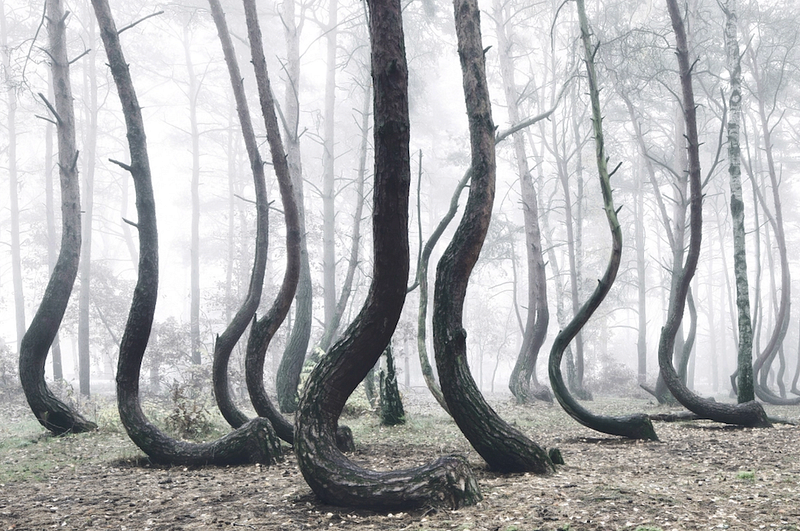
My interview with 2022 Black List writer for his script The House in the Crooked Forest.
Ian Shorr wrote the original screenplay The House in the Crooked Forest which landed on the 2022 Black List. Recently, I had the opportunity to chat with Ian about his creative background, writing a Black List script, and the craft of screenwriting.
Today in Part 3 of a 6-part series to run each day through Sunday, Ian discusses the mother-son relationship that lies at the heart of the story and the haunted manor in which they find themselves trapped.
Scott: Let’s talk about the relationship between Rivka and Hugo because there’s a tragedy in the past. We could talk about the fact that the father died. Could you maybe unpack that a little bit?
Ian: Rivka’s husband dies before the story starts. He’s killed by Nazis in the Warsaw ghetto. Rivka blames herself for her husband’s death. She is unable to let go of that guilt.
In fact, the night that he was shot, she tried tourniqueting his wound with this scarf he was wearing, to no avail. In the aftermath, she still wears that scarf around her wrist as a way of reminding herself of this failure.
At the beginning of the movie, she starts it in this emotionally damaged place and has to come to terms with this while forced to protect her son from a bunch of big bad Nazis and a big bad haunted house. In the last shot, she lets go of the tourniquet and finally forgives herself.
Scott: I know that you’re going back to when the producer brought your manager John that article. That was the first character that you were working with, was Rivka?
Ian: In the article, it was a single woman. The first change that I made was, I wanted to make her a parent. I had just become a parent around that time. My son was born on New Year’s Day, 2020. There’s all kinds of fears that go along with new parenthood because you suddenly have this defenseless creature that you have to keep alive.
There’s that great quote about parenthood that says it’s “to live with your own heart outside your body.” That vulnerability spoke to me, and that was something that I wanted to explore in this script.
I knew that over the course of the story, I wanted to see how this mother and son working as a team, and them relying on each other, and how their love for each other saves them in the end.
Although what’s funny is, the whole thing about the backstory with the dead husband came in a later draft. I didn’t write much of an arc for her in my initial drafts because I was like, “Oh, it’s a survival movie, and survival movies have very thin arcs if they have any at all.”
After a few people came back with notes saying, “She needs something. She has to overcome something emotional. There has to be something unresolved here besides whether she lives or dies or her kid lives or dies.” So that’s when we started exploring the idea of, “What happened to the husband?” and where does she start the story emotionally?
Scott: Hugo’s got a feeling of culpability about something that happened in the past, too. It’s interesting that both of them have these ‑‑ I call them talismans, these physical objects with emotional meaning. She’s got the thing that she wrapped around the tourniquet.
Ian: Scarf, yeah.
Scott: He’s got this little floppy‑eared mouse called Boris that was a gift from his father. Maybe you could talk a little bit about Hugo because he’s got his own arc.
Ian: Oh, yeah. With Hugo, I was thinking, “If I’m nine years old, I’ve within the past few months have lost my father, I’ve been living in the most terrifying situation imaginable ‑‑ what is my attitude towards the world going to be? What’s the truthful way into this character?” And I realized that this is a kid who has learned to approach everything in his life from a place of fear.
Over the course of the story, you learn that like his mom, he also harbors some sense of guilt over what happened to the dad. One night when Hugo got sick, got this terrible fever that wouldn’t break, his mom and dad snuck out of the house in the ghetto and went to try to get medicine for him. They got caught out after curfew, and that led to them being chased and the father being executed by Nazis. You have the mom blaming herself for that and Hugo realizing, “If I hadn’t gotten sick, my dad would still be alive.” By the end of the story, they both come to a mutual realization that neither one of them are to blame.
That was one thing I wanted to work into his arc, but the bigger thing was exploring how a kid who has come from all that trauma, who approaches everything from a place of fear, can learn bravery by the end of the movie. That was the main part of the arc for him.
Scott: There’s a little bit of a redemption story. Their survival ‑‑ the fact that they do survive. Spoiler alert.
[laughter]
Ian: I’m not a heartless bastard. I can’t put a mom and a kid through the hell that they go through this movie and then not have them survive. They earn their happy ending.
Scott: I want to talk about some other human characters and inhuman characters. One character that’s quite fascinating to me is Vormelker Manor, this place where basically all the actions. This goes all the way back to that article about living in the cat‑and‑mouse thing and a stranger in the house. [laughs] That sort of thing.
How did you go about developing this place? I imagine that at some point you’ve got like architectural renderings or something because it’s got multiple stories and rooms and stuff. How did you go about developing Vormelker Manor?
Ian: First I started by looking up a creepy‑sounding German last name, and “Vormelker” fit the bill. Once I had the name, I was hunting through images of old Polish manners, seeing what these houses looked like.
You had these country homes owned by German and Polish aristocracy way out in the middle of nowhere. During the summertime, these rich families would live out there and go hunting. During the winter, we’re forsaken and forgotten. I thought of how creepy it would be to be inside one of these homes way out in the middle of winter with nobody else around.
Once I got into the house, I knew that I wanted there to be a sense of worlds within worlds within worlds. I wanted the house to be almost like a Russian nesting doll where you’d peel back some undiscovered layer about it every 10 pages or so. If you’re going to have a one‑location movie, you can save yourself a lot of heartache with the audience if you can have the location itself offer up surprises every 10 pages or so. That’s why the house has all those hidden things about it. The passageways, the hidden doors, the paintings with double meanings. It was me finding ways to get all the meat off the bone of this one location.
Scott: It’s definitely its own character, and I will never think of the words “wet room” again in quite the same way.
[laughter]
Scott: The Nemesis characters, Nazi soldiers in “The Escape,” there are some Nazis get killed, and basically these Nazi soldiers, they’re hunting down the Polish Home Army, I think is what they’re called, right?
Ian: Yeah. The bad guys are a group of Nazi partisan hunters who are looking for the same partisan base that our heroes are trying to get to. When I was doing my research, I learned about the Polish Home Army, it’s like the counterpart of the Italian partisans. Resistance fighters living in the woods and finding ways to sabotage Nazi operations, taking in escapees from the ghetto. Then I created this squad of Nazi soldiers who are on a mission to go track down this base, and forced them to take shelter inside Vormelker Manor during a blizzard at the same time Rivka and Hugo are hiding out in the attic. I was looking for a way to trap both predator and prey in the same location and not have it feel like total bullshit. So much of storytelling is just finding ways to lampshade coincidence from the audience.
Tomorrow in Part 4, Ian delves into the horror elements of his Black List script: a group of Nazi soldiers, as well as Half‑Man, the Long Girl, and the Scarred Man.
For Part 1 of the interview, go here.
Part 2, here.
Ian is repped by UTA and Bellevue Productions.
Twitter: @IanShorr
For my interviews with dozens of other Black List writers, go here.