Interview (Part 3): Haley Bartels
My interview with the 2021 Nicholl Fellowships in Screenwriting winner.
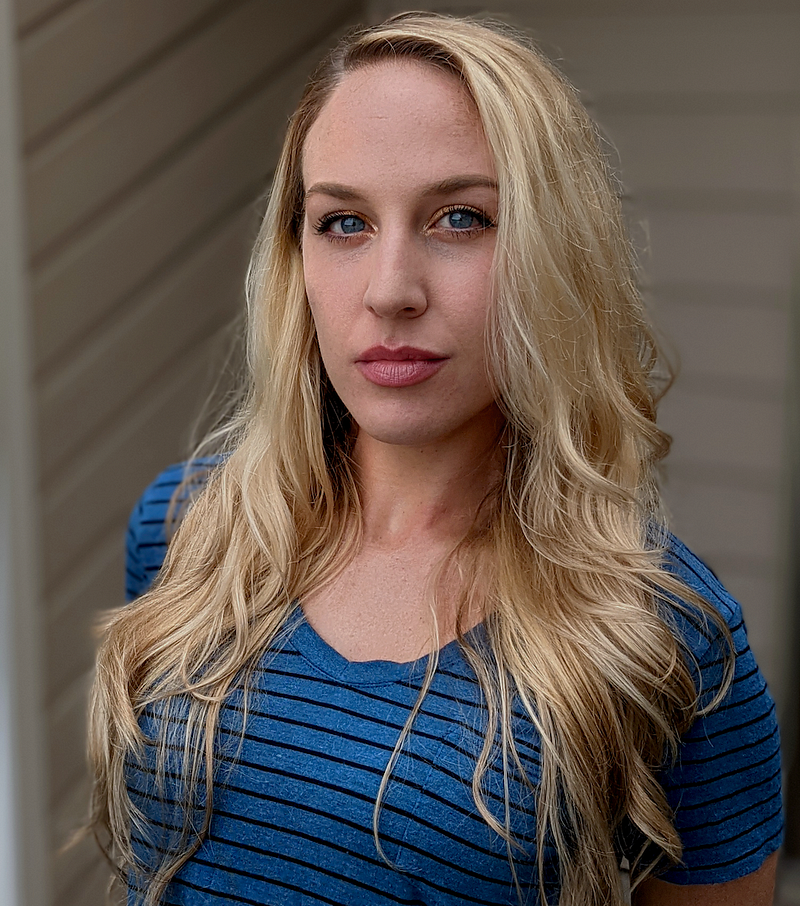
My interview with the 2021 Nicholl Fellowships in Screenwriting winner.
Haley Bartels wrote the original screenplay “Pumping Black” which won a 2021 Nicholl Fellowship in Screenwriting. Recently, I had the opportunity to chat with Haley about her creative background, her award-winning script, the craft of screenwriting, and what winning the Nicholl Award has meant to her.
Today in Part 3 of a 6 part series to run each day through Saturday, Haley delves into the key characters in her screenplay “Pumping Black” including the harrowing journey its Protagonist takes.
Scott: It definitely arcs like that. It doesn’t strike me as a genre film like you said you’re interested in. It is like a horror story in that at the end, there’s some horrible things that happen. Would you consider this a departure from your primary area of focus at all in terms of storytelling?
Haley: I do and I don’t. You’re right. It’s not technically a genre film, but it still scratches all those itches for my writer brain as far as immersive world‑building. That’s something that I always like about the process of writing genre, is crafting a world that is specifically designed for your character, your character’s flaw, and designed to challenge that flaw.
Even though cycling is a very grounded everyday‑world thing, it still felt like writing a genre film. Also, all of the surrealist elements were fun for me to write and definitely were informed by the genre background.
Scott: Typically, the association people make with the Nicholl is most of the scripts that get picked are drama. Were you thinking like that at all? Or were you just, “I’m going to write the story I’m passionate about”?
Haley: No, I don’t think I was thinking in terms of competitions at all. I was just thinking of writing the movie that I wanted to see.
Scott: You got a personal connection from the family side of things. You’ve got the tragedy that I’m assuming your dad and maybe your mom went through too knowing this guy who was part of that whole doping thing, the personal, with the pandemic, and your Three Witches experience in Griffith Park.
Let me ask you a question, one more pragmatic question about this. At some point when we have the script and we write screenplays, they’re in effect pre‑movies. They only exist in a vacuum. It’s not like a poem which could exist on its own. You’re trying to write something that’s going to be made into a movie so you got to be thinking pragmatics.
If I put on my producer’s hat on, I’m going to look at cycling. There’s an audience out there. It’s not huge, but the doping thing, Lance Armstrong, and all that, that’s a big deal. To use a metaphor for cycling, as a producer, I’m thinking you could draft off the tragedy of that whole sort of thing for marketing purposes. People would register that, “Yeah, I remember that guy.”
Were you at all thinking about that? Did that come later on? Has that ever entered your consciousness at all?
Haley: Like thinking about the script from a more producorial standpoint?
Scott: Marketing, putting your producer’s hat on.
Haley: Budget, yes. Up until this point, everything I’ve written has been very, very high budget. The first feature that I ever wrote, and I’m still proud of it, is a true story based on a real female pirate that existed in the 1700s. It’s period. It’s on water. It’s a $200‑million movie on the cheap end. For a first feature, it’s a pretty tough sell.
I have a couple of science fiction pieces. I have a couple other period pieces. For Pumping Black, I was thinking in terms of writing something where the challenge to myself was to have fun, to do all genre things that I love, and to write a character‑driven piece that also could realistically get made as a first feature.
Scott: That’s right. If you have a $200‑million script, I tell my students this all the time, you got five buyers who can make that. You have a $5‑ or $10‑million‑movie, $20‑million movie, there’s dozens of financiers and production companies you can go to.
You did something interesting too. Which is that it’s not a genre piece per se, but the writing in it feels like that. It does have this very visceral sensibility in the action, in the scene description.
Let’s talk about it, you said character‑driven, let’s start with your protagonist, Taylor Mace, 35, when you first meet him. He’s not a young guy. I imagine, the cyclist, that’s tipping out toward the outer edge age-wise, in terms of professional cycling. How would you describe this character at the beginning of the story? Where is he in his station in life?
Haley: He is on the precipice of being cut from his team. What I was trying to set up, in the beginning, for Taylor, is a sense that cycling is his whole identity. It’s all he’s ever known, it’s all he’s ever been good at. He’s put so much stake in that identity, that when it is threatened to be taken away, he’ll do anything to keep it.
Scott: It’s like external validation, in way. If he succeeds as a cyclist, then that means he’s a success.
Haley: Yes. It also goes back to mortality. You’re aging, you’re getting closer to death. Will your life have meaning? Did your identity on this planet matter? Taylor feels like, if he gets cut from this team, his life is over, because he doesn’t have an identity outside cycling.
Scott: I thought that was such a great way to start the script. You jumped us right into, he’s racing, he had a fall, there’s some blood. Blood is a major motif throughout the whole story. Of course, it makes sense when you’re talking about doping, because it does involve messing around with the blood.
Then you follow up that scene, it’s such a great scene, he goes to see his father. Now, you could’ve picked anything in the world, I’d be curious to find out why you chose this, but you could’ve picked up anything in the world. His father’s gig is he’s got a slaughterhouse in Colorado.
He goes to see his father, and it’s like, “This is the other choice for you, Taylor. You could take over.” The father actually literally says, “You know, you could give up the thing and come work here at the slaughterhouse.”
You’ve got a bit of this business where, as they’re walking through the slaughter house having this conversation, you know that thing from Chigurh in No Country for Old Men? I don’t know what that thing is called…
Haley: A bolt stunner.
Scott: Exactly. Taylor and his father are having this conversation, with this zap‑thud thing going on in the background, where it’s like zap, there goes the bolt, then thud, there goes cow, falling over, dead. One after the other. Zap. Thud. There’s this moment in the script:
“Taylor looks around the office. Framed newspaper articles showing Donald’s father as a high school football star, football trophies, a framed degree from UC Boulder, University of Colorado, Boulder.
Taylor: Are you happy, dad? I mean, really happy?
Donald: I have a comfortable life.
Zap. Thud.”
When I read that, I laughed and gasped at the same time, because it’s Coenesque in a way. It’s just like this weird, perverse, darkly comic thing. What you’re saying, if Taylor doesn’t succeed at racing this, then this is his life, basically, he’s dead. He’s going to be a dead cow if he can’t succeed at it.
I’m just curious, what was your thinking around that scene? Because it’s such a great way of driving home how important this is for him.
Haley: It went through a couple of different iterations. The first one, I think that he had a lumber mill, just because I liked the imagery of…It was like a match cut thing, with Taylor being cut up in the first scene, and then going to these buzz saws going through. It was like, “Ah, it’s just not quite visceral enough.”
Then, I just saw something on YouTube about a slaughterhouse, and I thought it was so visual and cinematic. I wrote a version of it. I was like, “I’m not sure about this.” I got a couple of rounds of notes back that were like, “Keep the slaughterhouse.” Then I just leaned into it harder for the next couple of drafts.
Scott: It was inspired. Let’s talk about blood as a motif. How intentional were you about that? Was this more of, you were just feeling your way and the blood coming out, thematically, or is it something you’re thinking about intentionally and weaving it through the story?
Haley: That was one of those more instinctual things, if I’m being honest. I don’t know where that came from. Part of it might be because I associate cycling with blood and body horror, just innately. My parents got a in a couple of really, really bad wrecks, cycling. To this day, it still happens.
My mom is actually an ER doctor. There would be times I would come home from school, and my mom would be still in her cycling kit, but sitting in a bathtub full of hot water. She’s numbed her leg up and she’s just scrubbing out an open wound, and then she stitches herself up. I’ve watched her stitch my dad up at home a million times.
Just the idea of blood in cycling — beyond just the doping thing, which I knew would be part of it — it was something I organically associated with the sport. Then, it was one of those things where it popped up in a few places in the first draft. It was definitely very present.
Then I leaned harder into it. The blood in the faucet, that was a second or third draft thing. The final sequence with the water bottles, that was also a later addition, once I committed to the surrealism. It was just something that started as a spark, and then with each draft, it got polished up a little bit more.
Tomorrow in Part 4, Haley recalls how Lady Macbeth was an inspiration for one of the key characters in “Pumping Black.”
For Part 1 of the interview, go here.
For Part 2, go here.
For my interviews with every Nicholl Fellowships in Screenwriting winner since 2012, go here.
For my interviews with Black List writers, go here.