Interview (Part 3): Filipe Coutinho and Ben Mehlman
My interview with 2021 Black List writers for their script Whittier.

My interview with 2021 Black List writers for their script Whittier.
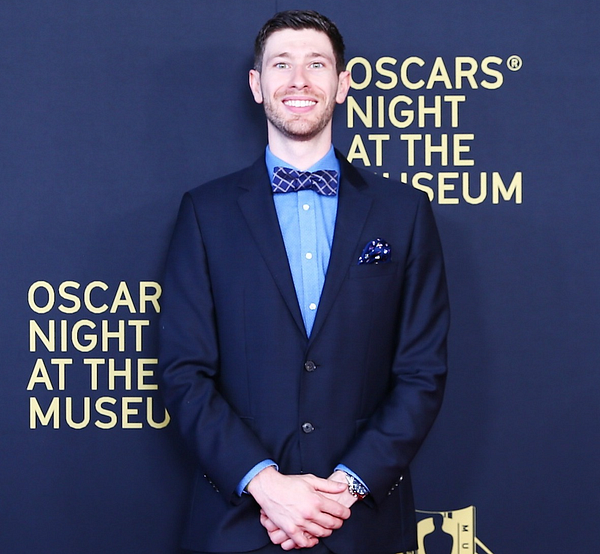
Filipe Coutinho and Ben Mehlman wrote the original screenplay “Whittier” which landed on the 2021 Black List. Recently, I had the opportunity to chat with Filipe and Ben about their creative background, their script, the craft of screenwriting, and what making the annual Black List has meant to them.
Today in Part 3 of a 6-part series to run each day through Sunday, Filipe and Ben discuss some of the key characters in “Whittier” including the Protagonist (Jackie Cross), a hard-bitten social worker who gets pulled into a complex murder mystery.
Scott: Let’s talk about your protagonist, Jackie Cross. She’s a piece of work. You have this idea, ’80s, you think “Whittier.” How do you come up with Jackie Cross, how did she emerge?
Filipe: We looked at who was a social worker in the ’80s. The truth is most were women. We were like, “All right, we have the gender for our protagonist and there’s a reason for it.” The rest evolved from there. We studied what that job entailed. Social working was– and still is– very dangerous, alienating, and exhausting. And it involves a lot of “detective” work.
Ben: More of a detective than our detective.
Filipe: Exactly. Ben, you want to talk a bit more about some of her traits and her outspokenness?
Ben: Of course. For us, and also to go deeper for the people interested in craft, we were tired of the cop trope. We were thinking about a fresh way of tackling our “detective” and ended up loving the idea of a social worker.
Then once we decided on a female lead, it really opened things up. It let us tell a somewhat different story with familiar tropes that can be viewed through a deconstructionist lens. How having a woman live out tropes we love pushes people differently.
Like the idea of Jackie maybe drinking a little too much, or God forbid, be a woman pushing 50 who is confident in her sexuality. Not having her be defined by having a child or through her partner would make certain people uncomfortable in a way that made Filipe and I want to push against it more. This is a different kind of rot in our society, a sexist rot.
Female characters, and plenty of women in the world for that matter, are under a microscope to always be “perfect and likable” in a way that can become a prison. We want to create characters who are relatable in their flaws and have the room to make mistakes and learn from those mistakes. Characters who have the space to figure out where they’re going, what they’re dealing with and have an ability for reflection and growth.
Filipe: Jackie’s a social worker at a very sexist time. She’s also a product of her environment. If she has defenses, if she’s quippy, if she snaps at people, it’s because she rarely gets the respect she deserves. She’s working for others– mostly men–, and she’s rarely appreciated for how much effort and care she puts into her job.
She also doesn’t have the budget to do what she needs to do. She doesn’t earn enough to have a comfortable living or take a proper vacation. Jackie’s basically trying to reckon with the person she once was when she got into social work.
One shot we thought was really interesting and encapsulated the essence of living in that world is the one at the beginning of “Silence of the Lambs,” when Clarice Sterling enters an elevator full of men. She’s smaller than everyone else, and all these guys are looking down on her. But she stands tall. We know early from there on that she’ll make a difference in this world.
Scott: What’s interesting is that if you’re going to do a noir movie, that hard boiled cynical protagonist character, this just derives from her work. At the time, the sexism, the under appreciation of what she does. She’s not making enough money. It’s a soul crushing work,
She’s like Rick Blaine in “Casablanca.” She’s got that cynicism, but underneath there’s still an idealism because Rick Blaine fought on the side of the loyalists way back when. Did you ever make that comparison?
Ben: We both adore Casablanca, so it is certainly in our DNA but it wasn’t a conscious comp while writing, even though that is the highest of compliments to be compared to Casablanca! A lot of Jackie’s essence came from the story talking to us because, in our research, deregulation in the ’80s was a big thing. So our first 10 pages where we dive into deregulation, the tent cities, and the special needs people who are stuck on the street, are influenced by real life.
A lot of the expansion and social safety nets of the ’50s were gutted by Nixon and Reagan. So yeah, unfortunately a lot of the film’s policy cynicism is based in real life policy choices.
Scott: Two characters that Jackie intersects with, who have quite a bit of influence on her, one is a young fellow named JD. They have a chance to meet on an airplane and then intersect later on. Could you talk about the JD character?
Ben: JD is probably our biggest David Simon esc character, someone indivictive of a broken system that is forcing his hand. His current predicament is a product of redlining and underfunded public housing.
Unfortunately, when you are a kid stuck in his situation in that area and in that era you are either living on the streets or selling drugs to survive. A lot of the dog whistling of the Reagan era demonized groups of people that directly affected people like JD and put them in danger.
We wanted him to be emotionally complex while being neither good nor bad, he’s just human. He’s nice but not necessarily the most exceptional person on purpose. But just because he might not have gone to MIT doesn’t mean his life is not as worthy as anyone else’s.
Filipe: There’s a scene that we worked very hard on. It deals with JD, when he’s put into Jackie’s care because the apartment complex he’s living in gets destroyed in the quake. Due to JD’s age and overflowing shelters, Jackie’s forced to take him to a homeless campground. When JD arrives and looks at what a campground really is, he tells Jackie he’s better off selling drugs, since at least that’ll earn him enough money to get his own place. He questions, why should he be a good person if America isn’t taking care of him?
That is at the crux of what JD represents in this movie, which is all the people the system fails, and what we can do or not do in order to help them. Jackie knows all this, and that’s why she’s so disenchanted with her job. So tired of doing it. That’s where Tracy emerges in the story because she is today who Jackie was 20, 30 years ago.
Scott: You make a good point, and I think it was a smart choice, he’s not exceptional. In fact, he’s rather ordinary in a way. The choices that he has to face are choices that all these kids have to face. That makes Jackie in taking this on, even that much more admirable.
Ben: It’s just a philosophy that Filipe and I have is you don’t need to be exceptional to be worthy of living. We unfortunately live in a society that, especially, over the past two years can be really cold and callous. Yes, part of it is an understandable coping mechanism to trauma, but at a certain point, human life is human life. They’re more than just numbers on a New York Times ticker.
Tomorrow in Part 4, Ben and Filipe talk about the “buddy story” approach they took with the two lead characters in “Whittier.”
For Part 1 of the interview, go here.
Part 2, here.
Ben and Filipe are repped by Matt Rosen at Rain Management.
Twitter: @filipefcoutinho, @Ben_Mehlman
For my interviews with dozens of other Black List writers, go here.