Interview (Part 3): Brent Delaney
My interview with the 2023 Nicholl Fellowships in Screenwriting winner.
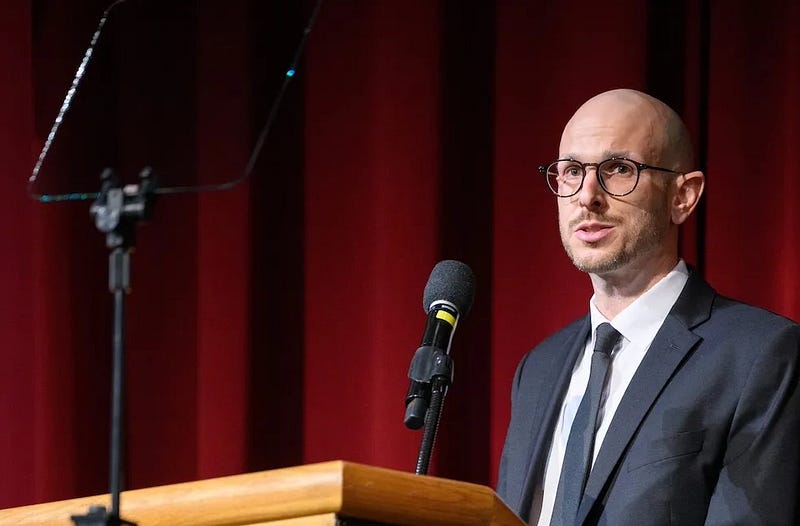
My interview with the 2023 Nicholl Fellowships in Screenwriting winner.
Brent Delaney wrote the original screenplay “Brownie Mary” which won a 2023 Nicholl Fellowship in Screenwriting. Recently, I had the opportunity to chat with Brent about his creative background, his award-winning script, the craft of screenwriting, and what winning the Nicholl Award has meant to him.
Today in Part 3 of a 6-part series to run each day through Saturday, Brent delves into some of the key characters in “Brownie Mary.”
Scott: In Hollywood, they have a saying: “Don’t let the facts get in the way of the story.” What you did with Jonathan makes for a much more powerful subplot.
Brent: One of the questions that I like to ask, too, when writing a true story with political and social import is: would the real life figures look at this story and think it serves what they were trying to do with their lives?
You know what I mean? Would Jonathan, Dennis, and Mary Jane watch this film and agree that it supports their broader political aims? Does the story represent the spirit of their lives?
Scott: Absolutely. You did a wonderful job on that. Let’s dig into some of these characters. The Protagonist is Mary Jane Rathbun. This is how you introduce her in the script:
“Mary Jane Rathbun, 51, rocking a mop of tight gray curls, oversized glasses, and a defiant glint in her eye. On the outside, she looks like a grandmother in waiting, dolled up in her favorite polyester pantsuit, but in fact, she’s a foul‑mouth anarchist who doesn’t take shit…from anyone.”
Right off the bat, we get this idea that she’s not your typical grandmother type.
Brent: Yeah, I immediately identified with her rebellious attitude. That anarchist spirit of hers. It serves the story well, too, because there’s always conflict being generated with a character who says what’s on their minds and doesn’t care what anyone else thinks.
When you see her in interviews, she’s just got such a vibrant and iconic personality, you can’t recreate it. The way that she engages with the world, she’s a real fighter. I love that.
Maybe there’s a part of me that wants to be more like her because I’m naturally an introverted writer. I would love to be so fearless. I have a lot of respect for someone who goes out into the world and says what they think and stands by their words.
Scott: How much research did you do?
Brent: For this project, I read five to ten books and dozens and dozens of articles. I read Mary Jane’s cannabis cookbook, which was a great read. And I also watched all the videos I could find on her. I think that my academic background helps a lot in this respect. I’m used to reading large volumes of material.
And with more research, the more you have to draw on. For example, there’s one scene in the script that wasn’t mentioned anywhere except in an obscure source I found. So, if I didn’t scour the available resources, then I wouldn’t have been able to include this incredibly harrowing part of Jonathan’s story.
Scott: One fact about Mary Jane’s life is the death of her daughter, 18‑year‑old daughter, tragic car crash. You have that going on, but you have got a choice. How am I going to reveal that? Where am I going to put that?
You have that pretty much up top. It’s like we get to see the daughter. She’s going out on a prom date with the guy. By page seven, she has died. What was your thinking on basically starting the script with that incident?
Brent: That’s a good point because you can either start with her normal life, revealing her daughter’s death through exposition, or you can show it. I opted for the latter, narrowing down her normal world to only a couple of pages. In that way, the opening functions as a self-contained sequence that’s visceral and shows how and why Mary Jane developed her flaw.
Scott: You mentioned Pixar. I’m a huge Pixar fan. I know Mary Coleman who used to be the head of story there for many years. She told me about the development of Finding Nemo, where Andrew Stanton did not want to start the movie with the tragedy.
They even went through a couple of different iterations of these real‑time reels where they had it placed later, like a flashback, until people kept saying to him, “No, you’ve got to start it up front because that explains why Marlin is this rather obnoxious, overbearing parent.”
Similarly, I think by starting with this tragedy, you learn a lot about this character. Obviously, you elicit a lot of sympathy for her.
Brent: You did an interview with Mary Coleman on DePaul’s YouTube channel, right?
Scott: Yep.
Brent: Yeah. I watched that. It was great.
Tomorrow in Part 4, Brent describes a key individual who became a kind of surrogate son to the Protagonist Mary Jane.
For Part 1, go here.
Part 2, here.
Brent is repped by Range Media Partners.
Twitter / X: @Brent__Delaney
For my interviews with every Nicholl Fellowships in Screenwriting winner since 2012, go here.