Interview (Part 3): Aaron Chung
My interview with the 2019 Nicholl Fellowships in Screenwriting winner.
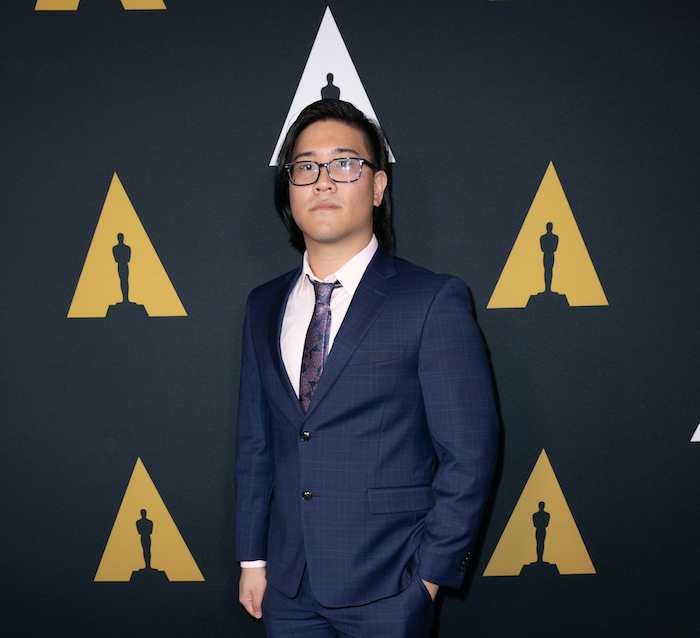
My interview with the 2019 Nicholl Fellowships in Screenwriting winner.
Aaron Chung wrote the original screenplay “Princess Vietnam” which won a 2019 Nicholl Fellowship in Screenwriting. Recently, I had the opportunity to chat with Aaron about his background as a screenwriter, his award-winning script, the craft of screenwriting, and what winning the Nicholl Award has meant to him.
Today in Part 3 of a 6 part series to run each day through Saturday, Aaron discusses the “naturalistic pace” of the script and how he hit on the idea of including three animation scenes.
Scott: How about Aisling’s relationship with her mother, Maude, and father?
Aaron: I would describe Aisling’s relationship with her mom as her best friend, her boss and her mother, in that order. I think Maude is a young mom who is in a state of arrested development where she…It’s the kind of parent who wants to be best friends with their child, but not know how to raise them or know what they need in certain situations.
As much as Aisling wants to feel close to her mom, she starts to see all the shortcomings her mother has, which is the fact that, like Aisling herself, Maude is very guarded and is very childish, and is very irresponsible in certain senses.
Especially when it comes to Bill, who Aisling starts out seeing as this monster who he met from a vicious floor and has these night terrors. Makes a lot of noises and keeps a gun next to him and is scary to be around because you don’t know how volatile he can be.
At the end of the script she starts to see his vulnerabilities, his need of someone else to be there for him and his fragility. In that he’s not a monster, he’s a man whose also been broken by the system he lives in.
Scott: He was in Vietnam as well?
Aaron: Yes, he was a war vet.
Scott: I know Aisling says at one point to Fable, “My dad was in the war. He came back home all fucked up in the head.” We’re looking at, I guess you could say Post Traumatic Stress…
Aaron: Yes, he does have PTSD.
Scott: He says something interesting to Aisling, which I think contributes to Aisling’s complicated feelings toward Fable as their friendship develops. At one point he says to her, “If there’s anything I can give you, know that the people you love stop loving you back. Understand?”
Was that a seed that’s planted in Aisling that contributes to her fear of getting into a committed relationship?
Aaron: Yes, I would say so. I think it’s part of her problems, confronting her own feelings and emotions.
Scott: Those layers that you said. So they’re not only defenses against other people, it’s probably defenses for herself to even feel things.
Aaron: Yes.
Scott: You set the story in 1980. I’m guessing the major reason was because it puts it in close proximity to the Vietnam War, which ended officially, I guess, in 1975. Throughout your script, it’s like the war plays a ghost.
There’re military vets on street corners. There’s military vets in the hospital. The PTSD we just mentioned of Bill. There’s phobia toward Fable and her mom. Could you unpack what attracted you to work with the Vietnam War as such a significant narrative element?
Aaron: There are a few reasons. I’ll tell you the top ones off the top of my head. One was because the Vietnam War was a significant event in American history where we do see a divide cracking. Essentially there’s very pro‑war, anti‑war.
It really strengthened this binary system that we have, and it caused, like I said, it caused this crack, this division. Around the ’70s and ’80s we did see this rise of fascism, the neo‑fascism. That’s where the skinheads came into play.
I wanted to introduce that element as well. Where we see this birthing of this extremist movement, and in a way a pseudo answer to how that happened.
Scott: Yeah, that probably out of the frustration that some people were feeling about the resolve of the Vietnam War, which I think no matter how you look at it, we considered it a defeat on the part of the United States.
That leads right to Eric, who at the beginning of the story, he’s a high school kid, skinhead. He’s the leader of this group. He is a boyfriend to Aisling, and she breaks that off pretty quickly. Did the appearance, the presence of Eric and that group to skinhead, functionally speaking form a narrative standpoint, a storytelling standpoint, they exist in order to basically physicalize that kind of racism and xenophobia?
Aaron: It’s not just the physical representation of the xenophobia. I think it’s the total representation of it. It’s the idea being promoted.
It did get born from teenagers essentially. Like punk‑rockers and people who sought a way to free themselves from this broken system and rebel and do that rebelling, and they found extremism which is ironic.
Scott: And an escalating sense of threat as the story moves along of this dread that things are going to go south, and it plays out throughout the story very effectively. The central through‑line of the story is this developing relationship between Fable and Aisling.
I’m imagining that that was probably there at the very beginning, or toward the very beginning of your story crafting process.
Aaron: Yeah, them as a looming threat was very much…It wasn’t always a central conflict when I first started writing, but I knew that they were going to be the time bomb that would eventually go off. What corrupted hate, unchecked hate would eventually do by the time push comes to shove.
Scott: So that as Fable and Aisling develop a friendship, Eric becomes jealous and you can see that there’s going to be a problem there. As a writer you made several interesting choices. Maybe they weren’t even conscious, maybe they emerged in your writing process, I’d like to look at them.
First, there’s your approach to the story structure and the pace of the narrative. In conventional Hollywood storytelling, I’m not saying it’s good. I’m noting that’s the way they do things out there. Development executives seem to feel most comfortable when the story’s got a single protagonist with a clear objective goal, that it’s this character attempting to achieve that goal, and that provides the story with a narrative drive. Princess Vietnam goes in another direction, especially in the first half of the script. It feels more like the movie Boyhood.
It’s a string of moments. It’s like one ends, another begins. There’s a definite thread to the scenes and they advance the plot, but they do so in, I guess I’d call it almost a naturalistic pace. First of all, do you agree with that take? If you do, was that an intentional choice, or was that something that arose out of your creative process?
Aaron: That was not conscious. Before I wrote Princess Vietnam, I did write other screenplays that did adhere to the formula more. Which is OK, I think formulas have a usefulness to them.
I would never look down on it, but with Princess Vietnam, I had to. If I wanted to tell this in the most honest way I could, I had to approach it in a different way. The way you described it, it very much…It’s very much not a conscious choice, more as me writing what I thought was best and what I felt was best for these characters.
Scott: Yeah, it feels very much like a character‑driven story.
Aaron: Yes. I wanted them to take me on a ride, as opposed to the other way around.
Scott: But surprise, at the end of this naturalistic slice‑of‑life string of scenes, there are three animation sequences involving these two characters. It circles‑back to your thing about when you were a kid and fantasies and whatnot with the princess character, who is basically the representation of Fable and the knight who’s Aisling.
You drop them in at page 27, page 40 and page 67, so they’re playing out throughout Act Two pretty much. Those three stories together create their own mini‑arc. Not only in terms of character developments, the characters themselves, the Princess and the Knight, but also the artwork. The animation evolves, too.
I’m curious how early in the story crafting process did you hit on that idea? What were you going for with those animation sequences?
Aaron: The animation sequences were always there. I always wanted to do that. I always wanted to blend this fantastical world and juxtapose it with what’s happening in real life. Again, that’s how I approached my growth as a child, to have things in a fantastical sense.
What was the second part of the question again? I’m sorry.
Scott: What was your intention? I guess you just answered it basically. You wanted to explore via fantastical world.
Aaron: Yeah, it’s delving into how they want to do things, as opposed to what they can really do. It’s the whole idea of power versus powerlessness. It’s something I wanted to…Let the audience clue in on what these characters are thinking and feeling at the moment.
Here is a video featuring the 2019 Nicholl winning writers receiving word of their awards:
Tomorrow in Part 4, Aaron and I talk about the role of stories within the story of “Princess Vietnam” and its theme of empathy.
Aaron is represented by MGMT.
For Part 1, go here.
For Part 2, here.
For my interviews with every Nicholl Fellowships in Screenwriting winner since 2012, go here.
For my interviews with 53 Black List writers, go here.