Interview (Part 2): Wenonah Wilms
My interview with the 2018 Nicholl Fellowships in Screenwriting winner.
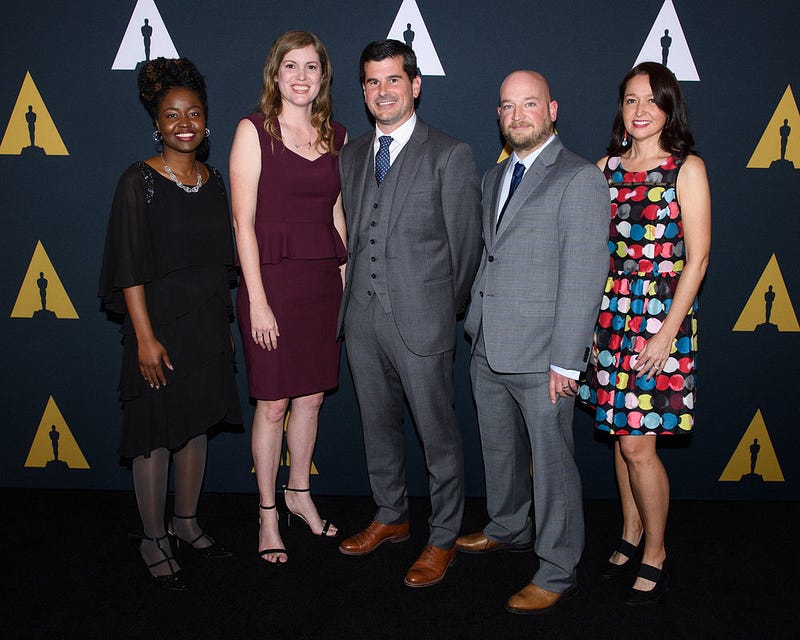
My interview with the 2018 Nicholl Fellowships in Screenwriting winner.
Wenonah Wilms wrote the original screenplay “Horsehead Girls” which won a 2018 Nicholl Fellowship in Screenwriting. Recently, I had the opportunity to chat with Wenonah about her background, her award-winning script, the craft of screenwriting, and what winning the Nicholl has meant to her.
Today in Part 2 of a 6 part series to run each day through Saturday, Wenonah reveals the inspiration for her award-winning screenplay “Horsehead Girls” and its two central characters — a grown mother and adolescent daughter just making do on the fringes of society.
Scott: I was going to ask you that because “Horsehead Girls,” the script for which you won the Nicholl Fellowship, is a Native American theme script, and was it you looking at the way that culture had changed, the Me Too Movement and whatnot, that made you think, “You know what? Maybe there is room for this type of material nowadays”?
Wenonah: Definitely yes. I think everything really happened very serendipitously for me with this project. I read an article about a Native American comic book artist several years ago, which led to a Native American short film that I wrote called “Waabooz” which is “rabbit” in Ojibwe. I knew a director who was looking for a short film, and I said, “Well, I have this. You might like this. It’s a Native American short film, but it’s a superhero story.” She loved it.
In order to make this though, I took her to the reservation, introduced her to my reservation, my family, my culture. The reservation can sometimes be closed off to outsiders so we went through the process of pre-production and production together and I ended up spending a lot more time on my reservation than I had for a long time.
I spent my summers there as a kid, but it’s a five hour drive for me and I was raising a family and didn’t get up there as much as I wanted. Doing this short film, I got to know some of the law enforcement officers and people in the community at a better level, and started hearing and seeing the darker side of reservation life. The side you don’t see when you’re a carefree kid. I knew there were stories here and I was a writer and I knew that this could be compelling on a human level.
I also started to become aware of the missing and murdered indigenous women’s movement (MMIWM) Living in Minneapolis with a large Native community, I would hear about these stories quite a bit. I decided to use the sex trafficking problem in a television pilot I was writing but knew it was a bigger story than a subplot in a tv show.
At the at the same time the movie Wind River came out. Great movie, but I made reference to this in my Austin Screenwriting Competition acceptance speech. While it touches on the abuse of Native women, the person that I identify with, the Native Woman was dead in the first 30 seconds. The rest of the film is about white people becoming the heroes of her story.
That’s not the take I would have had. I wanted a Native female protagonist. I want her to be the hero. She’s going to be angry, she’s going to be vengeful, she’s going to take back her life. She’s not going to be a victim. I knew I was the one that had to write her.
I wrote it really fast. It was a first draft that I just banged out, and I got lucky I think. Everything in the universe sort of came together.
Scott: You submitted the first draft to the Nicholl?
Wenonah: I did.
Scott: You had submitted a lot of scripts previously to the Nicholl, I guess?
Wenonah: Yup, I think 12 of them over the course of 16 years.
Scott: Wow. Let’s jump into it. “Horsehead Girls” is a really taut, compelling story. A logline that was provided by the academy people: “A blackjack dealer on a remote reservation recovers from a night of brutality trying to save a girl from a sex trafficking ring. When her teenage daughter is kidnapped by the same organization, she fights to not let her become part of a horrific fate she knows too well.”
Your story’s protagonist is Keya Pathwalker and she works as a blackjack dealer at a casino located in an Indian reservation. It’s like an immediate race. You meet her in the morning after a harrowing set of events. Let’s start off talking about Keya’s background. You sort of indicated the protagonist that you knew you wanted. Not that one of Wind River who is basically 30 seconds in and dead.
Wenonah: [laughs] Right.
Scott: You wanted this one to be alive. Could you maybe unpack her character a little bit more?
Wenonah: My protagonist came into this story deeply flawed and with a tragic background. This is something that I’m actually continuing to explore now and I’m thinking about writing a prequel because I feel like her character has a lot more going on as a younger girl.
She was part of a sex trafficking ring when she was younger. She got pregnant and escaped with the baby. There’s no father of the children in her life, she’s a single mom raising two kids. She’s just trying to get by. She goes to work every day at the casino. She’s involved in some of the opioid problems on the rez. She’s in an abusive relationship. She’s very weary, I think. She’s been a victim her whole life. She’s on the brink at this point of not taking it anymore and fighting back.
Scott: She’s got these two children. One is Brylee. That’s the one who was born from the experiences. She’s got this physical reminder in the form of her daughter of her past in the present. Then she’s got a young boy named Aiden who’s a little pistol. He gets in many things.
How did they come to emerge into your storycrafting process? You have Keya. Did they come pretty early in the process? You knew she’s going to be a single mother? You knew she was going to have these two kids?
Wenonah: Yeah. I’m a mom. That whole concept of a “mama bear” comes out. Even if she wasn’t going to stand up and protect herself all these years, when you have children, that changes everything. A lot of moms would say they would kill someone that would harm their children. At the very least you would do anything in your power to stop it.
Keya couldn’t stand up for herself or save her younger self, but this is her time to save her daughter. She’s not going to let the same thing happen to her daughter that happened to her.
Scott: You mentioned that she’s angry, maybe even vengeful. I have this theory about stories that…When I’m working with my students, I say, “Why does the story have to happen to this character at this time?”
It’s like there’s almost a fate involved. These events that transpire unleash this thing that’s inside her that emerges over the course of the story. Does that feel like an apt description of what happens with her?
Wenonah: Absolutely.
Here is a stage reading of an excerpt from Wenonah’s screenplay “Horsehead Girls” featuring actors Jamie Chung, Lily Collins, Ken Jeong, and Blair Underwood.
Tomorrow in Part 3 of my interview with Wenonah, she discusses the research she did into the sex trafficking trade in and around oil field operation sites and why she chose to structure the narrative with multiple timelines.
For Part 1 of the interview, go here.
You can learn more about Wenonah at her website here.
For my interviews with every Nicholl Fellowships in Screenwriting winner since 2012, go here.
For my interviews with 53 Black List writers, go here.