Interview (Part 2): Ward Kamel
My interview with the 2024 Nicholl Fellowships in Screenwriting winner.
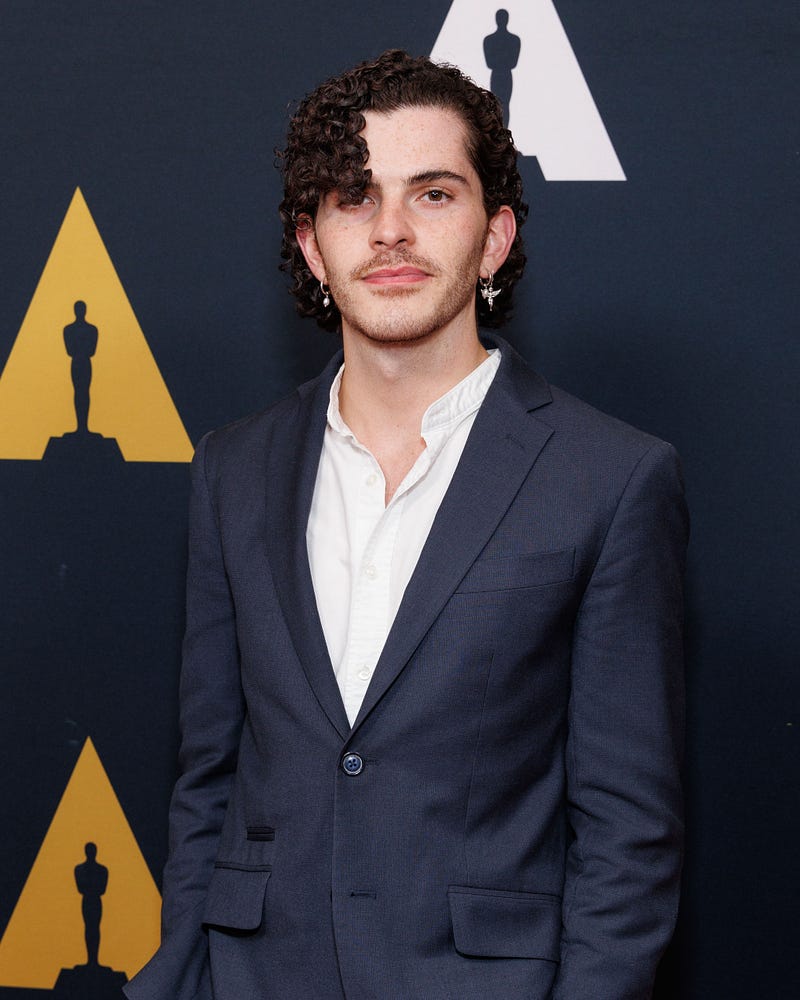
My interview with the 2024 Nicholl Fellowships in Screenwriting winner.
Ward Kamel wrote the original screenplay “If I Die in America” which won a 2024 Nicholl Fellowship in Screenwriting. Recently, I had the opportunity to chat with Ward about his creative background, his award-winning script, the craft of screenwriting, and what winning the Nicholl has meant to him.
Today in Part 2 of a 6-part series to run each day through Saturday, Ward reveals what the inspiration for “If I Die in America,” backgrounds on some of the key characters in the story, and his decision to use flashbacks.
Scott: It obviously did work because you did win the Nicholl. Here is the logline of that script “If I Die in America”:
“After the sudden death of his immigrant husband, an American man’s tenuous relationship with his Muslim in-laws reaches a breaking point as he tries to fit into the funeral they’ve arranged in the Middle East.”
What was the inspiration for this story?
Ward: I think largely, everything that I had written up until this point and in a lot of ways, a lot of my writing is largely influenced by this theme of immigration and what it means to be an outsider. I’ve had two big moves in my life. The first was from Damascus to Dubai.
While that doesn’t sound like the biggest move ever because they’re both Arab countries, they are very, very different cities. Damascus is largely comprised, or at least when I was living in it, it was 100 percent Syrians. Whereas you go to Dubai and the expat population is something like 83 percent expats. It’s really global and the first language there is English in a way, more so than it is Arabic.
Then obviously I had this other gigantic move when I was 18, barely 18, from Dubai to New York. I don’t have family out in New York. I was really thrown out here. What ended up happening was the year that I moved to New York, 2016, it was the year that Trump got elected and then on his first day of office, the Muslim ban went into effect.
With the Muslim ban, as a Syrian citizen, I was directly affected. I was on the list of the seven countries that essentially made it so that I couldn’t really leave the country for quite a while. I didn’t leave the country for six years.
That in combination with the fact that, there’s a lot of specifics I can get into, but that in combination with the fact that there aren’t any diplomatic ties between the US and Syria. There’s no Syrian embassy in the US and so renewing my passport was a nightmare if I couldn’t physically leave the country.
It was a confluence of factors that made me feel a little bit trapped out here. That’s one side of it. The other side of it is that I also just have a bunch of immigrant friends and just gravitated towards immigrant artists when I was at Tisch.
In conversations with other fellow immigrants, even if they weren’t Syrian, even if they weren’t in the specific scenario that I was in, this idea of this anxiety that we were all eventually would come to mind was what would happen if I died out here?
It’s a morbid thought because I can almost guarantee you every immigrant has at least once in their life considered what that would look like exactly, where would they get buried? How would they be mourned?
In my case, there were a couple more complications that made it interesting. The first is that in Islam, traditionally burials are really, really quick and there isn’t much pomp and circumstance. Ideally, if you’re running everything perfectly, after the person passes, they’re being buried within a few hours.
Like there’s really very little, it’s unlike the Western tradition, there’s no open caskets, you don’t draw it out, you’re really supposed to just get the person in the ground, and the funerary rights themselves lack some of the pomp and circumstance that Western funerary rights do.
The other is this interaction between queerness and Islam, which is something that I’m really interested in, not just this, but a lot of my work.
I think what’s happening in Muslim communities, both in diaspora and in the region, and then also obviously what’s happening globally when it comes to how queerness is changing both in its depictions and mainstream media, but then you’re getting these younger generations that are able to be connected at a global level that are starting to question their elders, long-standing positions.
This is definitely something that I started being in touch with a little bit more after I left and being around fellow queer immigrant artists in diaspora in the States, all of a sudden, all around me were examples of these other artists that were getting in touch with their queerness, or these other people, other immigrants, getting in touch with their queerness away from home.
They were developing this really integral part of themselves while they weren’t around their family. All of a sudden, there’s this kind of fractalization that occurs where there’s a part of you now that your family isn’t really in touch with or up to date on.
All of that orbiting around itself to create this situation where someone that was a queer Muslim immigrant died abroad, there is this urgency in getting them back. Then there’s this all there’s also this idea of which version of them is being mourned.
Is it the version that had paused the moment that they left and they immigrated out to this country, or is it this version that’s continued to grow and change amongst their chosen family, in this case, in the United States?
That placed against the tension of a man who wanted to delay his grief was really interesting to me because it’s in direct opposition to the, again, speediness of Muslim funerary rights. That’s the long-winded answer.
Scott: It’s a fascinating setup and an interesting journey that the protagonist goes on. Let’s talk about these two key characters, Manny and Sameer. Could you talk about the relationship between Manny and Sameer, and their respective backgrounds?
Ward: Yeah, for sure. In my mind, they met in college, maybe grad school. Sameer had immigrated to the States from the Middle East and so was probably closeted for a large, large chunk of his life and then blossomed stateside, and Manny’s is probably his first serious relationship that’s queer.
Manny’s backstory is that he grew up outside New York, he grew up in New Mexico and he has a strained relationship with his mother, but has also moved to New York and in his own right, even though he’s not an immigrant has blossomed similarly to how Sameer might may have in New York.
I think they meet each other and it’s a really immediate attachment, but then what ends up really coloring the relationship, what ends up really coloring the story is this idea of a green card marriage.
It’s this gray area that I think is a lot more common than most people think, where it is definitely not a transactional green card marriage the way that some antagonists in the script describe it. It’s not like I’m going to pay someone $10K to obtain a green card.
However, it’s also not quite as simple as well, this was just a completely regular marriage that had absolutely no twinge or at least hint of transactionality in there. The question that I feel like often came up was: would we have gotten married this quickly if it weren’t for the green card implication?
It’s not whether we would have gotten married at all, or let alone would we be in a relationship. These are loving relationships and loving partnerships, but the speed at which you decide that you maybe need to commit at this paperwork level is accelerated because of this added reality of, OK, well, if we don’t do that, one of us might not be able to be in this country anymore.
I think part of what I was really interested in in the script is an examination of what those relationships are like and what it does to a relationship that otherwise may have been just completely a fully loving partnership.
Like, is there room to say that that accelerated commitment strains the relationship, but then at the same time ties you to one another in this real way. You do become family in this measurable, on paper way, but then also in an interpersonal way. There’s a dependency. There’s again, a heightened level of commitment.
To me, that’s also unfolding at a subterranean level throughout the film, as you described with the flashbacks, where you have a microcosm. The intention at least is that there’s a small microcosm of a movie inside a movie, and inside the movie being the lifespan of this Brooklynite love story that dives into the implications of a modern day immigration journey.
Scott: The flashbacks are interesting because they’re told in chronological order. It’s like you see the unfolding of the past in these snippets, these little moments, so that there’s a coherence to it. You can fill in the blanks between the historical moments.
There’s even a scene that you basically reflects what you were just talking about, where they ask each other about the green card is how important that is.
Did you always have flashbacks in mind? Was that already in that half-baked and a half-written script that you had?
Ward: Half-baked is the right way, first of all. [laughs] You didn’t have to correct yourself. It was definitely half baked.
[laughter]
Ward: I’m trying to remember. I think so. I think the flashbacks have always been part of it. I think largely because, to put it this way, I’m interested in both these things at the same time. The first is everything that happens after the death, but then I’m also supremely interested in, again, the lifespan of the relationship as I described it.
Like, how do you tell a modern day love story through this immigration lens where you’re dealing with all the implications of what a green card does or what the realities of immigrating to this country and staying here legally do to a relationship, and then also this death abroad, repatriation of a body with a culture clash hero’s journey.
In order to do that, do both those things at the same time, you either have to have the death be the midpoint of the movie and then you’re just telling the story of their relationship and then one of them dies and then the rest of the movie is everything that happens after that, which covers these other areas I’m interested in, like queerness and Islam and who gets to grieve you, or do it the way that I’ve done it, which is, let’s let them play out on at parallel planes, in tandem.
I think I ended up being gravitated towards that because it then allowed all the scenes where Manny is in the Middle East that are taking place in quote unquote real time to then be colored by the flashback that came either just before or just after.
The rulebook is like: no flashbacks, similarly to no voiceover, and I would have been the first person to espouse that rule until I started writing this and I was like, “Well, you know what? Rules are made to be broken.” Yeah, hopefully my next one doesn’t have voiceover though, or narration. That’s what I’m really worried about.
Scott: The flashbacks set a mystery into motion early on. There’s a birthday party in the Queen’s apartment where Sameer and Manny live, and Manny wants to tell Sameer something. There’s something on his mind. One thing after another basically interrupts him.
It gets the reader to ask, “Wait, what exactly happened between these two?” That revelation doesn’t happen in this early scene. It’s like your choice to interrupt Manny in the flashback creates a mystery that plays out underneath the ensuing scenes.
Ward: Yeah. I’m really glad that you’re phrasing it exactly how I would want it to be phrased. I’m glad that it resonated at least. Yes, I think that the thing with the flashbacks is as a formal device is that I often think about it, there’s two things that I think are important for anyone who’s reading that I felt I needed to stress test when I was working through the flashbacks.
The first is, does the movie work without them? I think the answer is yes, and you almost want the answer to be yes. It’s counterintuitive, but I think if the flashbacks end up making it so that that’s the only way that the movie works, I think that’s honestly maybe not a good thing.
I think that in my mind, I would like to be able to pull out the flashbacks and that’s like a 30-page script, or something like that, and that works itself. You pull out the flashbacks and then the flashbacks all together are a 30-page little movie that works.
Then what’s left also, that’s not the flashbacks, also works, but the flashbacks are additive. They’re not absolutely necessary. It’s not like the whole thing would collapse. That’s the other criteria is, is the flashback doing anything to add to the texture of the film, even though it’s not entirely necessary? Is it adding to it or is it just repeating a beat?
Like if we know that he’s sad and then we get a flashback of him being sad, that’s not very additive. If we know that he’s sad, but then we get a flashback that elucidates exactly why he shouldn’t be sad by this thing that had happened, then to me that’s a functional use.
I’ve definitely, I think, gone back and forth on, like, I would say, arguably one of the harder parts about writing the script was the flashbacks and deciding when I was just being gratuitous or it was just like a scene that I really wanted to show.
Then I ended up deciding that, well, actually, I don’t know if this is doing all that much or this is maybe I’m hinging too much on this flashback and I think that also is like a mistake. I hope that answers your question.
Scott: It’s actually a really interesting idea. Think of the flashbacks as its own story.
Ward: That’s how I was thinking about it a little bit. I think the way to think about it, it’s similarly to sometimes the way I think about character arcs where you write your first draft, or at least you’re looking at the draft of the outline. What does it look like if I just started and stopped only the scenes where that character is in it?
This is maybe not as applicable when you’re talking about a protagonist, but if we’re talking about a mentor character or even an antagonist, what would their movie look like if it was just their scenes back to back?
I literally in the past color-coded, if you’re familiar with the script, every scene that Sama is in, who plays the sister character, where does she start? What sequence of five scenes do we get with her and what is the delta in the first and last time we see her? Same with Noora who is an antagonist/mentor.
I did something similar with the flashbacks where it was like, these are almost operating as their own little story. I think at one point, I really did just read the flashbacks from start to finish without any middle pages and just see if they’re working as their own thing.
Tomorrow in Part 3, Ward delves into his approach screenplay structure and the underlying psychological dynamics of the Protagonist in Ward’s Nicholl winning screenplay.
For Part 1, go here.
For my interviews with every Nicholl Fellowships in Screenwriting winner since 2012, go here.