Interview (Part 2): Walker McNight
My interview with the 2019 Nicholl Fellowships in Screenwriting winner.
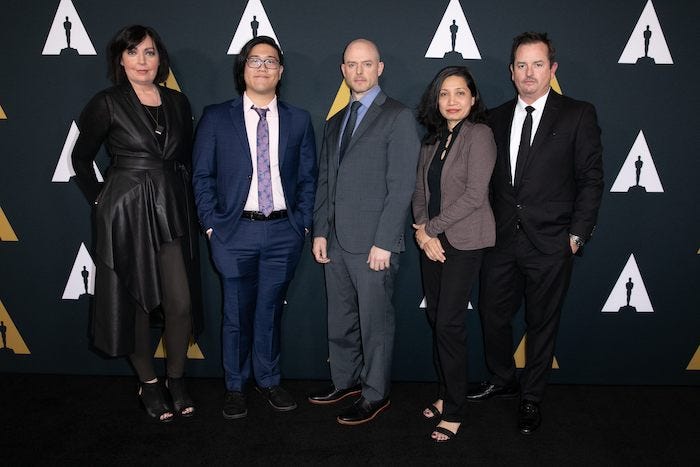
Interview (Part 2): Walker McKnight
My interview with the 2019 Nicholl Fellowships in Screenwriting winner.
Walker McKnight wrote the original screenplay “Street Rat Allie Punches Her Ticket” which won a 2019 Nicholl Fellowship in Screenwriting. Recently, I had the opportunity to chat with Walker about his background, his award-winning script, the craft of screenwriting, and what winning the Nicholl has meant to him.
Today in Part 2 of a 6 part series to run each day through Saturday, Walker talks about why going to film school was a major benefit for him learning the craft, what script feedback he dreads the most, and what was the origin of his Nicholl-winning script “Street Rat Allie Punches Her Ticket.”
Scott: Going back to your speech, you mentioned four teachers by name, and you went to UCLA Professional Program in Screenwriting. You got an MA from Georgia State University in screenwriting.
How important has that structured academic environment been for you in terms of learning the craft, as opposed to just reading scripts and watching movies and breaking them down?
Walker: It’s been essential. The feedback really helps. Especially early on, getting teacher feedback on what I was writing and having the give and take on craft questions was a huge part of the learning process.
Screenwriting how‑to books can be wonderful, but you can trick yourself into believing that you’re doing what the author recommends. I certainly could. I would look at the examples they gave and then at my own stuff and imagine I was doing the same thing, that it was lining up, or that I had the act structure just like they described. But when someone who knows their stuff reads your script and is able to assess it directly, they can see something totally different. They don’t bring that hopeful bias to it.
Most of my education has come from just getting notes back on first drafts. That’s been crucial. Every first draft I’ve written — that first round of notes are brutal, but also so instructive. It never ceases to be a shock what the reader sees and how different it is than your own read of it.
I only listed four teachers in the speech. I’ve had others that were lovely, but Jenna Milly, Michael Lucker, Jack Boozer, and Tim Albaugh have been big influences.
Scott: You mentioned in your speech something I thought was really insightful. You said, “My favorite storytellers throughout my life have been able to conjure something out of nothing, and make me actually care. The difficulty of accomplishing that never ceases to blow my mind.”
When I heard your comment, I was reminded of that wonderful TED Talk Andrew Stanton from Pixar did in which that was his primary point: Make me care. Create an emotional connection between the story and the viewer or the reader.
Could you maybe talk a little bit about that and how important that is for you in your own writing?
Walker: I think the most painful note that I get back on my writing — the one I dread the most — is when a reader says, “That was really interesting.” Interesting — that terrible word! If someone reads a whole script and all I get back is “Walker, that was really interesting. You did this or that, had this little twist of plot, or this was unexpected, and that made it interesting” — it kills me, because I know the script had zero emotional impact on them. They didn’t care. They may not have straight-up disliked it, but they didn’t feel anything. No real connection to the story. I’d almost prefer someone telling me, “I hated this!” At least then they would have felt something.
When I’m watching a new movie or TV show and I hit a point where I feel my attention drifting, I always ask myself why. What’s going on with the story that’s losing me? The answer is almost always that I haven’t connected to the characters — I can’t make myself care what will happen to them.
That’s the most important part of any story. Everything else is just window dressing. Even now, I marvel at what good storytellers can accomplish. Stories shouldn’t work. The audience or the reader knows it’s all bullshit. They know it’s something a writer conjured out of nothing. Yet somehow the great ones can make you care about this completely unreal thing — whether or not this protagonist lives or dies, succeeds or fails, finds love or loses it, etc. It’s mind‑blowing.
Scott: You accomplished that with your Nicholl‑winning script, Street Rat Allie Punches Her Ticket, not only creating this whimsical, wildly entertaining story universe but the characters who inhabit it also equally colorful.
Plot summary, “Street Rat Allie leads a small band of teenage girls in their makeshift existence in their wildly original ramshackle city of the future where they struggle to survive.”
Let’s start there. How and when did you come up with this story concept?
Walker: I can’t pinpoint a specific time when the idea first took root. Like most of my scripts, it began with little daydreams of random scenes. If a particular daydream reoccurs enough, I reach a stage where I think, “OK, obviously, this means something to me. Let’s explore it and start asking questions.” It began with a really simple daydream a hardscrabble girl sitting in this chair in a warehouse, being interviewed by some creature so disgusting that it wouldn’t appear onscreen. You just heard a voice. And it was her standing her ground but obsessively chewing bubble gum as a means of coping with her fear. I kept imagining that scene.
Eventually, I asked “Well, who is she? What is she doing there? Why is she being interviewed? What’s going on? Why do I care?”
I probably went to my notebook and started concept development in early fall 2018. And for a while, it was just her — Allie — in this future city, sort of on her own. Somewhere in there, I started to think that she would be a part of something bigger, a kind of found family. Just her by herself was too bleak. Not enough emotional connection. So I made her part of this gang and then built from there.
Scott: The post‑apocalyptic setting, was that implied in this daydream? Did that emerge as you were developing the concept?
Walker: It was always a future version of Earth, but the world got progressively more difficult and their situation got more extreme as I kept developing the story. Bizarrely, I think Allie even had an actual semi-normal job in really early concept development. Then by the end, she’s the leader of a gang of homeless girls who are always under threat of starvation.
They went from above-ground home to sewer. Humans became the bottom rung of the ladder, the least populous species, sharing the city with all this other craziness.
I liked the idea that it was sealed off from the rest of the world and the viewer wouldn’t know if this was the best the world had to offer, or if (as is rumored among the characters), that there are much better places outside the Bubble. The legend became motivation for them.
The short answer to your question is, the world got progressively more extreme and difficult to survive in.
Here is a stage reading of an excerpt from Walker’s screenplay “Street Rat Allie Punches Her Ticket” featuring actors Tyrese Gibson, Rosa Salazar, Amandla Stenberg, and Wes Studi.
Tomorrow in Part 3 of my interview with Walker, he discusses the dynamics of the surrogate family of four girls which lies at the heart of the story.
For Part 1 of the interview, go here.
For my interviews with every Nicholl Fellowships in Screenwriting winner since 2012, go here.
For my interviews with 53 Black List writers, go here.