Interview (Part 2): Tim Ware-Hill
My interview with the 2022 Nicholl Fellowships in Screenwriting winner.
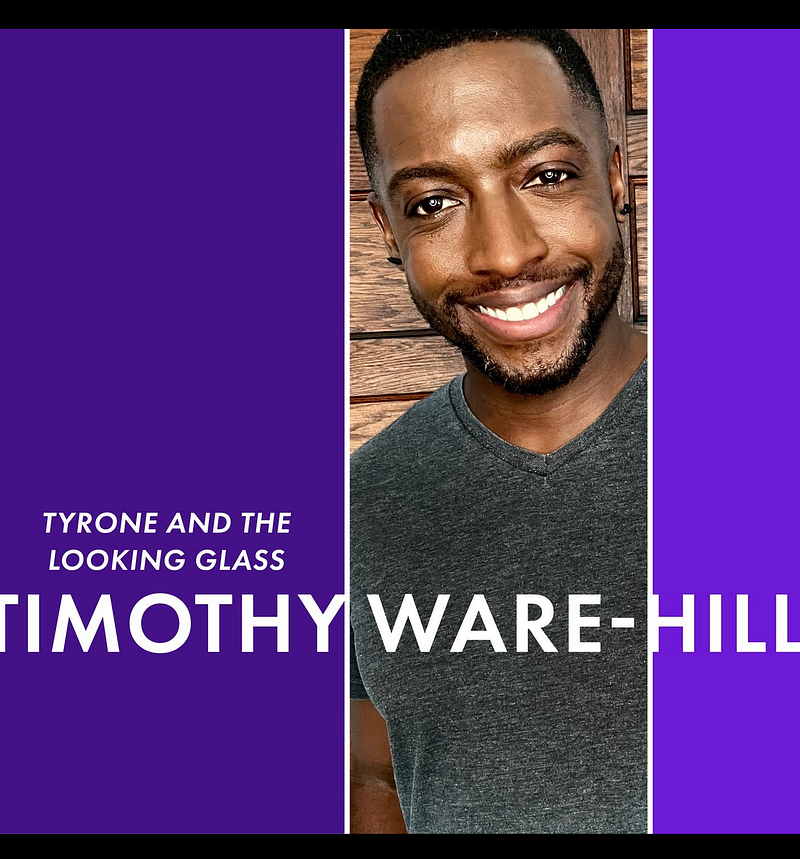
My interview with the 2022 Nicholl Fellowships in Screenwriting winner.
Tim Ware-Hill wrote the original screenplay “Tyrone and The Looking Glass” which won a 2022 Nicholl Fellowship in Screenwriting. I had the opportunity to chat with Tim about his creative background, his award-winning script, the craft of screenwriting, and what winning the Nicholl Award has meant to him.
Today in Part 2 of a 6-part series to run each day through Saturday, Tim talks about performing on Broadway, then getting an MFA in screenwriting.
Scott: You were in Broadway for a number of projects. How did that happen?
Tim: I’ve done four Broadway tours and I’ve only done one show on Broadway Properties. I was in the original cast of “Kinky Boots” on Broadway, along with my husband, who’s an actor as well. Barry Hill or his stage name is Eugene Barry Hill.
The very second gig that I booked after the show at the Taper was the Broadway, the first national Broadway tour of “Jesus Christ Superstar,” which was cast out of LA. We toured North America, including Canada. That’s where I met my husband because he was already a part of the cast, and I came in as a replacement for the last leg of the tour.
From there, I did other regional theater gigs at the Pasadena Playhouse in LA and the Goodman Theatre in Chicago, and all over. Then moved to Vegas and did “Mamma Mia!” in Las Vegas at the Mandalay Bay. I did Mamma Mia! In Vegas for a year in The Ensemble, and I was moved into the principal role of the character Sky for the first national tour of Mamma Mia.
I ended up touring for a year after that. I’m the first and only Black person that ever owned that role in any professional production of the show, which is great and unfortunate at the same time that there hadn’t been more prior to me or after me.
I did the national tour of “Dreamgirls.” The Broadway tour of Dreamgirls and the tour of Kinky Boots was the last Broadway tour that I did where I owned the role of Lola. When I was on Broadway, in the original cast on Broadway, I was this Lola standby.
Whenever Billy Porter was out, I was on and I did the role on Broadway over 200. It was 296 or something like that was my final count. I felt like I claimed that I owned the role on Broadway as well because I got to go on so many times. That’s how the Broadway thing happened.
Scott: It’s amazing that basically from the age 12, you’ve had consistent work or involved in education.
Tim: Yeah, because this is an education or something in the arts field. I started performing even before 12. Of course, in church. I grew up in the South, so I had to go to church whether I wanted to or not. I would sing in church or do…There was always some Easter program that I had to recite a silly little poem at.
I started dancing at this place in Montgomery. I danced at a couple of locations. My first foray into dancing, piano, music, and all that stuff was at a school called the House of Arts. It was in downtown Montgomery.
Then eventually I took dance at Alabama Dance Theatre, which was in Montgomery as well, under the…I can’t think of her last name, but I knew her as Ms. Kitty. She passed away a few years ago. She was a wonderful dance instructor there.
Forgive me for jumping all over, but while I was doing Kinky Boots on Broadway, I decided to go back to school because I would have a recurring nightmare that I was in school, and there was always one class that I didn’t complete. I couldn’t graduate. I said, “Well, let me go back to school. I dropped out of grad school, maybe that’s why I’m having this dream.”
I said, I was too old and too far in life to go to a brick‑and‑mortar college with a bunch of 20 something. I found online MFA program called National University run by Bettina Moss and got my MFA in professional screenwriting from there. The nightmares stopped once I got my degree.
Scott: I was going to ask how you learned screenwriting because in reading your script, “Tyrone and The Looking Glass,” clearly you know the craft well.
Tim: The MFA was a great program. I guess because of my background, my journey was slightly different than many of my classmates, because of my theater background. I understood story. I understood character. In some ways, it gave me an advantage in the way I grabbed onto the craft of screenwriting.
There are certain parts that I had to work on. I can be very wordy because of my poetry background. I’ve written plays and things of that nature before, but it’s a lot of exposition. Unlike film, on stage, you can’t show everything so you have to tell it. The opposite is for screenwriting. It’s like, “No, show it. Show it, show it, show it. Don’t tell me. I don’t need exposition all the time.”
That was an adjustment for me as far as my craft was concerned. As far as character and dialog, as an actor, that’s what I know. I know when I hear and I know when I read bad dialog or when characters just feel incomplete.
I didn’t necessarily understand what a three‑act structure was but I knew what it felt like. I knew that innately, I was writing in that way but I didn’t know how to define it. I’m grateful for all the steps that I took prior to finding my way into screenwriting because it really helped inform and enhance this new craft that I was trying to master.
Tomorrow in Part 3, Tim reveals the inspiration for his Nicholl-winning screenplay “Tyrone and The Looking Glass.”
For Part 1 of the interview, go here.
Tim is repped by The Gotham Group.
For my interviews with every Nicholl Fellowships in Screenwriting winner since 2012, go here.