Interview (Part 2): Scott Derrickson
My interview with the co-writer and director of the hit Marvel movie Doctor Strange as well as horror movies The Exorcism of Emily Rose and…
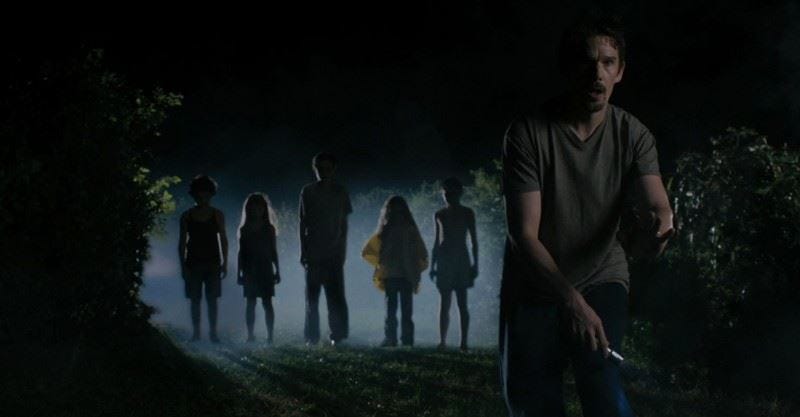
My interview with the co-writer and director of the hit Marvel movie Doctor Strange as well as horror movies The Exorcism of Emily Rose and Sinister.
I started following filmmaker Scott Derrickson years ago on Twitter (@scottderrickson) because I enjoyed his movies, plus, he’s a huge fan of Flannery O’Connor and Bob Dylan, two of my very favorite creatives. So I reached to Scott for an interview and was especially pleased when he said yes.
Recently, we enjoyed an hour-long conversation which was wide-ranging in nature covering three of his movies: The Exorcism of Emily Rose, Sinister, and Doctor Strange, as well as his thoughts on storytelling in general and the horror genre specifically.
Today in Part 2 of a six-part series, Scott relates how he moved into filmmaking and why he thinks horror movie fans are so ardent in their passion for the genre:
Scott Myers: Would it be fair to say that your interest in being a filmmaker was an extension of your passion for movies that you not only wanted to watch them and absorb them but create them and give people that wondrous magical, even mystical power that movies have on our audience?
Scott Derrickson: That’s exactly what happened. I can tell you the three films that were most instrumental in that happening. It’s significant. One of them is a TV movie, one a big Hollywood hit, and one a European art film.
The first time that I ever began to think about being a director and about the fact that people get to make movies was shortly after my dad brought home our first video recorder. It was a beta machine. He chose the superior format of beta over VHS to his own financial detriment, since beta faded out so quickly.
I remember taping Michael Mann’s very first movie which was a TV movie called The Jericho Mile, starring Peter Strauss. I think it won some Emmys that year. This would have been in the late ’70s, maybe early ‘80s.
I loved it so much. It was the first time I could watch a movie more than once. I started to watch it every day. I started to watch it over and over and over again. Dozens of times. I became addicted to this experience of repeatedly viewing this same movie.
The film is very Michael Mann. When I met him, I told him the story of how obsessed I became with it. He told me he shot it in 16 days inside a real prison, using real prisoners for a lot of speaking parts. It’s about a guy who’s an Olympic‑level runner, but he’s serving a life sentence. Mann used the Stones Sympathy for the Devil under these beautiful slow motion montages. It’s pure cinema.
I remember watching that it was like a sudden epiphany — I started thinking, “Somebody did that. Somebody got this piece of music and put it with these images. That’s why this is so awesome. Somebody actually did that. Hey, wouldn’t it be awesome to be that guy?” [laughter] Just to do that — it would be so amazing. Absolutely amazing.
And then years later in high school, Top Gun came out. I went and saw it with a friend at the best theater in Denver — the Century 21 on Colorado Boulevard.
I remember experiencing the THX sound as the jets were flying past me — from the back of the theater to the front. From one side of the theater and out past the Exit sign. I remember thinking again during that movie about how somebody pieced this all together. Somebody constructed this incredible, visceral experience that I was having. It was so powerful and overwhelming. Especially for the time, it was an exquisite piece of filmmaking. Nobody had made anything like it.
Afterward, I remember walking with my friend through the parking lot of the theater. He said, “So what’d you think?” I answered him,”I think I know what I want to do for a living.” [laughs]
Years later, when I got to work with Jerry Bruckheimer, I told him this story about seeing it and how it impacted me, which he clearly appreciated.
The third film that locked it all in for me was my Freshman year in college. A lit professor had us watch a VHS copy of Fellini’s 8½. It was so dense and surreal and tapped into my deepest sense of dark mystery. I actually had a panic attack toward the end and had to run out of the room. But when I calmed down and watched it again, I realized that movies were more than I imagined. Movies could do anything.
I think that one sealed the deal.
Scott Myers: You pursued that. You went to Biola University, and focused on literature, philosophy, film, and theological studies, and then got an MA in film production from the USC School of Cinematic Arts. Now, at that point, you are on target.
Scott Derrickson: Yeah. And I never really let go of that basic trajectory. I just got more focused as the years went by. I was 17 when I packed up my car in Denver and drove to California, and didn’t know anyone here. I had very little money. I just decided I’m going to go out to Hollywood and try to find my way into making movies. And that’s what ended up happening.
Scott Myers: As your career has evolved, you’ve been involved in a number of movie projects in the horror space. I’d like to unpack that a bit before we talk about the three of your movies.
First of all, I saw a tweet of yours recently, which you noted how much you enjoyed A Quiet Place. I think you said you thought it was more of a science fiction thriller rather than a horror movie. My question to you, what do you think discounts it from being a horror movie?
Scott Derrickson: I recant that statement. [laughs] I did on Twitter as well, by the way. But it was an important question for me. Since college, I’ve been keeping a list of every movie that I consider to be an excellent, four-star film. A list of all the best films I’ve ever seen. It’s amazing throughout my career how often I refer to that list, but it’s broken up specifically by genres.
I put the films in order by genre of the best, being the first one. I rank them all. With foreign films, I rank them in order by country. When it came to adding A Quiet Place, I found myself thinking, “Is this really a horror film or is more of a sci‑fi thriller? For example, I put Alien in my science fiction category — when of course, it’s a horror film as well. It’s a science fiction horror film, but I’d call it a science fiction film before I would call it a horror film.
So I just found myself musing about that, and at first put in my sci-fi category. There was lots of debate about it online, and I ultimately ended up moving it to the horror category when my friend, Steven D. Greydanus — a great NY film critic — argued that the perpetual tone of existential dread makes it horror film. And of course the Lovecraftian creatures themselves, which are gruesome and graphic, also help qualify it as a horror film.
It’s the predominance of unspoken or unspeakable fear that is the signature quality of any horror film. It’s much more about that than it is about body counts or how bloody it is or anything like that. In the end, what constitutes a horror film has a lot more to do with tone than anything else.
Scott Myers: I interviewed Scott Beck and Bryan Woods who wrote the original spec script for A Quiet Place. They had this idea back at the University of Iowa: “Make a sound, you die.”
Scott Derrickson: My God, that’s a perfect simple horror film concept.
Scott Myers: It really is. It’s interesting to me, of all the movie genres, I don’t think there’s probably any more loyal fans than horror movie fans. Why do you think that is?
Scott Derrickson: It’s an extreme genre. It’s the most extreme genre. It’s therefore going to attract the most extreme kinds of people and the most extreme fans.
Here’s the funny thing about that, though. In my experience there is no predicting who is going to be a horror film fan. I’ve met a lot of NYC cops, and one of the toughest, boldest, bravest cops in all of the New York City’s emergency services — a guy who dragged people out of the towers on 9/11 and barely got out alive — a guy who has seen so much shit, and he’s just terrified of horror films. Terrified. When I met him, he didn’t know that I made Sinister, and he actually brought it up.
I asked him what, if anything, he is afraid of. He said, “Supernatural shit. Especially in movies. Like that movie Sinister — did you see that fuckin’ movie? Oh my God,” It was one of my great moments in my life. I was like, “If I could scare this guy.”
But then I’ll meet some 80-year-old grandmother in a flower shop who’s seen every Hellraiser movie. [laughs] There’s just no specific type of person who really connects with horror cinema. You either love the visceral and vicarious experience of fear in a safe environment, because it’s cathartic and thrilling, or you don’t because for you, it’s just upsetting and painful.
This is why I never try to convince anyone to become a horror film fan if they don’t already like horror films. You can’t convince somebody to like roller coasters. If you don’t like them, you don’t like them. Nothing’s going to change that. If you love them, you probably love them crazy.
Tomorrow in Part 3, Scott digs deeper into his reflections on the power of horror movies and what he thinks is at the core of the movie The Exorcist.
For Part 1 of the interview, go here.
Scott is repped by WME and Brillstein Entertainment Partners.
Twitter: @scott derrickson.
For nearly 200 more in-depth Go Into The Story interviews with screenwriters, TV producers, filmmakers, and industry insiders, go here.