Interview (Part 2): Sam Boyer
My interview with the 2022 Nicholl Fellowships in Screenwriting winner.
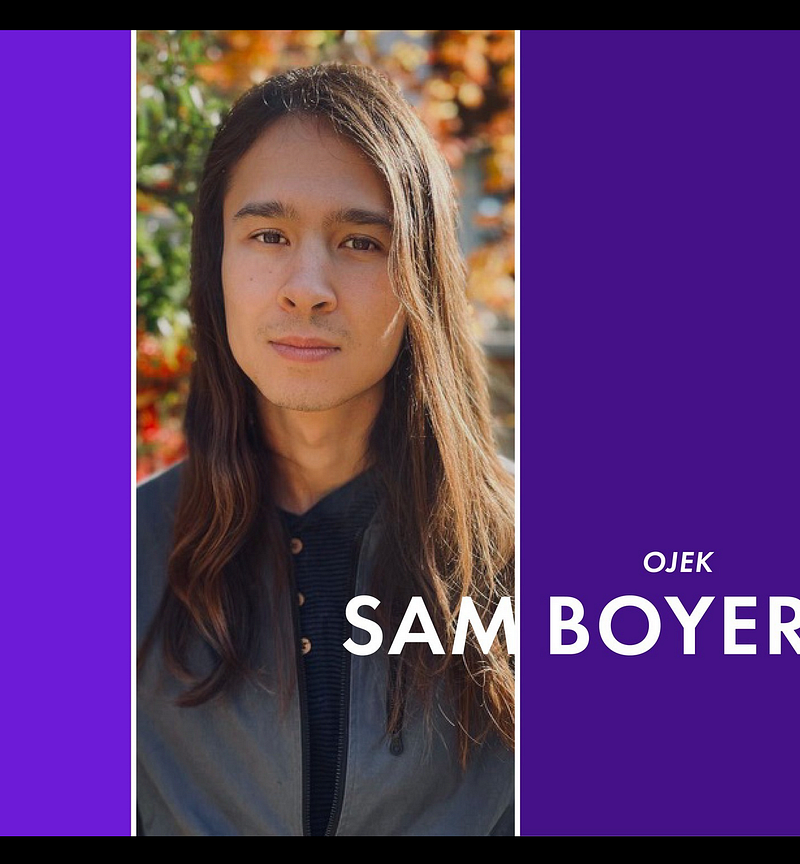
My interview with the 2022 Nicholl Fellowships in Screenwriting winner.
Sam Boyer wrote the original screenplay “Ojek” which won a 2022 Nicholl Fellowship in Screenwriting. Recently, I had the opportunity to chat with Sam about his creative background, his award-winning script, the craft of screenwriting, and what winning the Nicholl Award has meant to him.
Today in Part 2 of a 6-part series to run each day through Saturday, Sam talks about how a stint living in Indonesia led him to conceive his story’s Protagonist and inspired him to write his Nicholl-winning screenplay.
Scott: That’s a great segue into your Nicholl winning script: “Ojek.” Here’s the plot summary that the Nicholl people provided.
“In Jakarta, a local motorcycle taxi driver struggles to build a better life through a deadly new business that tests his transporting talents and inner humanity think drive in Indonesia.”
Do you remember the original inspiration? Because the protagonist is one of these motorcycle cabbies and they’re known as Ojeks. Why that character? What was it about that that appealed to you that generated the story in the first place?
Sam: Good question. Let me see. I guess, I rode an Ojek to and from work every single day. I was interacting with Ojek drivers on a daily basis. I thought that Indonesia was this vast, sprawling city that had not been committed to film in a global way before.
In terms of the right (pun-intended) vehicle to capture that, I thought Ojek drivers were perfect because of their almost superhuman ability to navigate the world’s worst traffic. I lived in DC and LA. It’s truly like these guys would be on the X Games or something if they were in the US.
Their ability to get around these very dangerous situations amazed me to no end. There are certain scenes in the script. At one point, he’s driving towards an oncoming train and that’s not even fictionalized. I was on a motorbike doing exactly that and it saved us 10 minutes in our commute and left a memory. [laughs]
Certain Ojek drivers would cut me better rates or certain drivers were faster and had these good reputations. All those things varied. Now it’s becoming much more streamlined and universal. That whole notion of Ojek is a straight-up profession has begun to die out because any college can join the new Uber-for-ojeks startup and become a Gojek now.
Scott: Here’s how you describe that traffic because Indonesia is the fourth most populous country in the world.
Sam: Exactly. You’re dead on. Very similar to United States.
Scott: Very close to United States. Here’s how you describe that traffic situation in the script. “Imagine a road paved 10 years ago tread on by 1,000 elephants every day since. Replace the elephants with a horde of cars, motorcycles and pedestrians all vying for the same piece of pavement. This is afternoon in downtown Jakarta.”
I was thinking, putting my producer’s hat, you could probably find some points of connection with LA studio executives and producers because of the traffic on the 405.
Sam: No, absolutely. I had lived in LA prior to living there. The whole thing of like, life is this thing that happens between traffic felt very universal in both locales.
Scott: Your protagonist is an Ojek…
Sam: Gede.
Scott: Here’s how he’s introduced in the script.
“Our driver comes to a stop in front of a row of parked motorcycles. Six other drivers squat in the shade of a small tent smoking Clove cigarettes. This is their rank, where Ojek drivers congregate, so they may be easily found.
Our driver comes to a stop, removes his worn helmet. This is Gede. Like the other drivers, Gede is dark and of average build. Unlike the others, he’s under 40 years old, and his motorcycle, while nothing fancy, is spotless.”
Could you give us a little thumbnail sketch on Gede’s personality and his situation of life at the beginning of the story?
Sam: Yeah. Gede is almost prototypical in terms of what you think a fantastic Ojek driver should embody. He’s loyal to a fault. He’s incredibly skilled and he’s very true to his customers and his profession. I think that in any script or story, and it was important for me that this would feel universal, because Jakarta is such a different place. I wanted Gede to feel very universal by the notion that we can easily relate to characters who are very good at their jobs.
I thought that it would be interesting in terms of an arc, to have someone who is a driver and can get anyone anywhere they need to go. At the same time, with Gede’s problem over the course of the script is, steering his own craft, driving himself and knowing where he should be.
I think that whether you’re a struggling writer in Los Angeles or an Ojek driver in Jakarta, seizing control over the navigation of your own life is a very universal experience, but can be more cinematically powerful when you’re piloting a motorcycle, like 100 km an hour down crowded Jakarta streets.
Scott: It reminds me of Joseph Campbell talking about The Hero’s Journey, that there’s that outer journey, but it’s really an inner journey. The outer journey is, and some of you say, it’s incidental in a way to what’s going on inside. There are several other Ojeks as part of this rank, their group. Mo, Yandi, I think Johan.
I was reminded of, I don’t know if you remember in Taxi Driver, the Scorsese film. Travis Bickle has got that little group that he hangs out with. They go to the coffee shop and stuff. I’m reminded of that. I don’t know if that was ever an inspiration for you. That camaraderie, could you maybe talk a little bit? Because he is loyal to these guys.
Sam: If we’re to distill characters down to attributes, loyalty is Gede’s. It’s very much also this thing in Asian families of loyalty to one’s family too.
He embodies that to the maximum possible extent, but I thought that these other Ojek drivers would be important to give you a sense of what a rank is like, because it’s a tough thing to describe and you can see that there’s community within this.
Each of these people, they’re independent contractors in their own way, but they’re all united in the fact that they share profession, they often share customers. In a big city you need people looking out for each other. It’s one of those families-we-choose to a certain extent.
Tomorrow in Part 3, Sam introduces us to some other key characters in his story and how the movie Drive was a “guiding star” in writing his script.
For Part 1 of the interview, go here.
Sam is repped by Range Media Partners.
For my interviews with every Nicholl Fellowships in Screenwriting winner since 2012, go here.
For my interviews with Black List writers, go here.