Interview (Part 2): Jonathan Levine
My interview with the 2022 Nicholl Fellowships in Screenwriting winner.
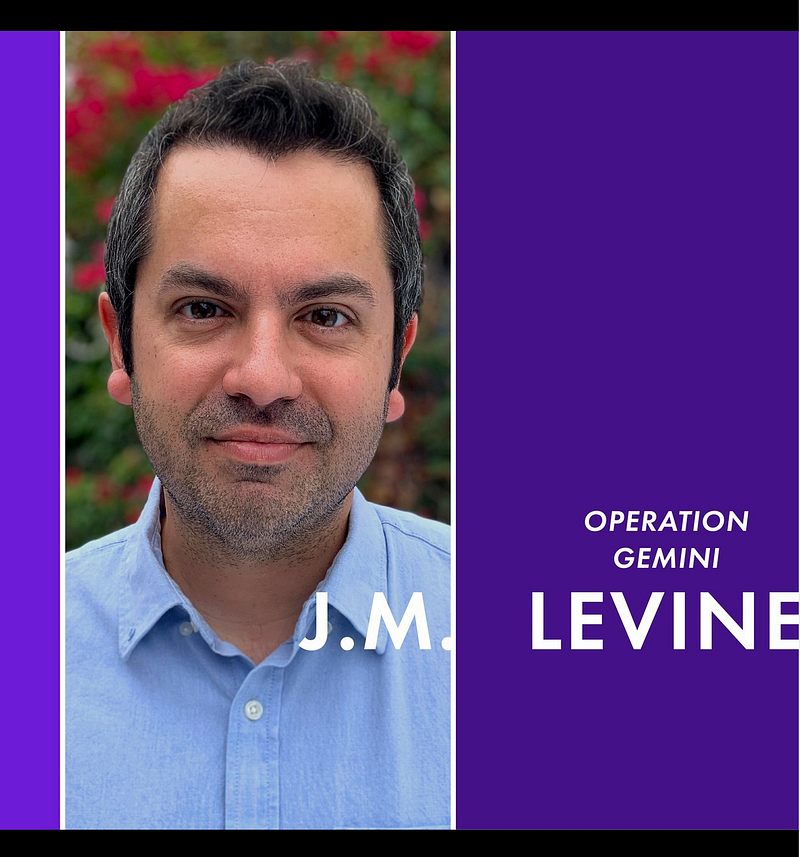
My interview with the 2022 Nicholl Fellowships in Screenwriting winner.
Jonathan Levine wrote the original screenplay “Operation Gemini” which won a 2022 Nicholl Fellowship in Screenwriting. I had the opportunity to chat with Jonathan about his creative background, his award-winning script, the craft of screenwriting, and what winning the Nicholl Award has meant to him.
Today in Part 2 of a 6-part series to run each day through Saturday, Jonathan talks about the inspiration for his screenplay “Operation Gemini” and how he wrote it in six weeks in order to submit it to the Nicholl competition.
Scott: That’s a nice segue into talking about your Nicholl-winning script, “Operation Gemini.” Here’s a plot summary:
“After being separated from her newborn twins during the invasion of Kyiv, a mother recruits two civilians to drive her back into war-torn Ukraine to rescue her children before medical supplies run out and the Russian army takes over.” Inspired by a true story. What real-life elements figured into your script?
Jonathan: I’ll give you context for how I ended up writing it. Following my time working for Larry King. I left there and I went to work for this kids production company called pocket.watch. I’m still there today, as their SVP of Production and Studio Operations.
pocket.watch partners with big influencers in the kid’s space on YouTube and grows their I.P. and brand into TV shows, movies, books, games, and toys. Aside from overseeing all the shows we produce, the job allowed me to write and develop material for kids. About a year in, I also had my first daughter — which was great because now I’m producing shows that she can watch and enjoy.
As it goes, life and work started taking over the time that would normally be reserved for my own writing; which was okay because honestly I was tired of the spec game and chasing that and trying to find motivation to make that happen.
So when the beginning of 2022 came around, I thought, “OK, the Nicholl deadline is coming, am I going to try to submit something? Am I going to rewrite something that I’ve already done?” I decided: no, I really don’t have time.
Then in March, about two weeks after Russia invaded Ukraine, I was driving to pick up my daughter from preschool and I heard on the radio this story about a woman who had given birth to twins in Kyiv right as the Russian army had come in. She was a surrogate for a family in Chicago. The family in Chicago reached out to a group called Project Dynamo, a group made up of ex-military personnel who go into war-torn countries or very bad situations like hurricanes or natural disasters, and get people out. Really great organization.
They were contacted, they went into Ukraine. They picked up the mom and her two children, the twins, and loaded them into a caravan of three emergency vehicles and drove them to the border of Poland and through snow and through checkpoints.
There was a war happening around them. It was a dangerous situation, but they reunited these twin babies with the family from Chicago. When I heard this I thought, “That sounds like a cool idea for a movie.” A rescue mission. Rescuing babies in war. It felt very compelling, it felt very readable.
I still didn’t think I had time to do it. The Nicholl deadline at that point was seven weeks away or something, but the idea kept popping into my head. I told my wife about it: “I heard the story about these two twins who’ve been born and they go into rescue…” and she stops me in the middle of my little story, saying: “No, no, no, no. I can’t handle babies in a war zone. It’s too much.” It was a very interesting reaction. A very emotional reaction from just a sentence.
And I thought: Huh. There must be something here.
Then I started reading about all these civilians who were going out to help. People from all around the world selflessly traveling there to help because they felt like they needed to be a part of it. They need to do something. They wanted to make a difference. It felt very unique to our time, especially in the context of COVID because I feel like COVID forced a lot of people to look inward and re-evaluate their lives, and a nice by-product of that was this wonderful outpouring of humanity to help others.
I was very moved by that selflessness. I thought that could be my way into the story: This American who wants to help. He’s a fish out of water, trying to make a difference.
So I hunkered down and wrote for an hour or two hours a night for six weeks. I feel like in some ways the ticking clock of me trying to push through it helped the writing because that’s the nature of the story.
I finished it — I want to say — four days before the final deadline for the Nicholl was due. My wife was the only person who read it. She read it in a day and gave me notes.
It was funny. When she read it, she said, “Well, you realize that you are your main character, Sam. Sam is trying to re-evaluate his life. He’s trying to find himself. That’s what you’re doing in the script.” I realized she was right. Me writing this script was me reconciling old Jonathan writer with new production executive Jonathan. Now I’m a dad. There’s COVID. There’s social unrest. This script was my way of processing and finding my new self or the rebooted version of myself. Sam’s journey to find that he can keep going is my journey to find that I still have stories to tell. That there’s still features to write. I can still find the time. It’ll be worth something. Somebody will read them. It ended up being a very cathartic, emotional writing experience.
Tomorrow in Part 3, Jonathan discusses the central characters in “Operation Gemini,” some of whom are inspired by real life individuals.
For Part 1 of the interview, go here.
Website: infinitivefilms.com.
For my interviews with every Nicholl Fellowships in Screenwriting winner since 2012, go here.