Interview (Part 2): Joey Clarke Jr.
My interview with the 2018 Nicholl Fellowships in Screenwriting winner.
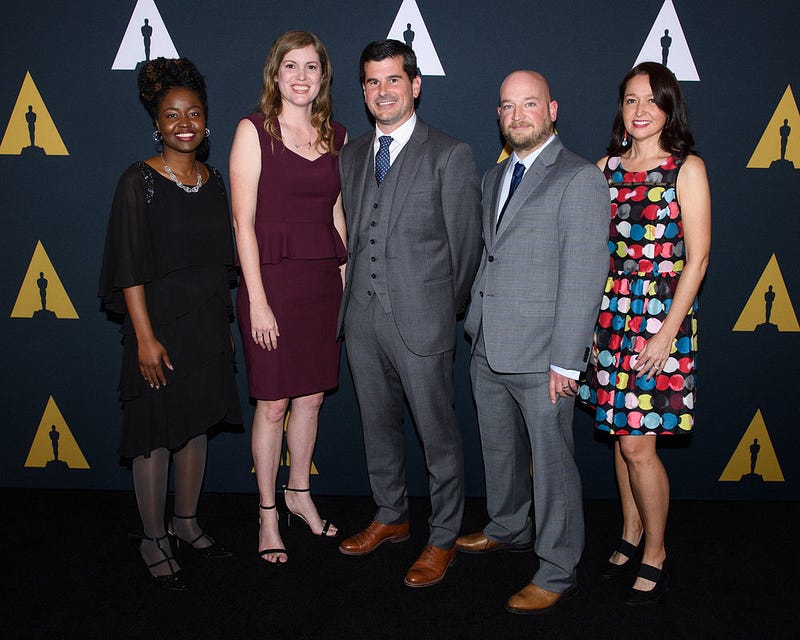
My interview with the 2018 Nicholl Fellowships in Screenwriting winner.
Joey Clarke Jr. wrote the original screenplay “Miles” which won a 2018 Nicholl Fellowship in Screenwriting. Recently, I had the opportunity to chat with Joey about his background, his award-winning script, the craft of screenwriting, and what winning the Nicholl has meant to him.
Today in Part 2 of a 6 part series to run each day through Saturday, Joey and I dig into his Nicholl winning script “Miles,” and the inspiration for the story’s lead characters, a pair of young siblings.
Scott: You just got to keep going. Speaking of which, you bore some fruit out of your creative efforts with this wonderful script, “Miles,” which did win the Nicholl Fellowship in Screenwriting. It’s a story set in contemporary Arkansas.
At its core, it’s got a sister and a brother, 12 year-old sister and a six year-old brother. I’ve read where you said that the relationship you have with your own sister was an inspiration for the script. How so?
Joey: My sister’s a couple years older than me. She’s four years older than me, and the script is six. We grew up in joint custody. We had good parents. It wasn’t like our parents were out doing opioids like they are in the in the story. It was the 80s when I would have been Nolan’s age, so I guess it would have been crack, but they weren’t doing that either. We had good parents.
But, because we were going back and forth every week, they weren’t always there. There wasn’t always a parent around. My sister, when she was pretty young, she became somewhat of a parental figure for me — not in an authoritative way at all, but in a guidance sort of way.
There was always a lot of drama behind the scenes that I never really knew about that my sister did know about. I was just kept blissfully ignorant. She carried everything on her shoulders. I put that into Riley, where she’s forced to grow up a bit too early and is aware of what’s going on. Nolan, he’s too young to grasp it all. Riley just takes the weight of stuff while Nolan’s in the background trying to figure out exactly what’s going on.
Scott: That dynamic is definitely in play, and that she is the surrogate parental figure. Evidently, she’s got a bit more edge than your sister. Let’s talk about these two characters, Riley, 12, Nolan, 6. How would you describe Riley’s personality?
Joey: She’s on edge constantly. She’s mad. She’s been cheated out of her childhood with what’s happened. She’s somewhat manipulative. She’s a little bit wise beyond her age and very independent for her age, because she had to be.
Under her anger, she still cares and loves people, and loves her brother, and still has love for her aunt and her parents. That’s, ultimately, where we try to get it at the end, is where you can see that she still just wishes things were different, ultimately.
Scott: I often times look at the stories as being journeys of key characters discovering some deeper aspects of their self, journeys of selfidentity. Whereas that anger, that frustration, that edge Riley’s got that’s right up top and very consistent, and she defaults to that, you just feel like there’s something else underneath there. Sadness. Loss.
In many ways, her journey is about allowing that stuff to come up. Do you think that’s a fair assessment?
Joey: Yeah. In an actual physical world in which she’s trying to get her dog back, emotionally, she’s trying to get something else back and trying to find innocence that she had before all this happened. Trying to find that happy time in her life when she was Nolan’s age.
Scott: Nolan, in a way, is the physical representation of innocence, because he’s right at the edge of…I think it’s six years old, is what psychologists say, is when children can fully grasp the concept of permanence. There are times where he knows his father’s dead, but then there’s other times where he talks about him in the present tense as if he’s going to be around.
Joey: At times, I felt like Nolan might come across as a little too mature, for six, how I wrote him. But, it works, I think. Throughout the script, he’s trying to grasp what’s going on. He does know his dad’s gone, but the idea that how permanent that is in reality, I don’t think he really understands.
How I wrote him, I have an almost twoyearold. He’s just learning to talk or whatnot. I pictured what my kid, what I imagined he’s going to be like personalitywise when he’s around that age. I don’t know if he will end up like that, but, I just projected what I think his personality is like into that character.
Scott: In some respects, he does have that innocence. He’s picked up at least something of his sister’s conniving ways with the whole candy thing and all that.
Joey: Yeah, you tend to take after your older sibling. I definitely did as a kid in some ways.
Scott: The children’s parents are both addicted to opioids, yet they’re presented not as the stereotype we might have in the media. They’re really caring parents who, through circumstances, have fallen prey to the power of drugs.
For example, the father’s a former football player. I believe he played on the Arkansas football team. University of Arkansas, is that right?
Joey: Yeah.
Scott: He got injured. I imagine that’s how he ended up getting hooked onto the pain killers.
Joey: That is correct, yeah.
Scott: Let’s talk about them, the parents, who they are. How did they come to life for you? Did you start with the kids and then extrapolate the parents off that? How did the characters emerge in your process?
Joey: The kids were the first characters. They came from that. The opioid part came later. I was trying to figure out why these kids would be going to get to their dog. That was the concept. I got to they’re foster kids and need to get their dog back. So, I’m thinking, why are they foster kids? Something that it’s relevant and current. Something relevant that I know a bit about and can project emotion into is the opioid crisis, so I went with that and there came the parental characters.
Like you said, I didn’t want to make stereotypical heroin addicts that are junkies. I wasn’t interested in that. I was interested in more showing these people who’ve lost their way, which I think is true in reality. A junkie is a person. An addict is a person. They could have been successful in the past and maybe still can be in the future. These are just people who are struggling.
And, a lot of people that I see get addicted to opioids — heroin or otherwise — start with a prescription. I wanted to make that point. That’s how the Dad would get it into it. That’s when I decided he should be a football player. It was just his life just deteriorated since getting hurt.
It was important to me to not villainize the parents and try to show that they are humans who care about their kids.
Scott: The Call to Adventure in your story, which starts the process whereby Riley and Nolan’s old world transitions into a new world, experiences this sudden death of their father. It happens right about the midpoint of Act One.
It’s interesting to hear you say you did this reverse engineering. You said, “Well, I know I want these kids to go get this dog, so then there’s this foster parents.” Now, you have to work on the parents. That’s a startling event to happen, where a father, through page 15 or so, is dead. How soon in the process did that emerge in your story crafting?
Joey: Everything was in the outline. That was even before I went to the outline, I knew he was going to die right away. It’s because I knew I wanted to write a story about a brother and a sister on an adventure, like a throwback to ’80s movies, films like Stand by Me or Goonies or whatnot. Then, obviously, it got a lot darker than those. But, I wanted to get on that adventure as quickly as possible.
I guess I knew he’d die right away. I started plotting out the beats. That was inciting action. Show Riley’s world and then rip it away very quickly through her Dad dying.
Here is a stage reading of an excerpt from Joey’s screenplay “Miles” featuring actors Jamie Chung, Lily Collins, Ken Jeong, and Blair Underwood.
Tomorrow in Part 3, Joey talks about why he ended up outlining the story six different times and in so doing made the Protagonists’ journey that much more harrowing.
For Part 1 of the interview, go here.
Joey is repped by Fourward.
For my interviews with every Nicholl Fellowships in Screenwriting winners since 2012, go here.
For my interviews with 53 Black List writers, go here.