Interview (Part 2): Jimmy Miller
My interview with the 2023 Nicholl Fellowships in Screenwriting winner.
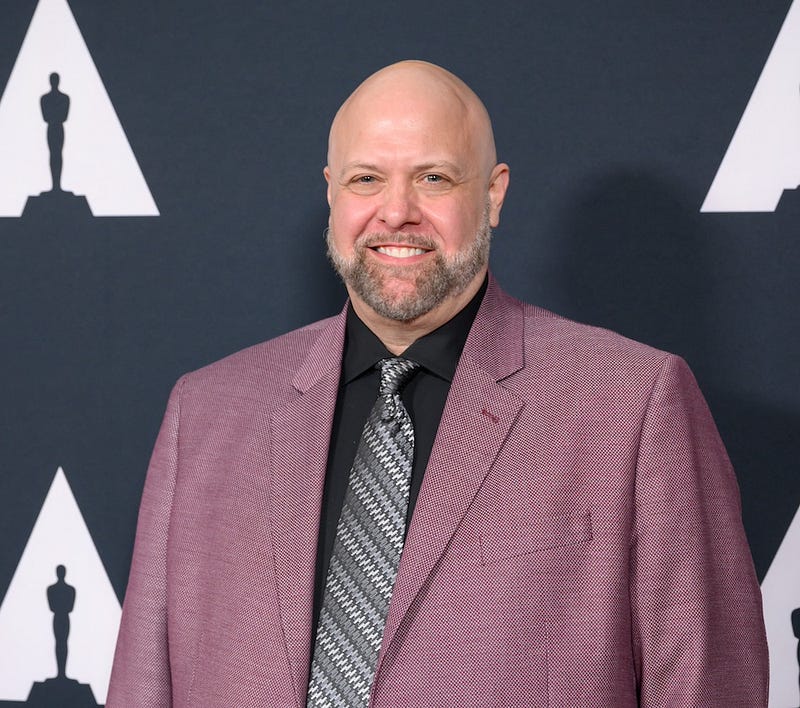
My interview with the 2023 Nicholl Fellowships in Screenwriting winner.
Jimmy Miller wrote the original screenplay “Slugger” which won a 2023 Nicholl Fellowship in Screenwriting. Recently, I had the opportunity to chat with Jimmy about his creative background, his award-winning script, the craft of screenwriting, and what winning the Nicholl Award has meant to him.
Today in Part 2 of a 6-part series to run each day through Saturday, Jimmy talks about his Nicholl-winning script and how his background as an editor influences his approach to screenwriting.
Scott: That’s an amazing story. There are so many things I could pick up on. But let’s zero in on this editing aspect. Has that influenced you at all in terms of your writing? Do you think about it as like you have an editing hat on when you’re writing or screenwriting hat on? Do you switch back and forth?
Jimmy: They’re very similar things to me. They’re just different expressions of the same idea because they’re both storytelling. For editing, I’m telling somebody else’s story. But I have so much to do with how that story is told. And it definitely informs my screenwriting. I think it helps me understand timing better than most. Knowing when a scene is too long or about the wrong thing. There’s a rhythm to scenes in editing when they are right length, and that translates well to screenwriting. I love it when my scenes are one page or two pages. It helps give it pace and direction.
And being a reality editor gives me a lot of opportunities to observe people. I often watch a lot of footage of non-actors just living their lives. Going through what they’re going through. I see of hours of footage get cut down to a minute and a half. It develops an instinct for what’s interesting and what isn’t.
Scott: Your script has a flow to it, transitions from scene to scene, a sense of pace. I can see how that benefits you in terms of your writing. It really has a nice movement to it.
Jimmy: Thank you. Yeah, some of that is learning that leaving a scene unresolved creates tension. Not every question should be answered by the end of a scene. They don’t need to be buttoned up perfectly. In fact, the mess of it should raise more questions and create more problems.
We’re leaving out so much of the characters’ actual lives, and we’re choosing what to show and what not to show so we can make the audience stick around to see how all the dots connect.
Scott: Yeah. Just like that Billy Wilder quote. “Don’t give the audience two plus two equals four. Just give them two plus two.” They’ll love you for it because now you’ve got them taking part in the story process.
Jimmy: Right. And if maybe if you’re clever, you can convince the audience that two plus two equals five. You thought it was going to equal four. I set you up to go to the most logical conclusion, but I tricked you.
Scott: Yeah, you do that several times in your script, too.
Jimmy: It’s setting up expectations. Sports movies have a format, and they come with some expectations from the audience. A lot of times they can sense the math in the story, expecting this “2” and this “2” to add up to “4” at the right time. But I really tried to misdirect the audience, so when in every other sports movie two and two equaled four in this kind of story, I tell them it equals three or equals five or that there’s really no answer to the equation this time.
It took me quite a long time to figure out that there was a balance I needed to have. I needed to give the sports fans the movie that they expected, but somehow still make it surprising.
Scott: That’s a great segue into “Slugger,” your script that won the Nicholl this last year. Here’s a logline:
“Abandoned by her mother and coached by her unloving father, a high school baseball prodigy with a hot temper and a thunderous bat must confront old-school coaches, jealous teammates, injuries, and her own sexual identity on an inspirational quest to be the first woman to play in the major.”
You say you started writing this thing back in 2004. What was the original inspiration for it?
Jimmy: It was kind of a combination of things. I grew up playing baseball with my dad and I’d always loved the game. And I remember when I’d hear the story of a great baseball player, or other great athletes, or anybody who became great at something really hard — almost all of them have some story about, “I couldn’t have done this without my parents or my grandparents or this uncle or this friend” or something like that.
People with exceptional talent at something hard must have support from somewhere because it’s too hard to do on your own. You are often taking a big chance on yourself. There’s risk involved. With great opportunities can sometimes come great risk and you need support.
I started thinking about what happens to great talent when it has little or no support. What if no one ever thought to give Roger Federer a racket? Or what if Michael Jordan grew up in a place without basketball courts or no way to get to them? What if Simone Biles had no one to drive her to the gym and no one to console her when she lost or help her when she got hurt?
How many amazing people with incredible talents were lost to obscurity because of no access and no opportunity and no support? What if there was a girl out there who could have been the best baseball player in the country if no one made her play softball instead?
And what if her parents were crappy? What if they were messed up and didn’t know what they were doing? Or even worse, what if she had a parent who was against her? How would she fight against it all? Why wouldn’t she give up? Or would she?
The story gave me an opportunity to explore all those questions. If this could happen, if a girl could really play baseball at a professional level, what would it look like? And how could I make it feel impossible and inevitable at the same time?
So, I gave her a father who was a baseball player, but because of an injury and a big mouth, never got to play pro. He never fulfilled his potential and was pissed about it for the rest of his life. What if a guy like that had a daughter who became a better baseball play than he ever was? I think he’d be proud and jealous and would love her and fight her all at the same time.
Here is the video where the 2023 Nicholl Fellows found out their scripts had been selected as winners.
Tomorrow in Part 3, Jimmy discusses two of the story’s main characters and their mother-daughter relationship.
For Part 1, go here.
Jimmy is repped by Marc Manus at Persistent Entertainment.
For my interviews with every Nicholl Fellowships in Screenwriting winner since 2012, go here.