Interview (Part 2): Jennifer Archer
My interview with the 2022 Nicholl Fellowships in Screenwriting winner.
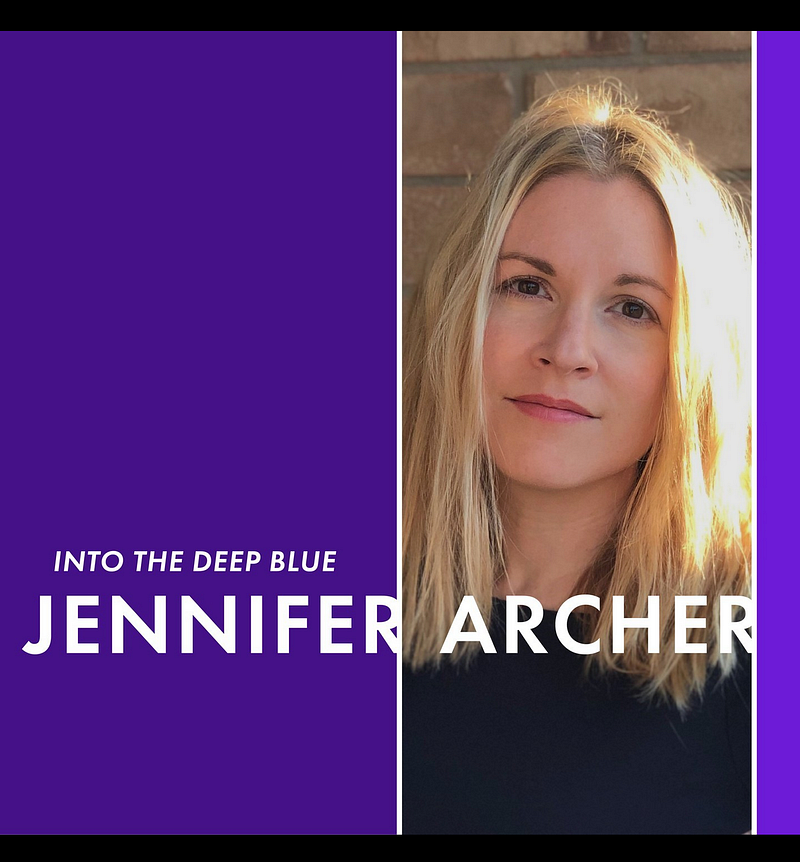
My interview with the 2022 Nicholl Fellowships in Screenwriting winner.
Jennifer Archer wrote the original screenplay “Into the Deep Blue” which won a 2022 Nicholl Fellowship in Screenwriting. Recently, I had the opportunity to chat with Jennifer about her creative background, her award-winning script, the craft of screenwriting, and what winning the Nicholl Award has meant to her.
Today in Part 2 of a 6-part series to run each day through Saturday, Jennifer talks about a tragic event which inspired “Into the Deep Blue,” the two lead characters, and some interesting narrative choices she made in writing the script.
Scott: On your website, there’s this description, “Jennifer loves a good love story and writes them whenever she can. She writes stories rooted in reality with just a hint of magic, because what’s life without a little magic. Jennifer’s stories are always full of adventure, heartache, hope, and happy endings.”
That’s a perfect segue into talking about your script Into The Deep Blue, which did win the Nicholl Award in 2022. Here’s a plot summary for your script.
“Nick Bennett is rebuilding his life after the death of his mom, a DUI and mandatory grief counseling. Together with Fiona. Fiona, his fiery best friend from therapy, they navigate the waters of grief and their growing feelings.”
Let’s start at the beginning of the story crafting process. You wrote it as a novel. You wrote it as a screenplay. What was the inspiration for Into The Deep Blue?
Jennifer: There was a tragic world event that really affected me. That’s what triggered the story — reading some articles in the news about young people who lost their parents. I couldn’t get that out of my head. How do you cope with that?
Scott: Let’s talk about some of the key characters. Was Nick the first character to come to mind out of this? Once you had this idea of wanted to deal with teenagers and them dealing with grief. Was Nick the first one or…
Jennifer: It was both of them. It was just both of them together. I think the very first scene that I had in my head was him riding his bike through the rain to go to her house for some kind of confrontation. That was the very first seed. I kept replaying that moment and then everything else was built outwards from that.
Scott: How would you describe Nick’s situation at the beginning? He’s lost his mother in a tragic plane crash, he’s in therapy. How would you describe where he was emotionally at the beginning of the story?
Jennifer: Angry, very frustrated. Just trying to figure it all out, make sense of his loss, his place in the world and why these things happen, I think.
Scott: Then there’s Fiona, who is a member of the therapy group and also his friend, I guess you could say, best friend, it’s fair to say, right?
Jennifer: You could say.
Scott: Because she also has suffered a loss, her mother has died. How would you describe her situation at the beginning psychologically and emotionally?
Jennifer: She puts up a stronger front, and you almost get impression that she is OK just from the way that she interacts with people. I think she’s bottling a lot up inside which she doesn’t reveal until the layers get peeled back and their journey unfolds.
Scott: You make some interesting narrative choices which run counter in some respects to these conventional wisdom in Hollywood, which is often more about convention and less about wisdom. They worked well, I thought. I’m always happy to see that because there’s so many people who talk about these screenwriting rules.
To see that when stories work that don’t necessarily align with that stuff is always heartening to me because it’s like, “Yeah, go write the story you feel like you need to write.” For example, you’re reading the script. It starts off voiceover, Nick in these images. For the first 20 pages or so, it’s very clear. Nick is our guy.
Then you pivot for about the next fifteen pages or so, it shifts over to Fiona. We follow her, we meet her father, we see her at work, she has a friend that we meet.
Even the scenes with Nick feel like a little bit more from her perspective. The first question I would have for you about that was, the conventional thing is like, who’s the protagonist? Let’s be really clear about that. Would you consider them both protagonists? Did you give that any thought at all, or you just go by instinct?
Jennifer: I just went by instinct, and I would consider them both protagonists. I’ve read all of the books, and all of the rules — all of it. I’ve done the cue card thing, and plotted everything out in the past, but this one was really just intuitive. I went with who I felt the story was leaning towards at the time. Yeah, I was worried about if it would work, for sure. Yeah, yeah. It was instinct.
Scott: You start with a scene. You see Nick riding this bike in the rain to see Fiona. How did you then go about writing the story, you just threw yourself into it? Did you do any sort of outlining or anything?
Jennifer: I wrote it really out of order for this one. I started with that, and then I would go backwards. Then I think I started with the voiceover, with Nick’s voiceover. I kind of knew what the story was going to be. I just went chapter by chapter. I would alternate between the POV for the chapters, and it unfolded pretty naturally.
Scott: That’s also probably against the conventional wisdom…
Jennifer: It is, for sure.
Scott: …which is when you’ve got to have scene by scene outline with the three by five cards, even. There does seem to be a psychological structure to it, that naturally flows. You mentioned that Nick, if we talk about the five stages of grief, Nick’s in that anger stage.
But Fiona’s in a different place. I’d say, it’s a couple of times where she talks about this railing thing, I got a little worried about that. Like, “Oh, I see.” She’s at least subconsciously dabbling in that depression stage. Does that seem like a fair assessment of her character?
Jennifer: Yes, absolutely. Absolutely. There’s a bit of a ’what is she going to do’ element.
Scott: Here’s another thing where you did something that was interesting. There’s this language. I’m sure you’ve seen, that’s been floating around forever in the screenwriting universe. “What does the character want? What does the character need?” This idea of an active protagonist having a specific, conscious goal and that’s defining their want.
What strikes me, what’s interesting about these two characters, it’s more about what they don’t want. It’s like they don’t want to move forward. They don’t want to say goodbye, or towards acceptance, I guess, the end stage. Does that resonate with you? Is that something that you’ve felt going on with these two characters?
Jennifer: Yeah, I think that they’re both really stuck. They don’t know how to get through that place that they’re in, and they’re not really getting any kind of support from people around them. Well, they’ve got some support but not a lot.
Scott: But that need, it’s very clear. This really feels like one of those stories where it’s not like there is this conscious goal. It’s more about this need that’s driving them, and that’s the journey they don’t want. It feels that this is the journey they need to go on. Does that feel like an accurate…?
Jennifer: The need to let go and move on, and the resistance to that, yeah.
Tomorrow in Part 3, Jennifer reveals why she chose to drop the reader into the “middle” of the story and the family lives of the two lead characters.
For Part 1 of the interview, go here.
For my interviews with every Nicholl Fellowships in Screenwriting winner since 2012, go here.
For my interviews with Black List writers, go here.