Interview Part 2: Jane Therese
My interview with the 2020 Nicholl Fellowships in Screenwriting winner.
My interview with the 2020 Nicholl Fellowships in Screenwriting winner.
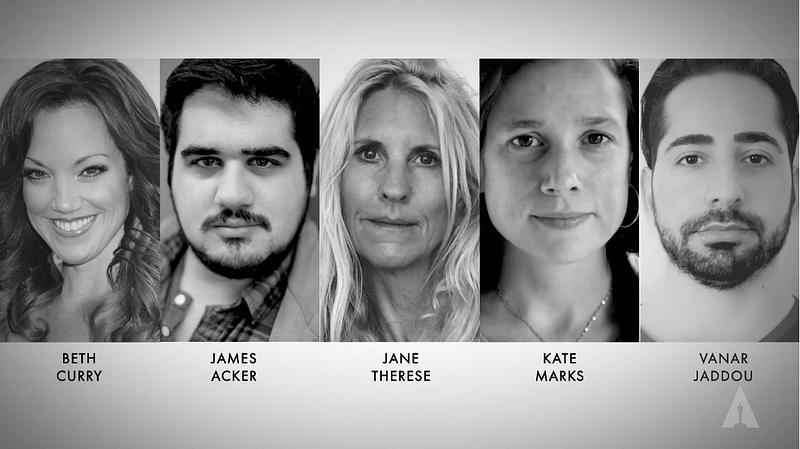
Jane Therese wrote the original screenplay “Sins of My Father” which won a 2020 Nicholl Fellowship in Screenwriting. Recently, I had the opportunity to chat with Jane about her creative background, her award-winning script, the craft of screenwriting, and what winning the Nicholl Award has meant to her.
Today in Part 2 of a 6 part series to run each day through Saturday, Jane discusses her Nicholl-winning screenplay “Sins of My Father” and what inspired her to write it.
Scott: In a biographical statement you put together, you said that, “You continue to dedicate your work to those who remain unheard.” That sensibility is reflected in your Nicholl winning script, “Sins of My Father.” Let’s jump into that. The logline: “The young woman in Ireland grapples with the love she has for her father, after bringing charges of abuse against him.”
The title page says, “Inspired by true events.” My first question for you is, are those events tied to a specific individual or is this more about a story that arose from the general state of the situation in Ireland?
Jane: I got involved with a project that quickly filtered, fell by the wayside. One of the things I do in storytelling — and just me as a person as I’m thinking of stories to tell — is I have to be mindful and aware of my surroundings and things that are being presented to me.
That may sound a little strange, but maybe there’s people out there who feel the same way. For instance, even though the storyline had fallen apart, what I took from that was a judge during that time. After researching him, he dedicated his life to children of abuse, rape, murder. He devoted all of his career to this.
Now with that being said and with the history of Ireland, and the more I started to research, there was a collective of children who were sexually abused and what that did to them. I wanted to go beyond that and tell the story differently.
In my newsfeed during this time, a story popped up about a child of incest and the love the mother had for the father. I thought, “Wow. What do you do with that?” Love is a central thing for me. I think love, it propels us to do the most heinous crimes and the most compassionate of gestures. We just go all over the spectrum.
We have this premise hiding behind of “I love you.” This is very false and very misleading because love isn’t as pure as all of this.
I wanted to look at that perspective of love and how we trust in love, we believe in love, and we believe the words that are being said to us. What do you do when those words are twisted, but you have these feelings inside for that person? Even though you know what’s going on is wrong, there’s still that connection to that person.
To explore that and then to have a child by that person, there is an awakening that even though suppression, we can suppress all we want, but there will be an awakening within the psyche that will seek to break out. That’s what Imogen [the Protagonist] is trying to do in a way to where it doesn’t affect anybody, doesn’t hurt anybody. It’s just her doing what she needs to do for her, and unfortunately that’s not how abuse works.
Abuse trickles through the family, generations, relationships. I wanted to show how no one comes out of this a winner.
Scott: Let’s break that down. The screenplay isn’t easy to write. Given the dark nature of the subject matter, I suspect this was a challenging story to write. How did you manage to write a script like this with sustained inter-familial child sexual abuse and incest, balancing that as a screenwriter versus your feelings that you had?
What I’m hearing from you is what drew you to it was, “Wow. That’s such a complex thing that someone who could have been abused by their father yet still has feelings for them.”
Jane: Right. In the storyline, the mother leaves, so there’s really not a role model for her to model after. It is complicated.
When I first started to write it, it was heavy, I took a break. I wrote this other fun fantastical adventure story. I needed that to get away from the subject matter. Then I was brought back into the subject matter when I started to research more.
I played around with every scene. From everybody’s point of view, but never trying to leave the central theme of the story. I went to the Athena Workshop, and one of the Athena woman, we were talking about our screenplays, and she said, “Victims are groomed.” I thought, “Oh my God, that’s right.” That’s all she had to say to me.
It was like, hearing at the Athena lab, this is also wonderful and great. All it took was just victims get groomed. That was all I needed to know.
When I came back, I took that and the feelings I had for this woman who loves her father, but is beginning to understand, I don’t want to say the reality, but the honesty of the relationship or the lack thereof, all tied up with her daughter. Literally, what do you do with that? What do our children who are abused do with that? Then you have a child of abuse who you love and you’re committed to.
Scott: The script creates this community of people, this little village of Garristown, Ireland, which is near Dublin. That’s a whole other thing I’d like to talk to you about how you immerse yourself in that and achieve that sense of verisimilitude where it feels like you were there. Let’s break down these characters so that we can get a handle on this.
You mentioned Imogen. She’s the protagonist in this story. 30‑year‑old woman. How would you describe her at the beginning of the story?
Jane: In the beginning of the story, she’s wound. She’s going through a lot. It’s her daughter’s 15th birthday. She’s involved in a celebration physically, but emotionally and mentally, she knows what’s going to be required of her in the next few days, weeks, and months coming up.
It says, “If she’s attending the most important event of her daughter’s life, a birthday. She almost feel like she’s betraying people.” She’s had a secret.
Scott: This 15th birthday is a symbolic trigger because Imogen had a child, her daughter, Ane, when she was 15, correct?
Jane: Yes.
Scott: She’s projecting her own past experience about having given birth to her daughter when she was 15 and now her daughter’s turning 15. That’s a triggering thing, right?
Jane: Right. Her daughter is, I don’t want to say promiscuous, but she’s exploring her sexuality. This also triggers Imogen into this mother mode, but once again, she doesn’t have a role model. She’s just going on these visceral feelings of what this marker de psychologically means to her and she wants it to stop.
She’s almost as if she takes her child and just wants…She wants to give her wings, but she wants her to stop. Like, “Just stay little. Don’t go anywhere.” By holding back all of the secrets, Ane is at that age where she’s questioning everything, especially truth and love, and honesty.
Scott: Ane wanting to get out of the house?
Jane: Yeah. Big teenager there.
Scott: She’s a teenager pushing back against her mom…
Jane: Thinking she knows more.
Scott: …and she has this positive relationship with her grandfather.
Jane: That’s one of the things that Imogen made sure that any damage that was done to her, she wanted to keep it to herself. She’s hoping that it doesn’t affect anybody. She’s happy to see that her daughter has a relationship with her grandfather. You also see that Brendan, the father, makes himself at Imogen’s home. He just comes and goes. That’s the way the family has always been.
Unfortunately, as things begin, it’s says, “If Imogen is on autopilot at that point and she begins to sever, bring up the walls, so everybody is protected in her family. That means that the kids can’t be with the grandfather.”
Unfortunately, which is interesting is the kids can’t be with the grandfather, not because of what Imogen is doing. It’s because of what the father doesn’t acknowledge, but continues to behave as if something has never happened.
Scott: That’s interesting to Imogen’s walls. That’s a really interesting metaphor because on the one hand, it’s reflective of the way in which the community wants this thing. [laughs] Basically, Imogen is going to bring charges against her father for sexually assaulting her for a long period of time.
Starting when she was four up through her adolescence, resulting in, and being the daughter of Brendan, who is the father. In effect, Ane is not only the daughter of Imogen, she’s also the sister of Imogen. Ane is not only the daughter of Imogen. She’s not only the granddaughter of Brendan, she’s the daughter of…
It’s really a complex thing. Basically, the people in this village don’t want to deal with this at all. They all build these walls to ignore it, but there’s an interesting way in which that shifts. Where Imogen says, “I need to build a wall” ‑‑ I’m speaking parenthetically, right? ‑ “to protect Ane, to protect people.” It takes on a different meaning, doesn’t it?
Jane: Yeah. It takes on a different meaning which not only affects the children, but she’s in a marriage. This marriage was her husband never really questioned a single mom getting pregnant, falling in love with her. Taking on the responsibilities of raising the mother’s child as we have in marriages now, and then have a child of their own.
Not only is she protecting the wall within the family, she’s putting people in compartments, she’s also compartmentalizing her marriage. Eamon, tried to understand, can’t really understand because he’s never had that experience. The only way he sees things surviving and moving along normally is if his marriage moves along normally and there’s no hiccups and obviously.
Scott: But hiccups occur because in the process of her going forward with this legal case against her father, that basically disrupt everything.
Jane: Yes. All of it psychologically is really it.
Tomorrow in Part 3, Jane delves into the complex relationships between the Protagonist (Imogen) and her abusive father (Brendan).
For Part 1, go here.
For my interviews with every Nicholl Fellowships in Screenwriting winner since 2012, go here.
For my interviews with Black List writers, go here.