Interview (Part 2): James Acker
My interview with the 2020 Nicholl Fellowships in Screenwriting winner.
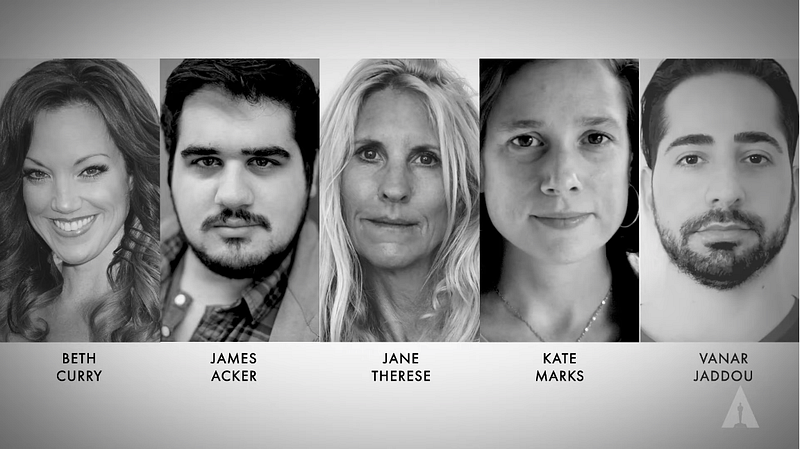
My interview with the 2020 Nicholl Fellowships in Screenwriting winner.
James Acker wrote the original screenplay “SADBOI” which won a 2020 Nicholl Fellowship in Screenwriting. Recently, I had the opportunity to chat with James about his creative background, his award-winning script, the craft of screenwriting, and what winning the Nicholl Award has meant to him.
Today in Part 2 of a 6 part series to run each day through Saturday, James talks about writing the script “SADBOI” for the Nicholl competition and his inspiration for the story.
Scott: I believe one of your novels gained the attention of a book agent via Twitter.
James: Yeah. There’s this Twitter campaign on called DVpit. I found out about it through work. It’s an all‑day Twitter event where you go on and give a brief pitch of one of your completed, #OwnVoices projects. It has to be #OwnVoices and it has to be ready to send. That’s the whole point.
Book agents and managers scour it and see what looks good to them. If they’re interested, they like your tweet. At the end of the day, you check profiles of all your likes for the agents and managers and check their submission rules. If they liked your pitch on DVpit, you can email them a query letter and whatever pages or materials they list in their rules. Everyone’s different.
I found a couple opportunities through that. I think I had 10 contacts to reach out to by the end of DVpit. I sent in my query letters and my bits of manuscript. At this point, I had the manuscript finished and locked, ready to go out. After some sending and waiting and sending and waiting, I eventually narrowed that contact list down and found the right one.
This agent really responded to the material and within the month of DVpit, I signed with her. Her name’s Carlisle Webber. She is wonderful. Fuse Literary, check them out. She’s been wonderful. She’s been taking it around ever since and letting me know how it’s going. That was the first bit of good news of 2020. There was a lot of bad news until the Nicholl. It’s been a real series of highs and lows for me this year.
Scott: You were quoted in an interview about the book experience, “I used that momentum to get some meeting with film/TV agents, unanimously recommended that I try and snag a notable fellowship or contest win, get my foot in the door.” That’s when you landed on the idea of applying for the Nicholl.
James: I’d always gotten the general advice that a fellowship or a contest win is a very good foothold to have when breaking in. Especially something with a name as unarguable as the Nicholl. I mean, any fellowship that’s name has any sort of cache is going to be incredibly helpful to you. I was always told that that’s key.
I just thought I had no shot in hell. Truly no possible shot. To the point where facing that blank application page, whether it was for those writing programs, like the Writers on the Verge or the Disney or CBS one, filling that blank page always felt so pointless to me.
It felt like college applications again. “Well, why would I bother applying to Princeton? I have not invented a sentient robot and I’ve never been to Mars. I’m not going to get into this.”
When it came time, after the book news got out, it was a nice career milestone for me. Through some friends of friends, I managed to book a couple meetings with that news for general representation with TV/film agents and managers. Overall, the resounding thought was, “This is all great. If you sell this book, get back to me. All I can tell you right now is you’re on the right path, but you need some other foothold. The book sale, sure. A fellowship, better.”
So, I decided to finally apply to a couple fellowships. Then when it came down to actually filling in all the essays and stuff, I ended up only doing the Nicholl one because I was incredibly busy and stressed out.
I can’t remember what the initial application for the Nicholl was. I don’t think I had to write an essay, and that was a big part of it for me.
Scott: A big plus.
James: There’s only so many ways you can be like, “Hi, I’m very special, and here’s why.” I don’t have enough formative child experiences that speak to my character as a whole at the ready. I applied to the Nicholl because of that advice and then did not think about it for months. Truly at all. I was hoping to just make the first cut.
I had seen so many people with that feather in their cap. Nicholl Semifinalist. Nicholl Quarterfinalist. I thought, “OK, with these other ones, I only get anything out of them if I win the whole thing. With the Nicholl, I just need to make that first cut and I’ll at least leave with any sort of foothold.”
Even with the book agent win that year, I mean, quarantine hasn’t helped anyone. It really made me feel super lost in what I was doing out here. So, career footholds aside, any sort of light in the dark was going to be so helpful to me.
When the first cut came, and I made it into the Semis ‑‑ I believe the Semis are the first cut ‑‑ that was it for me. I freaked out. That was honestly the biggest reaction I had the whole run of it. It had been four months of trying to forget I was waiting for the huge news so when I finally saw that email over dinner, my brain got this amazing whiplash.
Not to say that the Quarterfinal cut and the Finalist cut weren’t amazing too. But my biggest reaction was the Semifinals. That was the thing where I was like, “Oh my God. I’m not crazy.” This script was something. [laughs] I have the feather. I can put it in my cap and go to bed.
Then the Quarter happened and I thought, “Oh my God. The feather’s getting bigger. What’s happening?” and so on and so forth. Now, here we are.
Scott: You ended up with quite a few feathers in your cap. That’s a natural segue to your script “SadBoi,” S‑A‑D‑B‑O‑I, which I read and thoroughly enjoyed.
Logline: “A coming‑of‑age drama that follows an emotionally stunted high schooler who, thrown out of his house for being gay, has to revisit old friends and repair some burnt bridges all in the name of finding a couch to crash on.” Obviously first question, what was the inspiration for this story?
James: [laughs] Other than my general bad attitude in high school, when you’re writing high school characters or any coming‑of‑age story, it’s a lot of sifting through your memories and trying to find those pockets where you felt the most.
I was a pretty emotional kid. There are big memories in my head that just stick out. It was always an eruption or a breakdown for me. I was constantly ping‑ponging back and forth between not being able to get out of bed or screaming at my rearview mirror. It was a lot of highs and lows in high school.
Once I decided I wanted to do coming‑of‑age stories, it was a matter of picking through those emotions and finding which were the biggest engines. What were the things I was feeling so hard at the time that I could never express? What could I work through now on the page?
For “SadBoi,” that engine came from a four‑year‑long frustration I had through high school of people not understanding why I was upset. [laughs] It became a part of “SadBoi,” but high school was essentially a lot of people asking what’s wrong with me but never what’s wrong.
I have drastic eyebrows, some would say. They’re big. They are, on a scale of No Eyebrows to Eugene Levy, somewhere around an eight. If I don’t do anything with them, they really hang on my face angrily. I look pissed off all the time or on the verge of a breakdown even when I’m happy.
Because of this, all through high school I was constantly getting told, “You look upset. Can you stay after class? Hey, what’s wrong with you?” It was constant. “You look so angry, what’s wrong with you? You look so upset.” But they were just looking at my eyebrows. Which was very frustrating in a way that was hard to put into words at the time.
I felt called out. Or figured out. Because I did have a lot going on in my head. I was a closeted kid in New Jersey, of course I was upset. Of course I was angry. I was constantly freaking out, but I knew these people didn’t actually want to hear that. I knew they were just looking at my eyebrows. I didn’t know how to explain my face or my life to them, and I didn’t think they’d want the real answer. At a certain point, everything just felt like an accusation.
A lot of frustration fueled “SadBoi” and honestly writing it down helped me work through some of that old stuff.
Scott: It sounds like the protagonist character, Edgar…there’s a close alignment there between your personal experiences and his experiences.
James: For sure. I wanted to feel as close to Edgar as possible. I really didn’t want to go overboard with it. I never wanted to him or his story to feel melodramatic. I wanted to show a realistically sad kid who wasn’t unreasonable in his frustration. I didn’t want it to alienate audiences. I know first-hand how alienating an emotional kid can be. But I wanted people to get on board with Edgar, so I thought the best way to do that was by keeping him very real to me.
Tomorrow in Part 3, James delves into some of the key characters in his Nicholl-winning script “SADBOI.”
For Part 1, go here.
James is repped by The Gotham Group and Fuse Literary.
Twitter: @JamesUmAcker
For my interviews with every Nicholl Fellowships in Screenwriting winner since 2012, go here.
For my interviews with Black List writers, go here.