Interview (Part 2): Filipe Coutinho and Ben Mehlman
My interview with 2021 Black List writers for their script Whittier.
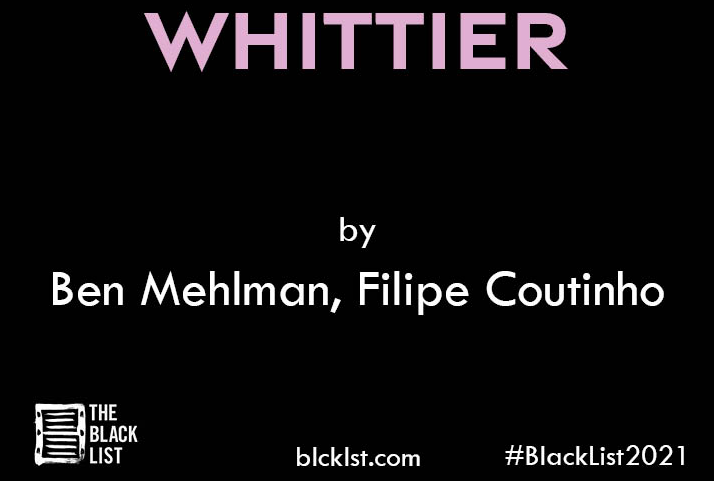
My interview with 2021 Black List writers for their script Whittier.
Filipe Coutinho and Ben Mehlman wrote the original screenplay “Whittier” which landed on the 2021 Black List. Recently, I had the opportunity to chat with Filipe and Ben about their creative background, their script, the craft of screenwriting, and what making the annual Black List has meant to them.
Today in Part 2 of a 6-part series to run each day through Sunday, Ben and Filipe share the inspiration for their 2021 Black List script “Whittier.”
Scott: I want to talk about “Whittier”. I’d like to see more of these kinds of movies, reminiscent of all those great gritty dramas from the ‘70s.
Plot summary, “While looking into a client’s murder, a Los Angeles social worker stumbles upon a political conspiracy in the wake of the 1987 Whittier earthquake.”
What was the inspiration for the story?
Ben: We were working on a project with an actress that was based in the world of sex trafficking, which is a really, really, really dark subject matter.
After we’d wrapped that up, we were like, “We gotta do something a little more lighthearted. Let’s just try to find something fun based in the ’80s that we can do.” At this point I’ll say, Filipe and I have the philosophy of “Listen to what stories are speaking to you.”
As we are researching, we discovered the 1987 Whittier earthquake and saw that two weeks later was Black Monday. There just seemed to be something going on in 1987. We quickly realized “This is an LA neo-noir.”
It felt like a “Chinatown” meets “LA Confidential” style movie that we, as fans of the genre, really wanted to see. Also what was going on politically and socioeconomically in the late ’80s felt, unfortunately, very prescient.
Sadly, as the pandemic continues and homelessness grows even worse in LA. It has become even more prescient, so it’s also a story to talk about something bigger through local politics and bureaucracy.
Filipe: Also, there aren’t a ton of noirs set in the ’80s. That was a very interesting proposition, because when we think about that decade, we think about a time of expansion, excess, kitsch, colors, neon, all that stuff. Those aren’t elements you’d normally associate to film noir. You could argue Michael Mann did a lot of that with movies like “Thief,” or even “Manhunter”, but I think those movies fall more under the ‘crime’ banner.
Ben: Taking into account that our lead is a social worker as well, which is an extremely dangerous job. Also, as we were saying with the ’80s, there’s a whole sub genre called neon-noir.
What is so interesting about this sub genre is a lot of them have ’80s influence, “Drive” is probably one of the most popular, but there has yet to be one that has used the ’80s as a time period. So it embraces the style but hasn’t necessarily gone back to the era it’s channeling.
Scott: It’s a fascinating era because it was at the end of the whole Reagan 80s “greed is good” era. The Whittier earthquake and Black Monday tore apart that illusion. It’s like the earthquake is for you, contributes to the plot, but it’s also very heavy in terms of the thematic elements in the story.
Ben: Absolutely. An earthquake brings a lot of stuff to the surface. If you think about it in metaphorical terms, it is the inciting incident in terms of what kicks the story into gear, and what leads to the ultimate discoveries that Jackie and Tracy will make.
Filipe: It sounds so obvious, but we’re talking about trickle-down economics. We really wanted to focus on who’s actually being affected by that policy and show how it affects them.
Scott: Set in 1987, so it’s a period piece. I always tell my students, you’ve got to find a point of relevance: why tell the story today? It seems to me with “Whittier,” you’ve got two things. One, the homelessness issue, which is very significant right now in Los Angeles.
There’s also the whole true-crime podcast phenomenon. Putting on my producer’s hat, I would say, “You could probably draft off that.”
Were you thinking that this is relevant because of the socioeconomic situation right now and the popularity of true-crime podcasts?
Filipe: This is a good time to say that, at the time, we had a side gig working for a brand consultancy company doing cultural forecasting. That essentially entails looking at society, putting all the pieces together, make connections, and try to figure out where things are going.
We ended up bringing that muscle into the writing. That’s why we included the homelessness as a backdrop and an integral part of JD’s storyline. We live in Los Angeles, and every day we see it. It’s impossible not to. It’s a real issue that’s been going on for far too long, and it doesn’t seem like anyone has a viable plan to improve it. After we started writing, the “L.A. Times” published a series of pieces on the subject, and then the pandemic exacerbated everything.
This is to say that, speaking for myself, I never thought about the podcast space for this story. We did think that if we’re going to write a period piece, it should say something about the times we’re living in. So we looked at where the politics were going and infused some of that into our writing. We started in late 2016, I think…
Ben: Probably ’17, because it was around Trump’s first year.
Filipe: Yeah. We thought, “Well, this is a good opportunity to talk about a lot of issues.”
Ben: Unfortunately, corruption is evergreen. For us, it’s also studying certain films we like and seeing what our version of talking about something like the California water wars from “Chinatown” is.
We don’t reference him as much as we should but the way David Simon handles a lot of what he does was also a big influence on us. In “Whittier’s” genesis, “Show Me A Hero” was a big influence on how to use small town politics to talk about big world problems. The day to day impact of racist policy, a “not in my backyard” mentality, or even interpersonal soft racism.
The way that is unfortunately becoming more and more pressing is a huge bummer. The idea of what happens with someone’s life or how their perceived worth is dependent on their skin color, ethnicity or socio-economic status is, frankly, a disgusting rot that’s at the core of our country and it’s something that’s currently getting worse and worse. Too many people are focused on trying to not be called racist then actually focusing on ridding themselves of internalized racist actions.
When we first started sending “Whittier” out, some people were a little unsure about how much someone in government could get away with. Then as we got deeper and deeper into the last administration, and especially during covid where people were taking advantage of PPP loans, people stopped questioning the reality of the corruption we depicted.
In our research, unfortunately, people stealing millions of dollars from local governments is super easy. People only got caught because they were dumb and cocky.
Tomorrow in Part 3, Filipe and Ben discuss some of the key characters in “Whittier” including the Protagonist (Jackie Cross), a hard-bitten social worker who gets pulled into a complex murder mystery.
For Part 1 of the interview, go here.
Ben and Filipe are repped by Matt Rosen at Rain Management.
Twitter: @filipefcoutinho, @Ben_Mehlman
For my interviews with dozens of other Black List writers, go here.