Interview (Part 2): Colton Childs
My interview with the 2024 Nicholl Fellowships in Screenwriting winner.
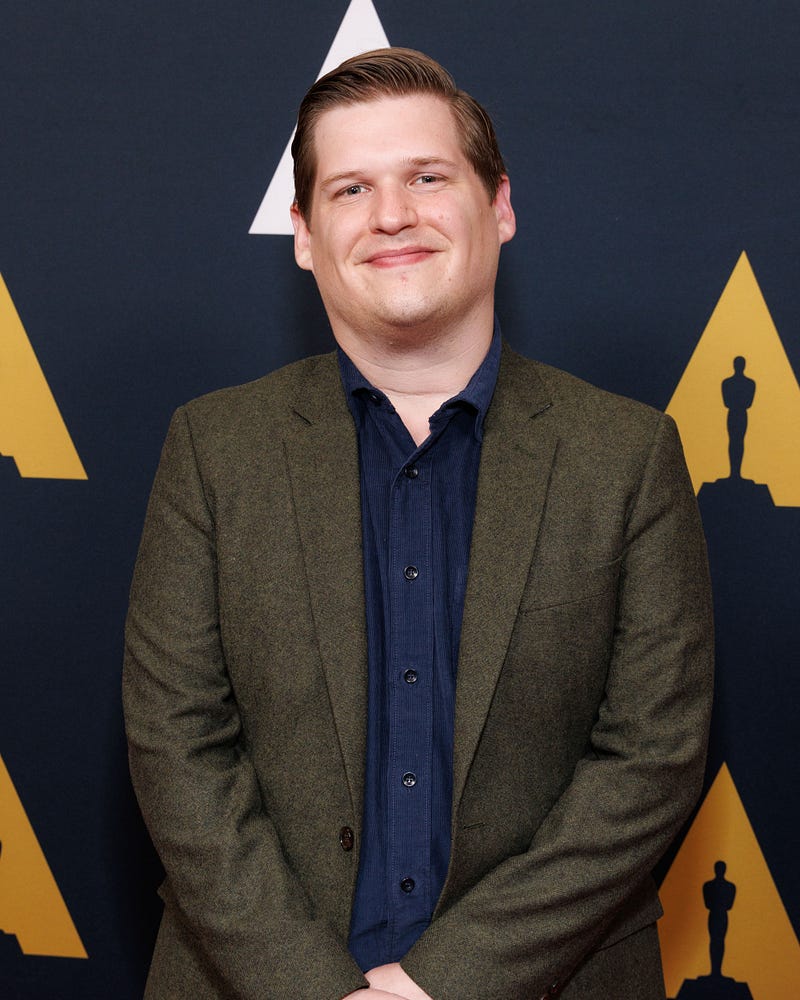
My interview with the 2024 Nicholl Fellowships in Screenwriting winner.
Colton Childs wrote the original screenplay “Fake-A-Wish” which won a 2024 Nicholl Fellowship in Screenwriting. Recently, I had the opportunity to chat with Colton about his creative background, his award-winning script, the craft of screenwriting, and what winning the Nicholl has meant to him.
Today in Part 2 of a 6-part series to run each day through Saturday, Colton delves into the two central characters in his Nicholl-winning script “Fake-A-Wish.”
Scott: Here’s the logline for “Fake-A-Wish” as provided by the Black List.
“Despite their 40-year age gap and the cancer treatment confining them to their small Texas town, two gay men embark on a road trip to San Francisco to grant themselves the Make-A-Wish they’re too old to receive.”
After the title page and before page one, you include this quote, “Home is where you feel like home. I’m still looking.” Truman Capote. Why that quote?
Colton: I view the script as a love letter to the generations of gay men who came before me. Truman Capote is someone I deeply admire. Paying homage to him early on is a small way of expressing that.
A lot of the script is dealing with finding your place in the world and this idea of home, and that’s something I’ve always struggled with as a queer person. As I’ve gotten older, I’ve realized that home can be other people, which is a lesson these characters are discovering for themselves.
Scott: Let’s talk about those two characters. You’ve got Noah, who is essentially the protagonist of the story. Here’s how he’s introduced in the script, literally the very first image on page one.
“Noah, 32, exhausted and out of shape, lies staring up on the patient table of a CT scanner. A blinding white light illuminates a massive, gnarly surgical scar wrapping around the entirety of his neck.”
Did you always imagine that you were going to start the movie that way?
Colton: I had a lot of time to reflect on an opening image while sitting in hospitals and waiting rooms. I wanted the opening scene to accomplish a couple things: introduce Noah, establish that this is a “cancer movie,” and then immediately subvert those expectations by ending on a joke, as if to signal, “This is not your typical cancer movie.”
Scott: How would you describe Noah’s circumstance, his family situation, living with his mom and his grandma, how would you describe where he is at this point in time, beyond the fact that he’s dealing with cancer?
Colton: He’s grieving and idealizing the life he once had. Between the weight of a devastating breakup and his ongoing treatment, he feels trapped in the darkest phase of his life.
Scott: You have a postmodern meet cute in a way because he meets Cliff at the medical center. Let’s see how you introduce Cliff here.
“Sandwiched between two straight senior citizen couples is Cliff, 74, the chirpy, gay life of every party. He’s the only person in the lifeless waiting room who’s there alone, and he’s dressed far too formally for a doctor’s visit.”
Quite opposite Noah’s personality. What else should we know about Cliff at the beginning of the story?
Colton: I wanted him to feel like a complete juxtaposition to Noah and his energy, but it was clear to me from the beginning that Cliff is holding onto a similar type of shame and loneliness as Noah. It manifests in different ways for both of them.
Scott: Who came first? Was Noah the first character to pop into the story or Cliff?
Colton: I think Noah was technically first, but my initial vision for Cliff was clearer. It’s funny, people often assume Noah is based on me because of obvious similarities. But I feel just as connected to Cliff, if not more so, than to Noah.
Scott: We’ll get into their distinctive personalities as we go forward here. In your Black List personal statement, you wrote this. Writing Fake-A-Wish, quote, “Became a love letter to the generation of gay men who came before me.’” You mentioned this earlier. There’s 40 years difference between these two characters. Talk a little bit about why that was important for you to explore that previous generation.
Colton: I’m grateful for the moment we’re in because more LGBTQ+ stories are being told. With that said, I rarely see stories about queer people over fifty. When I think about the legacy and history of the generations that came before me, there are so many stories that remain untold or lost to time.
Without even realizing it, I often find myself writing older characters. They’re not always queer, but usually they are. I think it’s my own small way of trying to connect with the past so that we don’t lose it.
Scott: Before they go on this journey, they have their initial meeting. Then the narrative follows Noah spending time with his family. His mother is named Carrie. His father died couple of years ago. Then there’s Nana, who’s his grandmother. Describe these two characters and the nature of their relationship with Noah.
Colton: Carrie is trying desperately to connect with her son, but it’s not happening. Noah is much closer to his grandmother, Nana, who lives with them. It’s hard for Carrie to see how protective Noah is of Nana, because he doesn’t show her that same tenderness.
Scott: You have many themes or story dynamics at play in the script. Obviously, cancer being one of them, being queer in this day and age is another. Religion is an interesting dynamic here because at one point, she’s very faithful, Carrie, believing that God will cure, basically, be involved in curing her son. Noah says to her in a very frank moment on 14:
“I’m sure you believe that your church is what will somehow save me, but the irony is that being there makes me want to fucking die.”
Your family is Southern Baptist, am I correct?
Colton: Yes.
Scott: It’s almost like a state religion in Texas.
Colton: It really is.
Scott: What was that like for you to explore the relationship between Noah and Carrie in that Southern Baptist experience, and then your own experience growing up in the church?
Colton: I’ve always resented the way that faith feels so binary in our society, particularly in the South. Where I grew up, it felt like a certain group had ownership of it. If you deviated at all, even slightly, in terms of your own beliefs, it wasn’t accepted.
As a queer person, I’ve always been drawn to interrogating what I actually believe outside of the confines of organized religion. It’s an especially complicated thing to ponder when you’re going through cancer treatment and mortality is staring you in the face.
That’s something I wanted to explore in the script. What does it mean to question what you were taught, but more importantly, what does it mean to find your own way?
Tomorrow in Part 3, Colton and I explore what he did to create a sense of narrative drive in this road picture.
For Part 1, go here.
Colton is repped by 42 Management & Production.
For my interviews with every Nicholl Fellowships in Screenwriting winner since 2012, go here.