Interview (Part 2): Charmaine Colina
My interview with the 2024 Nicholl Fellowships in Screenwriting winner.
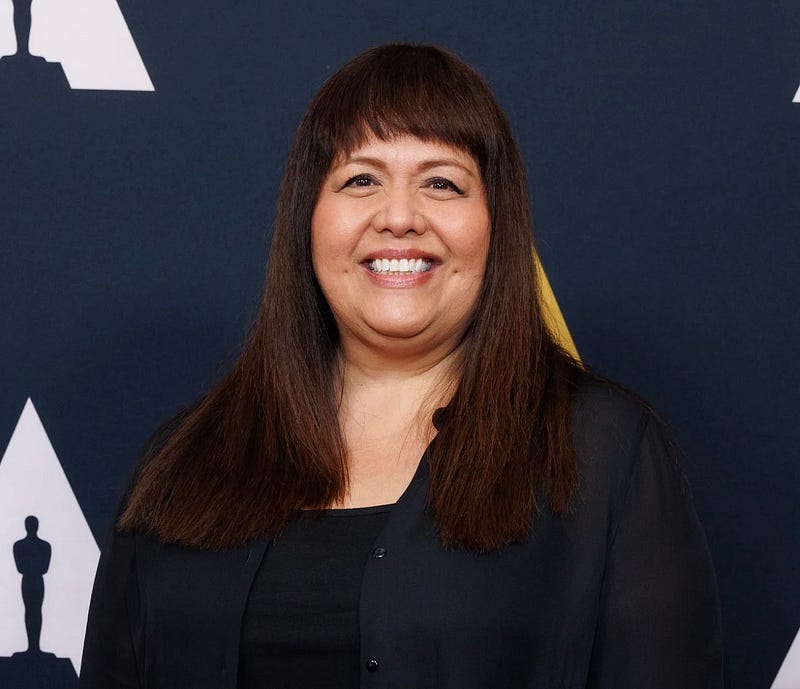
My interview with the 2024 Nicholl Fellowships in Screenwriting winner.
Charmaine Colina wrote the original screenplay “Gunslinger Bride” which won a 2024 Nicholl Fellowship in Screenwriting. Recently, I had the opportunity to chat with Charmaine about her creative background, her award-winning script, the craft of screenwriting, and what winning the Nicholl has meant to her.
Today in Part 2 of a 6-part series to run each day through Saturday, Charmaine reveals the inspiration for her Nicholl-winning script “Gunslinger Bride” and how her family members served as inspiration for some of the story’s key characters.
Scott: Didn’t you get into the Meryl Streep Writers Lab?
Charmaine: Yes. I also took the UCLA Professional Program in Writing for TV. They offer a comedy track and a drama track. I took the comedy one in 2022, and then the following year I took the drama track. Storytelling in a TV format was very different from feature. I didn’t know how to tell a story in half an hour or an hour.
It was really a shifting of mindset. How can you squeeze just enough of a good story into a pilot and then stretch it out over a season? One of my comedy pilots, Booked, I entered into the Meryl Streep Writers Lab and I was thrilled to be selected. The Writers Lab is all women over 40. So there we were, a dozen writers, for a whole week in the woods in upstate New York. Sounds like a horror film, right?
[laughter]
Charmaine: My mind immediately goes to the story: Twelve women stranded in the woods in upstate New York. What happens next? It’s like “Yellowjackets” or something. But it was really cool being with other women who are in a similar phase in our lives and the responsibilities that we have while also wanting to get our stories out there. And so that was an amazing experience. In the UCLA tv program, I developed pilots based on my features. That is a hard thing to do.
Scott: Did you try that with Gunslinger Bride?
Charmaine: I did. Yeah, it got some accolades in the program too. I called it Welcome to Salvation instead of Gunslinger Bride, and the pilot ends at a specific cliffhanger… because I want people to go to next episode. [laughs]
Scott: Let’s talk about Gunslinger because it is a Western. You mentioned you wanted to bring Asian American women to the forefront of that genre because it’s typically not there.
Charmaine: Yes. I grew up loving Westerns. As a child, I couldn’t get enough of them. But then as I got older, I learned that the West was a lot more diverse than what we see in films.
It’s a genre that tends to leave out the women and the people of color who were in the West, and so when I set out to write a Western, I would tell these untold stories. My character, Lou, is actually based on real women of the West. She’s a composite of trailblazing women I researched.
I was also inspired by John Ford’s, “The Searchers.” It’s a beautiful film, cinematic quality, just top‑notch. But I was so frustrated with the plight of the women characters in the film and it made me angry. I thought, “No, there are women who could take care of themselves. And who is that person?”
That’s when I started creating this character. How did she learn how to take care of herself? How did she learn the ways of survival? And that was, yeah, my lead character of Lou.
Scott: Here’s a logline for Gunslinger Bride.
“With a bounty on her head, a young Chinese American gunslinger poses as a mail‑order bride to hide from the law and seek revenge for her murdered family.”
Let’s talk about this Protagonist character. We meet her when she’s young, nine years old. Her family, her father Otto, I think he’s German, is that right?
Charmaine: Yes, she’s biracial.
Scott: Yeah, she’s biracial. Her mother Li and her older brother Erik, and they live in a homestead, I think it’s in Kansas, if I’m not mistaken, in like 1870s or so. How would you describe that situation at the beginning, kind of their lifestyle and relationships between these key characters?
Charmaine: They’re based on real life experiences. My mother, Janet, is biracial. She’s half White — Ashkenazi Jewish — and half Filipino. My dad is Filipino/Filipino-Chinese. So my sister, Lenore, and I are multiracial. There were many multiracial, biracial people in the West, but we rarely hear their stories. The thing about when you are biracial — or a child of immigrants — is that you have a foot in two worlds and you are not fully accepted by either. You’re sort of this thing that everybody rejects, this person that everybody rejects.
In my mind, the backstory for Lou’s family is her mother and father probably met in California because that was where the influx of Chinese immigrants was landing during the building of the railroads and the Gold Rush days. Being an interracial couple, Lou’s parents faced a lot of hate, and they had to keep moving and moving to escape it. Then they settled down in Kansas. They just wanted to be left alone.
Actually in this time period of Gunslinger Bride, this is right round the time of the Chinese Exclusion Act of 1882, limiting Chinese immigration. There was a lot animosity building against Asian people. Lou’s family, there’s just trying to make it in the world. They just want the “American dream”. Let’s have some land, let’s raise our kids, let’s have a family, but people can’t get past the fact that they’re different. Lou’s family faces racial hatred — sadly we’re still dealing Asian hate almost 150 years later.
Scott: You introduce Lou and she’s with her brother, and they’re out having a good time racing horses. But then there’s this tragedy, like literally within four pages, where her family is murdered. You make an interesting choice because that tragedy happens off screen.
Putting on our writer’s hats: Why that choice?
Charmaine: Lou has experienced horrible trauma and she’s trying to hold it in. We don’t know what exactly happened yet, but we know it’s extremely bad. I thought that by having it revealed little bit by little bit, this makes it more impactful than if were to see the tragedy happen in real‑time.
Lou is trying to be brave, yet there are these things that haunt her, that push her to seek revenge. So, in showing her memories bit by bit, this also plays into the question of what memories can we trust? Because it turns out later in the last scene of the story, she doesn’t remember the whole thing as it actually happened.
With trauma and parts of memories, Lou being so convinced this is the man she’s got to find, and then later more pieces are filled in. I thought it was a way to keep the story going, that we didn’t have all the answers yet, and to give it to the audience little bit by little bit. I want the reader to turn the page, find out.
If the audience knows everything that happened to Lou in the beginning, then there are no questions, no mystery, nothing to find out. But by revealing her family’s tragedy little by little, the audience seeks to find out the truth much in the way that Lou does. I’m a big fan of flashbacks. I know some people are not, but I think if they’re used effectively, they can work, and so I do incorporate them into Lou’s story.
Scott: So after that tragedy, Lou is alone. She’s out in the wilderness, then has a fortuitous intersection with a character named Jeb and his dog, Kusu,
Let’s talk about those two characters because they’re quite important in Lou’s life.
Charmaine: The way I thought about Lou, she is a misfit. And Jeb is half Pawnee and he’s half White, and he’s also a misfit in his own way. They’re sort of both rejected by society at the time. He is kind of a loner, and he finds this little girl and his whole thing is, “I just want to dump her at the orphanage. I can’t deal with this.” But as he gets to know her, she gets to know him, they form a bond.
And yeah, Jeb and Kusu. My dad loved dogs. We always had dogs when I was a kid and feel like they’re an integral part of the family. Kusu has a very important part in the story. He’s not just an add‑on, like oh, the old guy needs a dog. Kusu found Lou.
Had we not had Kusu there to find Lou, Jeb would have had to encounter her in a different way, but he’s nearly blind. So Kusu makes sense. Jeb and Kusu are gone halfway through the story, but they come back in Lou’s memories.
Scott: Yeah, I’d say he’s a mentor figure, Jeb.
Charmaine: Yes.
Scott: The story dips into moments over a period of 10 years, because we go from her to being 9 to 19, the three of them traveling about. He’s teaching her, including shooting a gun. That’s an important thing. There’s a horse that she gets, Arusa.
You’ve got three things set into motion. One, Lou wants to see the Pacific Ocean. So right there, I’m going, OK, so that’s going to probably come into play. As I recall, it was like she was interested in it because that water touches the United States, but also China. Is that right?
Charmaine: Yes. That actually comes from my personal experience. Moving from the Philippines to the United States, my mom’s family had been here for a long time. They came here in the ’50s. She met my dad in Philippines, but for him to move to the United States was a big thing. He left behind everybody, brothers, sisters, parents.
When I was little, my family would go down to the big fish market at King Harbor in Redondo Beach. Dad would take me and my sister to the shore and he’d say, “Wave to Lolo Pepe and Lola Deng on the other side of the of the ocean.” And so, that was a big part of me feeling like we were connected to my grandparents by this body of water.
How vast is the Pacific, and yet that same water landing on the beaches of the little village of Cavite, where I was born, that same water is also here in Los Angeles. That was kind of the inspiration behind the same water that touches China, touches California in Lou’s story.
Scott: Yeah, that’s a nice payoff at the very, very end of the script.
Charmaine: She finally gets to see it.
Tomorrow in Part 3, Charmaine relates how in writing “Gunslinger Bride,” she was influenced by such films as Severn Samurai, Les Miserables, and Star Wars.
For Part 1, go here.
For my interviews with every Nicholl Fellowships in Screenwriting winner since 2012, go here.