Interview (Part 2): c. Craig Patterson
My interview with the 2023 Nicholl Fellowships in Screenwriting winner.
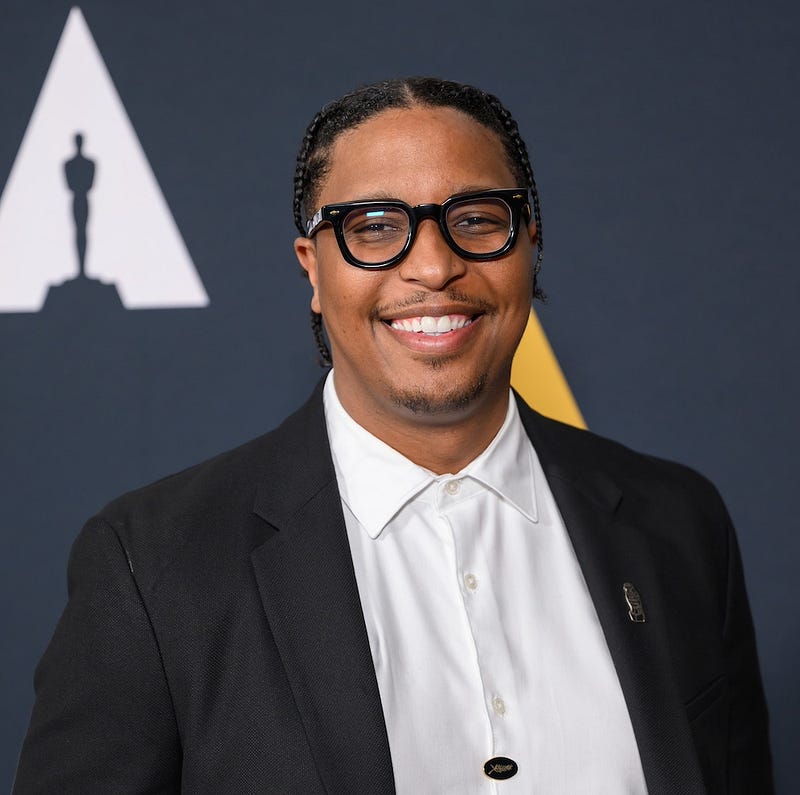
My interview with the 2023 Nicholl Fellowships in Screenwriting winner.
c. Craig Patterson wrote the original screenplay “Tah” which won a 2023 Nicholl Fellowship in Screenwriting. Recently, I had the opportunity to chat with c. Craig about his creative background, his award-winning script, the craft of screenwriting, and what winning the Nicholl Award has meant to him.
Today in Part 2 of a 6-part series to run each day through Saturday, c. Craig reveals the inspiration for his Nicholl-winning screenplay “Tah.”
c. Craig: [Laughs] Yeah, auteurism, I don’t know anything about that. But I do know they taught me how to point a camera in a direction. They taught me how to take the lens cap off and make sure that I’m filming something.
Scott: Well, you must have figured it out, because there’s this short film I was reading about called “Fathead.”
c. Craig: Oh, my goodness.
Scott: That has received quite a reception there. Could you maybe talk to us about that film?
c. Craig: Yeah, it’s a story about these awesome kids who all live in a junkyard. There’s no parents around, and kids tend to break into factions. In that particular world, they broke into the Ragamuffins and the Dums. The Ragamuffins run the junkyard. They’re the rough and tumble kids and the Dums are the kids that believe more in the freedom of doing what you want to do.
They’re like the little Charlie Browns of that world. They get overrun pretty quickly. And there’s only two of them left is Fathead and her little brother, Tudaloo. Once Tudaloo gets kidnapped by the Ragamuffins, it’s the classic story of one versus many.
This little girl goes and takes on this entire group of kids to get her brother back. And it’s kind of a love letter to my older sister. Many times she’s gotten me out of trouble. And Fathead was the nickname my grandfather gave my mother as a kid.
Scott: This is a film you did in conjunction with Amazon and Epic Games’ UnReal Engine. Talk about a bit about that.
c. Craig: A couple of weeks before graduation, I got an amazing phone call telling me I was a finalist for the Innovation and Technology Grant. It’s put on by the Entertainment Technology Center that was started at the behest of George Lucas nearly started 35 years ago.
They were responsible for the standardization of digital cinema and cloud-based storage for film. The thing that they were studying that particular year was LED‑wall technology. They asked if I had a film that I would love to make that no one else would pay for?
And I was like, yeah, absolutely I do. I pitched them Fathead and we were lucky enough to be selected. I’m immensely grateful to the ETC and to that entire team for making that happen.
Scott: Quite a few awards for that film. NACCP Image Award for Outstanding Short Film Live Action, winning the Cannes Film Festival Best Student Short Award, Premier Emerging Filmmaking Showcase, Finalist American Black Film Festival, HBO Short Film Award. Wow. That must have been something else?
c. Craig: Really, and The American Pavilion at Cannes Film Festival, like that was, I had to be the most surprised person in all of France.
It was an amazing experience to have. Obviously every filmmaker dreams of being in that town and stepping on the stage and having something recognized, especially because that crew, it was close to 400 people that worked on that film. They gave every bit of imagination and heart into that. So, that was a thing. That was a win for all of us, for sure.
Scott: Is that movie on Amazon?
c. Craig: No, we’re still on the festival circuit.
Scott: OK, still on festival circuit. Now, you’re doing all this, which is amazing. And then there’s a Nicholl sitting over here somewhere in your mind like I need to write a script for them. How did that work? What were you thinking about the Nicholl?
c. Craig: I thought I had applied to the Nicholl three times. I actually applied four times and with three different scripts. The first time was in undergrad. It was my first script I ever wrote, and it finished in top 10 percent.
The next year, I switched scripts. I did a different script, and it went to top 20 percent, so I went down. I was like, oh, no. And then I submitted a draft of “Tah” in 2022 and it didn’t place at all. I went back and we thought about what were the important moments of these women’s lives? We worked at about 70 percent. I wasn’t going to submit because you start to feel like, those certain things are…
You’re going to have to go a different route. Certain things are not going to happen. I turned it in on the last day. On the last day on a humbug, I was just like, all right, let me just send it off. And I went to work and I’ve been working on the animation with a lot of the same people. It’s with Paramount, Epic Games, and Amazon MGM. And so I didn’t have to fear and think about it. Then when that came up, especially because of what the story was, it made it even more special.
The story was about, you know…those particular women, I tell stories because of “Tah.” Like “Tah” was everything to me growing up. Out of all stories that it could have been, I’m glad it was this one. And I got the final call for it while I was in New Orleans. It just so happened to me I was at home when it happened.
Scott: Well, it’s such a wonderful script. The logline:
“The black sheep of the family comes back home to live with the most difficult matriarch in New Orleans.”
Let’s start off here. Before Page One, you have this quote, “I have the nerve to walk my own way, however hard.” From Zora Neale Hurston.” I’d never heard of her. I went and looked her up. Wow. What an interesting person she is. Maybe you can talk a little bit about this. This is something people should know about.
c. Craig: Yeah. Zora Neale Hurston is one of my mother’s favorite authors. I knew that I wanted to start it. It was going to be between her and Flannery O’Connor. I knew that.
Tah had that same type of contrarian spirit. This was a woman that had a hard life. Now I know it’s hard, it’s not like having an emu farm, but it was a rough life. One of the big things that was a goal of mine, because I knew I wanted to write this story before I wrote any other story, but I never felt like I was going to be good enough to do it. Because if I screwed up with it, that would mean that these women who I care about very much, their story might be lost.
With Zora, I knew that quote for many years of my life and I never thought about it in terms of anything I was going to do. I just so happened to just write it as the first thing on there. I didn’t look back, but it it’s…it was the outlook of no matter what Tah, for her personally, she just kept going.
I mean, that woman in real life, every dream imaginable that she had went away — every single one. And what do you do in life when your dreams go away? And there’s another day after that and another day, another day. The goal I had for the story was to give her a happier ending than she actually had.
Here is the video where the 2023 Nicholl Fellows found out their scripts had been selected as winners.
Tomorrow in Part 3, c. Craig talks about some of the real-life people who inspired key characters in the script.
For Part 1, go here.
c. Craig is repped by Gotham Group.
For my interviews with every Nicholl Fellowships in Screenwriting winner since 2012, go here.