Interview: Linh Tran
An exclusive Go Into The Story Q&A with DePaul University MFA in Directing graduate on her award-winning short film Dinner.
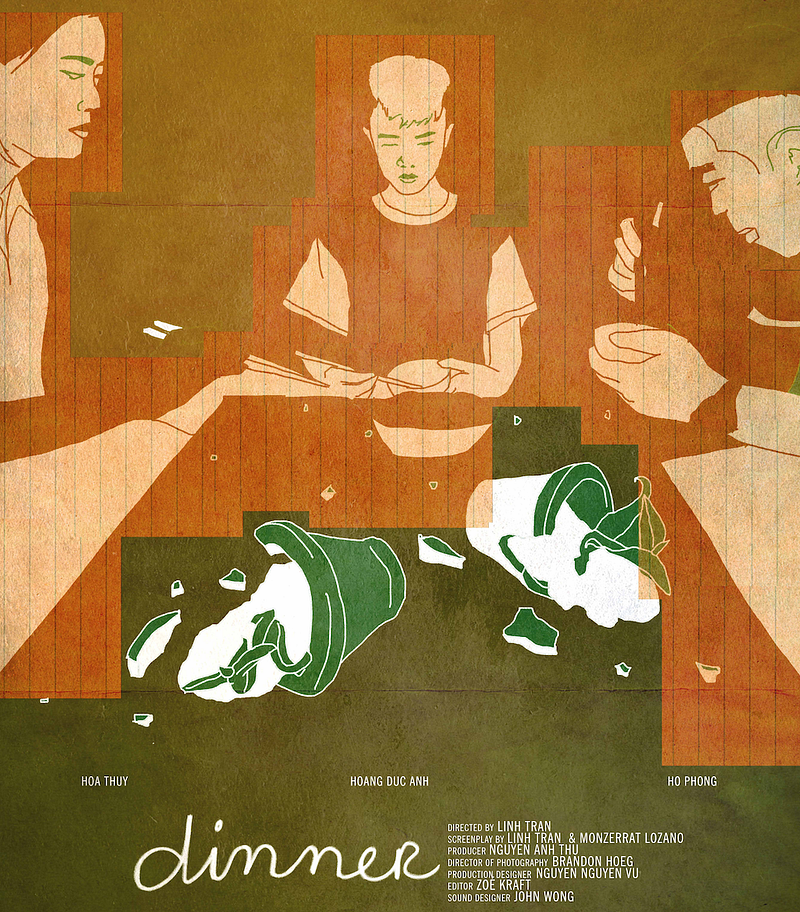
An exclusive Go Into The Story Q&A with DePaul University MFA in Directing graduate on her award-winning short film Dinner.
As an educator, nothing brings me greater joy than to see one of my students make positive steps in their creative aspirations. Such is the case with Linh Tran, a 2020 DePaul University graduate from the MFA in Directing program. I had the pleasure of working with Linh in a very cool class Writing on Assignment in which each student was given three film elements — Genre, Actor, Budget — then tasked to write an entire feature length screenplay in ten weeks. I also advised Linh on her thesis script and movie: Dinner.
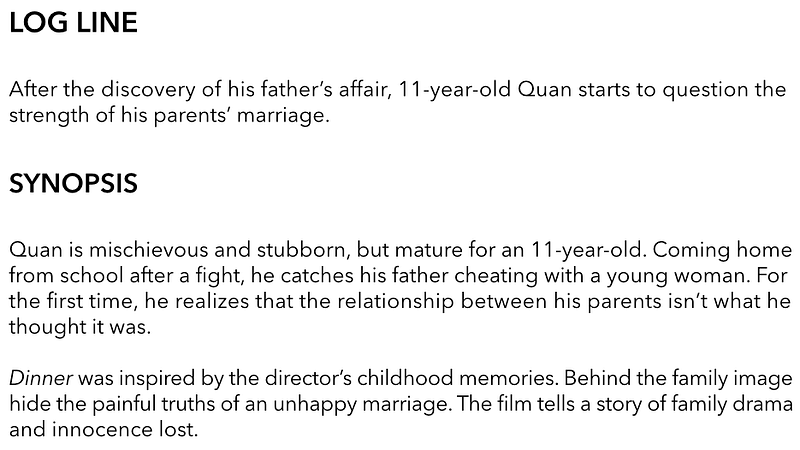
The movie had its debut in spring 2021 at the DePaul University annual student event: The Premiere Film Festival. It won a Jury Award determined by a group of guest film festival programmers. The film subsequently had a strong festival run.

Recently, I was a guest of the Pittsburgh Shorts Film Festival and inaugural Filmmakers Conference. While there, I had the opportunity to spend time with Linh whose movie Dinner screened at the festival. Due to the pandemic, it was the first time Linh had seen the movie with a live audience.
Linh is a delightful person and developing storytelling talent, so I took the opportunity to interview her.
Scott Myers: When did you become interested in filmmaking?
Linh Tran: I think I’m sort of a late bloomer. I first came to filmmaking as a freshman in college. Very coincidentally, I was involved in a lot of theater productions, and was taking film studies classes. I just fell in love with films then. Before that, I didn’t even watch movies regularly.
SM: What was your experience like as an MFA in Directing student at DePaul University?
LT: I learned a lot from my three and a half years at DePaul University. It was a pretty chaotic experience for me. I like some of my classes and had some awesome teachers. One thing that I’m glad I did was that I tried to get on set as much as possible, doing pretty much everything — a lot of (literally) heavy lifting, that’s how I met a lot of my collaborators. And I tried to make as many shorts as I could, which helped me figure out what I like as a director, and what style of directing suits me. I think in general, for me, DePaul was a great hands-on environment.
SM: Your thesis film project is Dinner. What was the inspiration for that story?
LT: I remember the first quarter at DePaul, I saw Lynne Ramsay’s Gasman in a class, and that short film really hit home for me. It reminded me of how lost I sometimes felt as a child.
There was this one occasion when I was 11, when I witnessed a fight between my parents. My dad was accusing my mom of being in love with someone else. They knew that I was there and that I heard everything, but we never addressed it as a family. A few days later, everything became like normal, but something really changed for me. That incident really left a big impression on me. So I kinda leaned on that feeling to write Dinner.
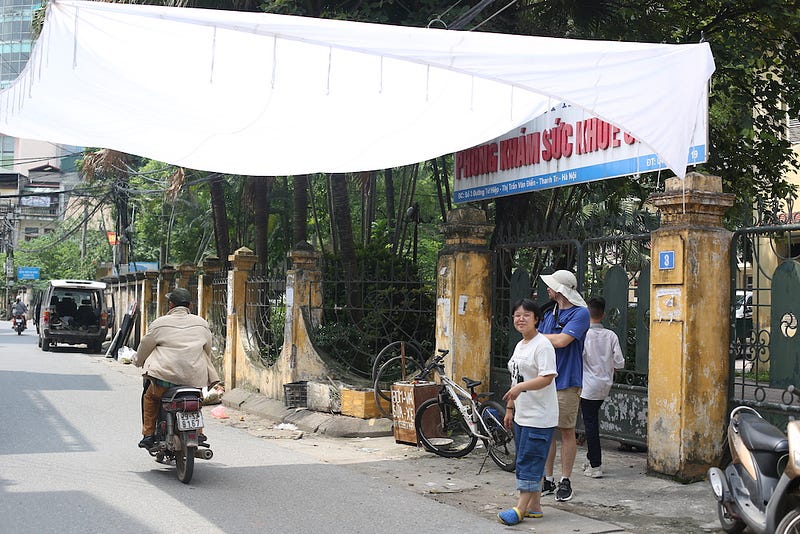
SM: You shot the movie in Vietnam. What were some of the unique benefits and challenges in making a movie there?
LT: I was born and raised in Vietnam, and Vietnamese is my first language, so I think that allowed me to be more in tune with the levels of authenticity I would have in the film. Dinner’s locations are actually very specific, so having that familiarity was essential. The close-knit film community of Hanoi allowed me to have access to some well-known actors. The actors who played the mother and father in the short are familiar faces to Vietnamese TV audience, I grew up watching them, and I was set on bringing them onto the project pretty early on. My family really was such a great support during the film’s production, and I wouldn’t have that here in the States. (The apartment in the film is my aunt’s).
In terms of challenges, we probably ran into all the problems an indie production typically runs into, like the unpredictable/unpleasant weather (One of the shoot days, as we were setting up our biggest light, a storm came and with it a power outage!), dysfunctional equipment, etc. On top of all that, I had never shot a movie in Vietnam, so I had to familiarize myself with the working culture there, which I would say is drastically different from what you would expect in the States. My DP was from the US, and he doesn’t speak Vietnamese, so navigating communication among the crew was also pretty interesting. It was a great learning experience.
SM: One thing, among many, that struck me in watching the movie was how self-assured you are as a director. No fancy “Look at me, I’m the director” camera shots. Instead, you focused on story, characters, casting, setting the camera to frame each shot, and let the actors act. Is this a reflection of your directing style or more about the way to tell this specific story visually?
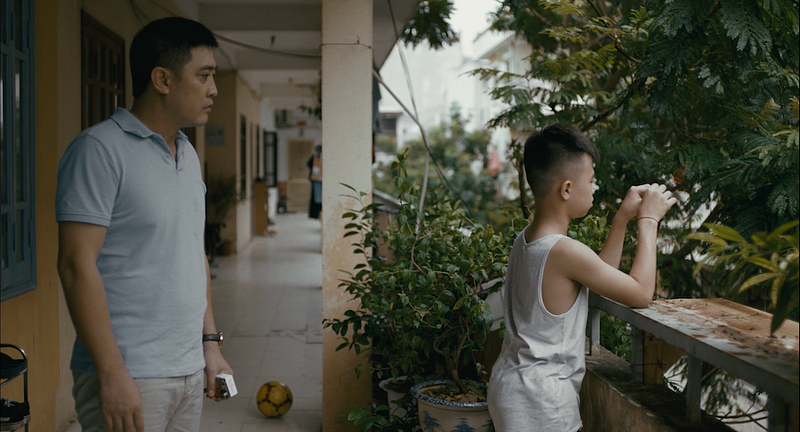
LT: I think it is both. The film is so much about what the boy feels, and in order for us to feel what he feels, I think the film needs to be quiet, and I need to create that space for not only the action but also the reaction (of the characters and of the audience).
When it comes to directing, I like to be as economical with my shots as possible, and I like to use a bit of distance in the frame to give the audience some freedom of interpretation. I think that is very important, since ultimately, I hope my film does something for its audience.
SM: The lead character is a young boy. What a fantastic job the actor did! How was that working with such a young talent?
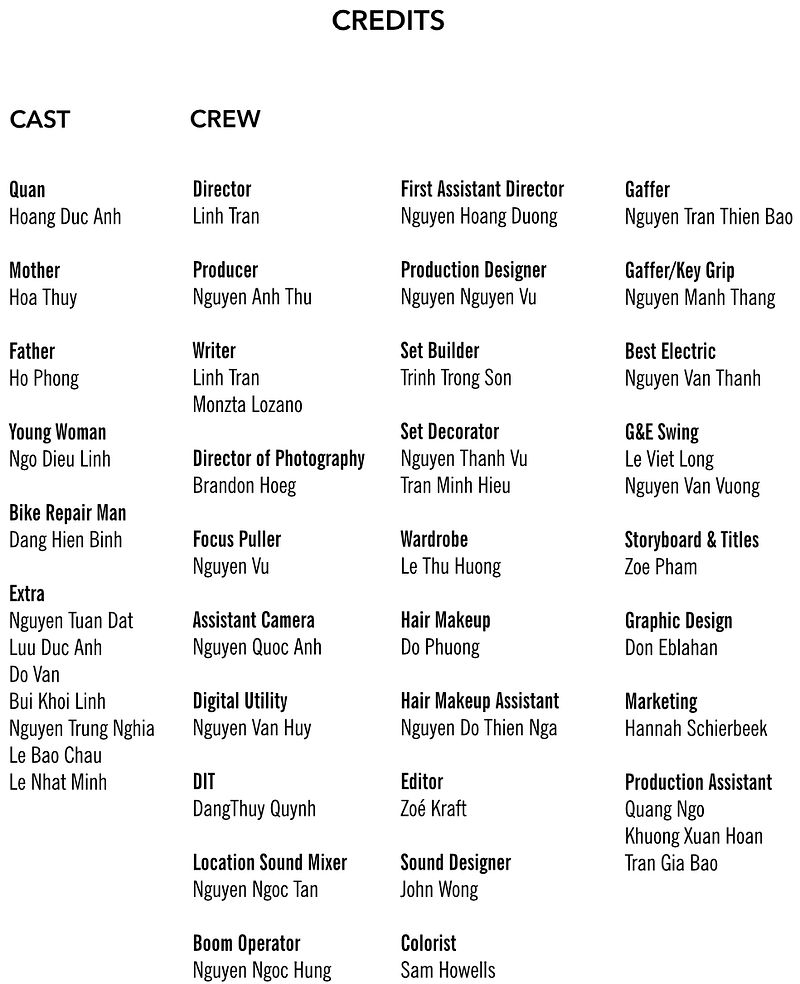
LT: Thank you very much! Duc Anh, who played Quan, is super talented, and he was as much of a professional as anyone else on set. I have always enjoyed working with child actors, just because working with them is straightforward, you just need to help them conjure up an image, or an idea, or an emotion. They don’t really anticipate or overthink directions. On the production of Dinner, because there is a fight scene at the beginning of the movie, I organized martial art lessons for the young actors. I accompanied them (sometimes their parents just left them with me) to martial art lessons twice a week for six weeks, during which time, I got a chance to get to know all the kids, and especially Duc Anh. So when the time came to shoot the project, we were already so close. Working with Duc Anh was probably one of the easiest part of directing the film.
SM: The movie Dinner won a Jury Award at the Premiere Film Festival, the student film festival sponsored by DePaul University. What was that experience like? Did that help position the movie for other film festivals?
LT: The award really came as a surprise to me, because my festival run had been pretty slow before that. DePaul’s Premiere Film Festival showcases the best films by my peers, so winning the Jury Award was such an honor on my part. And that turned out to be extremely helpful. After Premiere, festivals really picked up for us, thanks to the festival programmers who saw my film there and liked it.
SM: Among the many film festivals which have programmed Dinner is the Pittsburgh Shorts Film Festival. Due to the pandemic, I believe that was the very first time you’ve seen Dinner with a live-audience. That must have been exciting. What was that like?
LT: Seeing the film on the big screen with an audience was awesome! It was also a nerve-wrecking experience, to be honest. I was sitting in the audience, and my heart was racing. People asked really great questions and received the film well. I remember after the screening, two people in the audience came to me and told me they were school teachers who work with children around the age of my character, they thought I did a good job portraying what they are like. I find moments like this extremely rewarding.
SM: Now that Dinner has pretty much finished its film festival run and is available for the public to see on Omeleto, what are some key takeaways as a filmmaker and storyteller from your experience making the movie?
LT: I think the first takeaway for me is the level of preparation a film needs. I actually shot a short film with pretty much the same script before I made Dinner, and used it as a place to explore what would work for the film. That really helped a lot, so I think I will continue doing intensive preparation like that for my future projects.
Because of Covid, Dinner didn’t reach a lot of the audience until it got on Omeleto. And now that it is online, I could read people’s comments. I am happy to see a lot of people relate to the film and appreciate the educational value it has. This gives me a sense of purpose as a filmmaker, and I hope I could make impact with my works in the future.
SM: What’s next for Linh Tran and where do you hope to be creatively in the next five to ten years?
LT: I am in post-production for a micro budget feature at the moment, and also developing another film that is very close to my heart. This film deals with the topics of family relationships and immigration. In the next five to ten years, I hope to continue making films that are personal, hopefully I’ll be able to work with bigger budgets.
Here is Linh Tran’s award-winning short film Dinner.
Website: mlinhltran.com
Twitter: https://twitter.com/lnhtrnn
Instagram: https://www.instagram.com/lnhtrnn/
Facebook: https://www.facebook.com/dinnershortfilm
Good luck, Linh! I very much look forward to tracking your progress as a filmmaker and storyteller!
For 100s more Go Into The Story interviews with screenwriters and filmmakers, go here.