Interview: Kristoffer Borgli
A RogerEbert.com conversation with the writer-director of Dream Scenario.
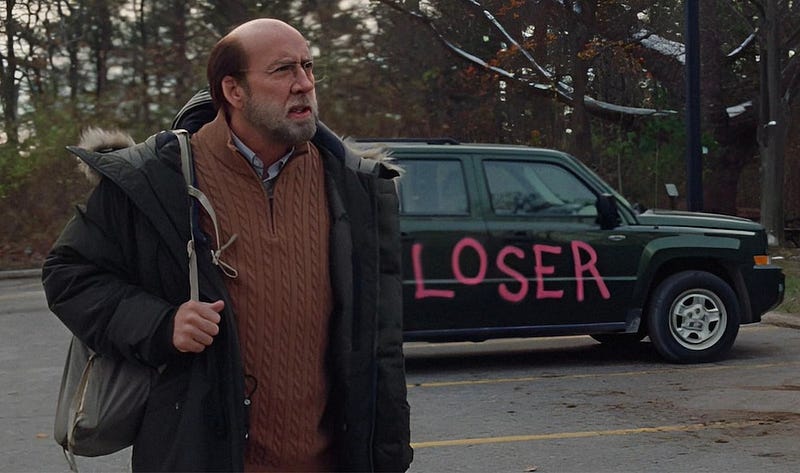
A RogerEbert.com conversation with the writer-director of Dream Scenario.
Kristoffer Borgli is a Norwegian filmmaker whose first feature film was the critically acclaimed Sick of Myself (2022). His follow-up movie is Dream Scenario starring Nicholas Cage.
Plot summary: A hapless family man finds his life turned upside down when millions of strangers suddenly start seeing him in their dreams. When his nighttime appearances take a nightmarish turn, Paul is forced to navigate his newfound stardom.
Here are some excerpts from Borgli’s interview with RogerEbert.com.
Dream sequences are central to “Sick of Myself” and, obviously, “Dream Scenario”. Have you always been fascinated with dreams and what makes them a compelling narrative tool in your stories?
I’ve been thinking a lot about this lately. I worked at a video store when I was sixteen for about three or four years. That’s when I fully fell in love with cinema and started thinking that maybe I could make movies one day. But I remember my surroundings in this little town in Norway looked nothing like the movies that I enjoyed. I was frustrated because I felt like there were no stories to tell there. Then I started thinking about how there was a place I could go though: inside my head. I thought of dreams as the most exciting location, and ever since I’ve been wanting to find a movie where I have an excuse to go into people’s heads. Now with “Dream Scenario,” you not only go into one person’s head, you go into thousands.
We spend a lot of our lives dreaming in bed, but we also spend our waking life mostly in our heads too. I feel like we’re not participating in reality as much as we are thinking about our past or the imagined future at any moment. That is a big part of the experience of life. I thought of this movie as a possibility of going there and exploring that. There’s a discrepancy between reality and what you dream about, and I wanted to put those two in dialogue and explore that tension.
— —
Has working on “Dream Scenario” reshaped your views on the creative process or made you reevaluate the dream of “success?”
I made a movie in Norway through European funding systems, meaning it is not seen as a product the same way that Hollywood thinks of movies. With “Dream Scenario,” I feared this idea that what we deem as a public good in Europe, now I’m entering a space where the film is being seen more as a product that needs to be optimized for the demands of the market. This idea should not enter the creative process and with “Dream Scenario,” I’ve been lucky enough where I have had good producers and a studio that have not intervened too much. They have not tried to form or reshape my art to make it more of a viable product. We believed in the integrity of the art itself.
I’ve had a really positive experience making my first American feature and I hope that I can keep doing that. I really believe that we need original ideas and authorship with integrity. Ultimately, we need love-based and inspired decisions. We need to be willing to invest in unique, even esoteric art that risks not making its money back.
Here’s a video interview with Borgli:
For the rest of the RogerEbert.com interview, go here.
For more RogerEbert.com interviews, go here.
For 100s more interviews with screenwriters and filmmakers, go here.